The war of Hz in monitors continues to escalate, but not all increases are equal. While going from 60 to 144 Hz completely transforms the visual experience, the jump to 240 Hz only offers tangible advantages in very specific environments. We analyze where each frequency is worth it. ⚡
Latency reduction: the decisive factor in eSports 🎯
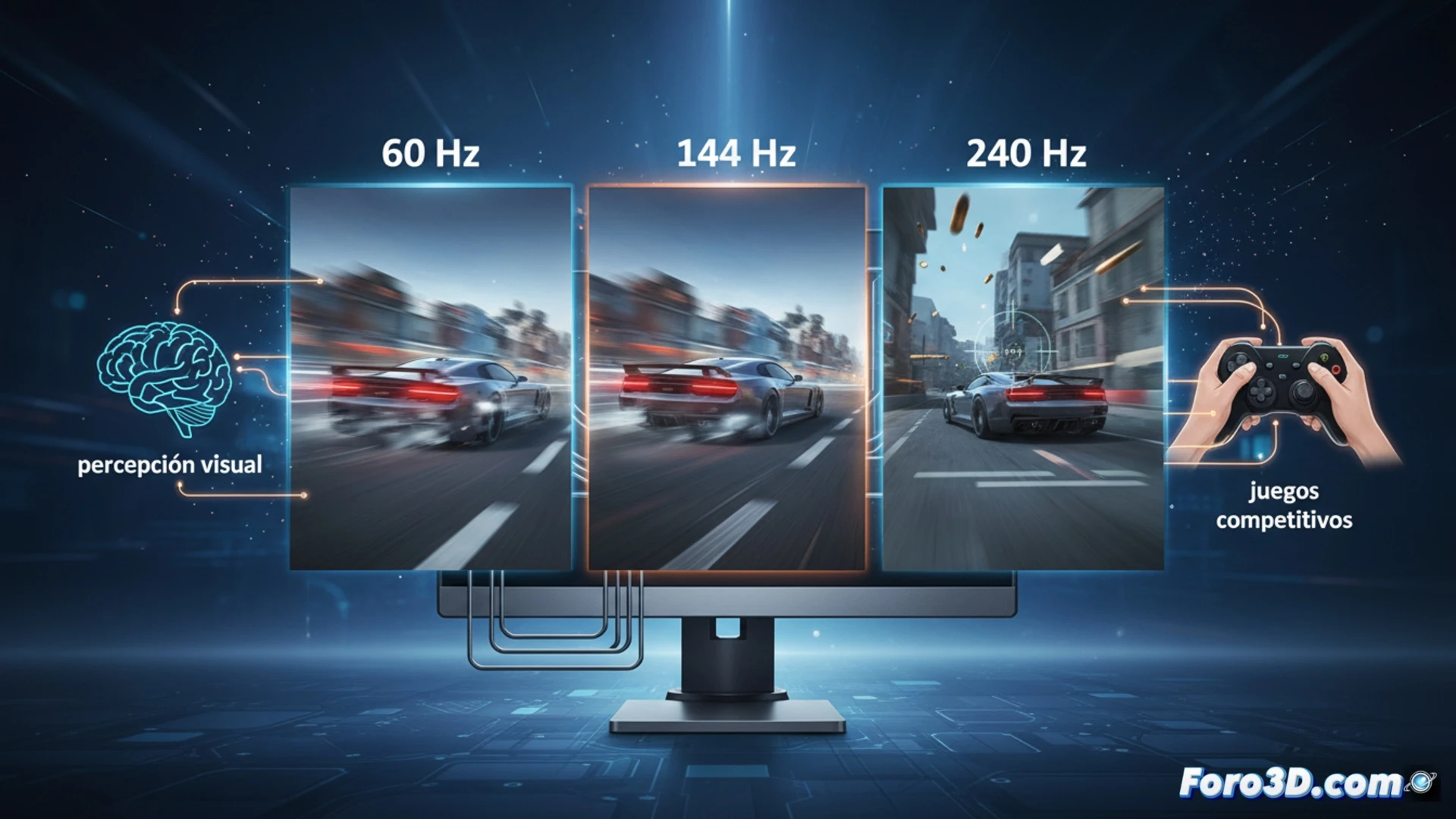
The difference between 144 Hz and 240 Hz translates to just 2.8 ms less between frames. In titles like Valorant or CS2, that time window allows you to react to an enemy sooner or adjust a shot. However, in narrative games or office tasks, the human eye does not perceive that fraction. The jump from 60 to 144 Hz, with an 11.1 ms improvement, is clearly noticeable to any user.
When Hz become currency 💸
Sure, if your routine is limited to watching Netflix and opening Excel, a 240 Hz monitor will make you feel like an F1 driver at a traffic light. The extra smoothness will only serve to make loading bars seem faster. But hey, if your pride needs to justify the expense, you can always say that the 2.8 ms separate you from glory in the bronze ranking.