Andreas Giesen, VFX supervisor at RISE, returns for the second season of Fallout. With a team almost identical to the first installment, the collaboration was smooth, but the challenge grew exponentially. The new season features a significantly larger scale, with much more ambitious aerial and destruction sequences. To tackle it, specialized teams were organized and procedural methods and prior technical knowledge were maximized, scaling a proven workflow.
Redesign of the Caswennan and USD pipeline for parallel work 🚀
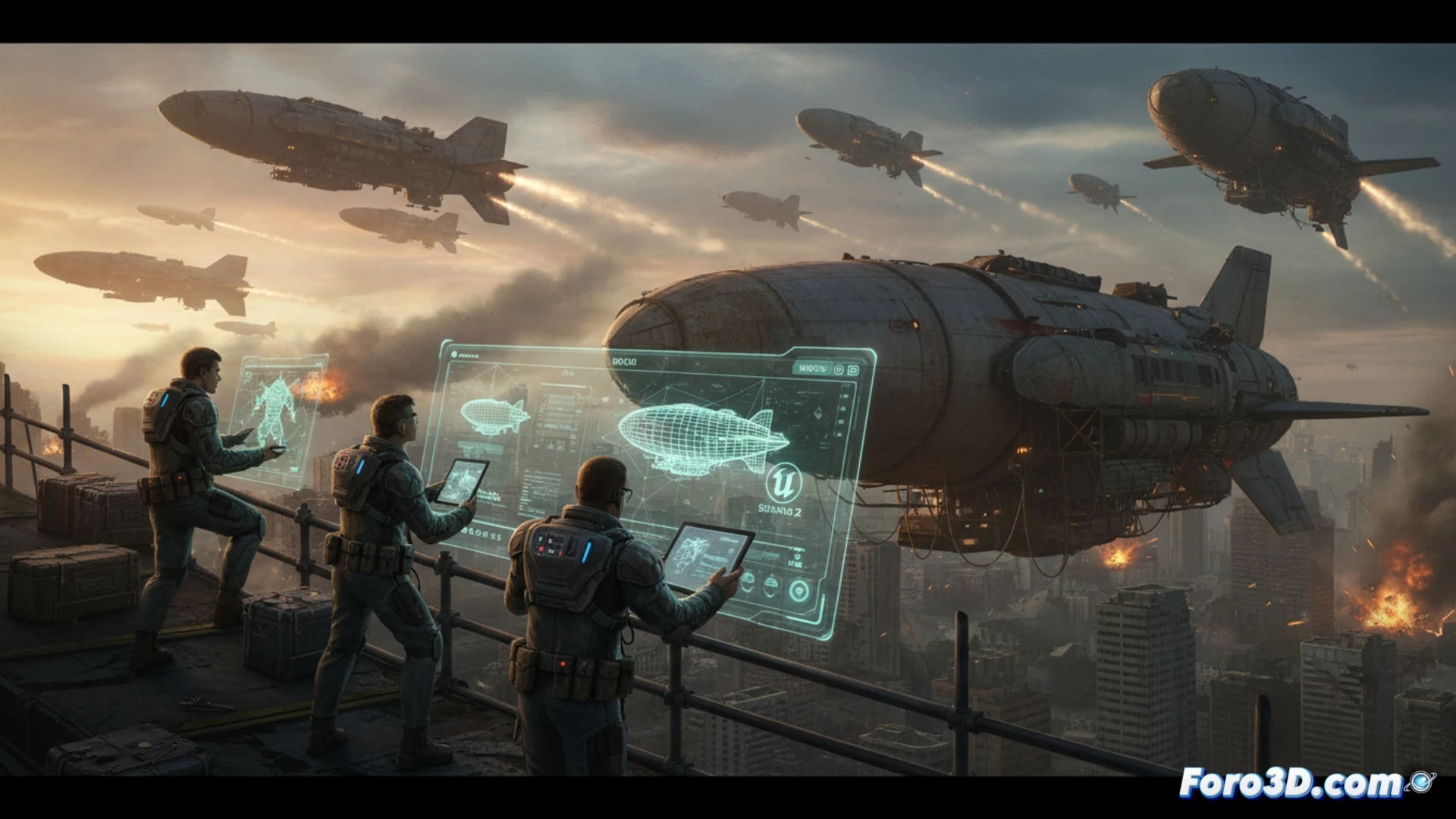
A key example was the complete redesign of the Caswennan airship for close-up shots and virtual production. Detailed assets from Unreal Engine and LIDAR scans of the real set were integrated, adding a photorealistic level of detail. The cornerstone was the implementation of USD (Universal Scene Description) in the pipeline. This standard allowed multiple artists to work in parallel on the same asset or scene efficiently and without conflicts, accelerating production. Additionally, visual variants of the airship were created for different factions, always maintaining the characteristic retrofuturistic aesthetic of the Fallout universe.
Lessons in managing complex VFX projects 💡
The Fallout case demonstrates that scalability in VFX for high-budget series does not depend solely on more resources, but on a solid and flexible technical foundation. Keeping a cohesive team and leveraging prior knowledge was crucial. The commitment to standards like USD and the integration of real-time engines like Unreal facilitated collaboration and managed complexity. This approach allowed RISE to focus artistic talent on visual storytelling, not on solving pipeline problems.
How were USD and Unreal Engine used to efficiently scale the complex visual effects of the airships in the second season of Fallout?
(P.S.: VFX are like magic: when they work, no one asks how; when they fail, everyone sees it.)