The National Dance Company premieres ROM, a double program with works by Forsythe and Inger. This event highlights the memory of movement and the fusion of choreographic languages. In the niche of scenography, a key question arises: how can 3D tools enhance the creation and production of contemporary dance performances? The answer lies in previsualization and the design of immersive spaces.
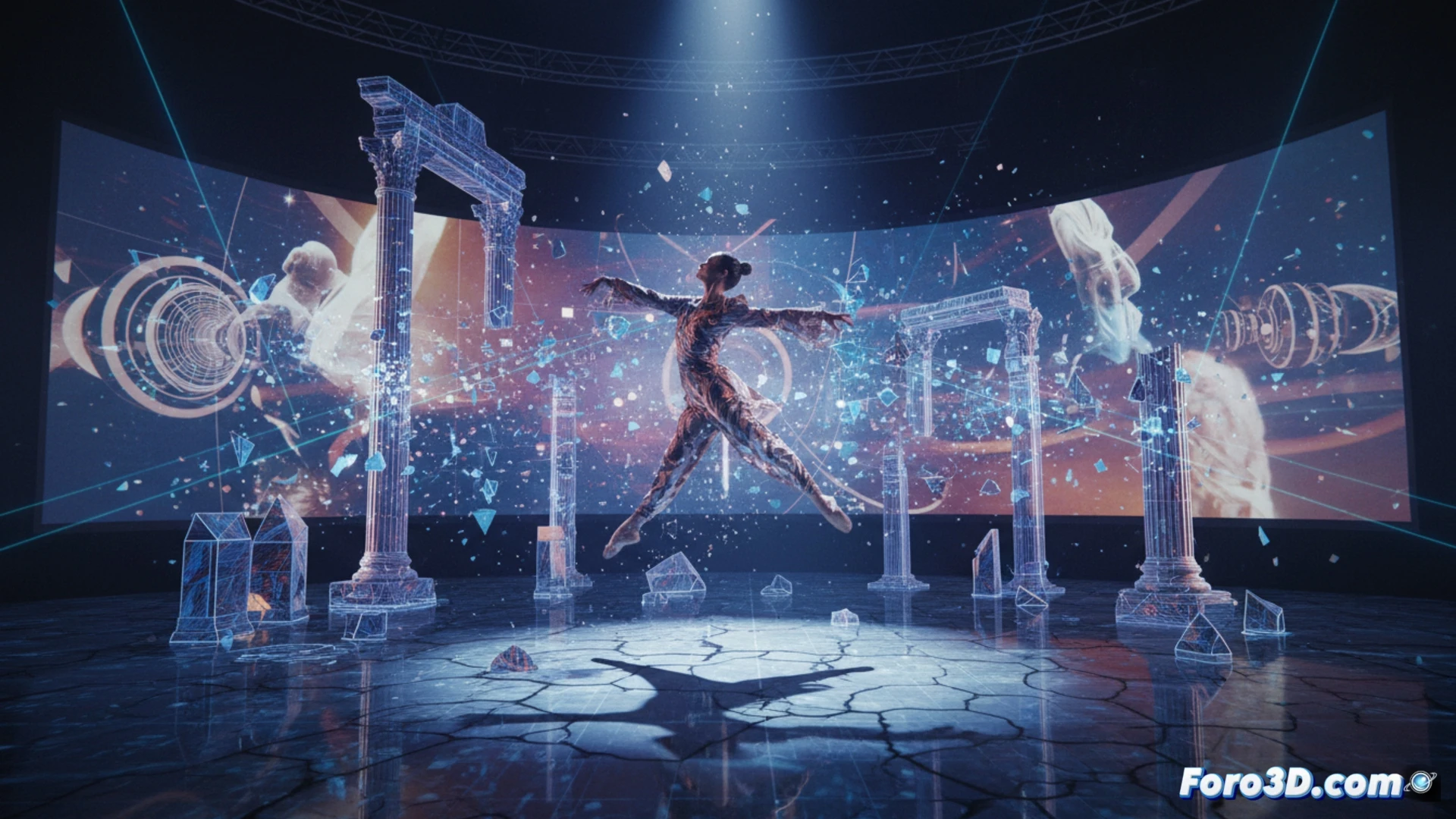
3D Previsualization for Choreographies and Scenic Spaces 🎭
For a work like The Second Detail, with its intense technical language, 3D design allows rehearsing the spatial arrangement of the dancers and precise lighting in a virtual environment before reaching the theater. This optimizes setup times. In Become, which celebrates transformation, different volumetric scenographies or video mapping projections can be modeled and tested, integrating choreographic movement with digital space. 3D acoustic simulation is also vital for balancing electronic music with the organic sound of movement in the venue.
Technology as an Extension of the Body in Space 🤖
The title ROM, Range of Motion acquires a new dimension with 3D technology. These tools expand the creative range of action, allowing to choreograph not only bodies, but also light, geometry, and visual narratives in a digital prototype. The essence of the CND as a meeting point of languages is enriched by incorporating the language of digital design, making the stage a true laboratory of space and movement for today's Europe.
How can 3D visualization be used to capture and reconstruct the memory of choreographic movement in scenic projects like ROM by the National Dance Company?
(P.S.: designing a stage in 3D is easy, the tricky part is making sure the musicians don't fall off it)