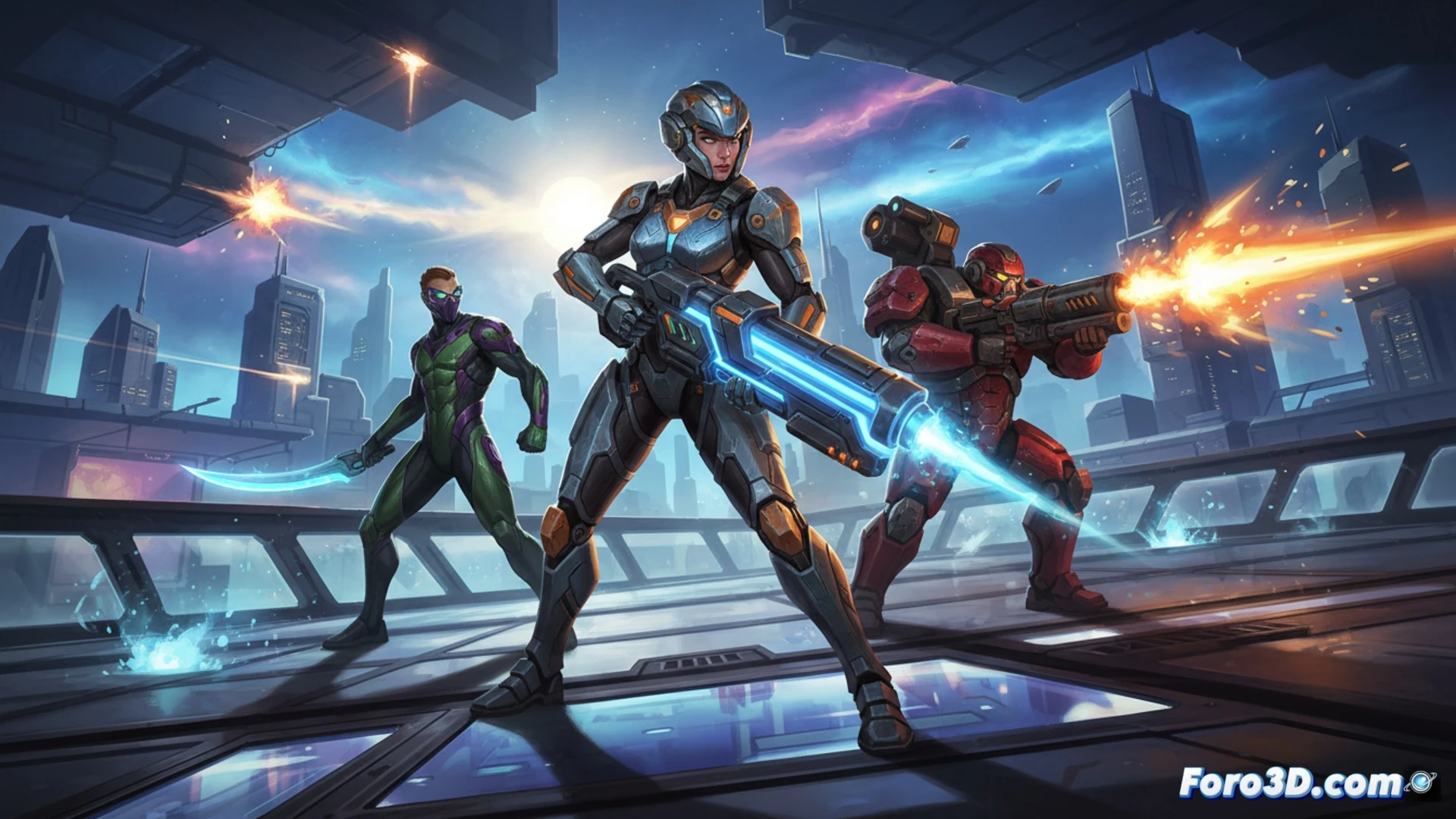
Project ETHOS presents itself as a hero shooter that prioritizes visual clarity in its fast-paced combats. Developed with Unreal Engine 5, the game bets on a stylized and clean artistic style, where the readability of characters and their abilities is fundamental. This technical and artistic decision seeks to eliminate on-screen confusion, allowing the player's skill to shine. We analyze how the chosen tools shape this experience.
The technical trinity: UE5, Maya, and Houdini 🛠️
The pipeline of Project ETHOS is supported by three pillars. Unreal Engine 5 provides the foundation, with its Lumen system for dynamic lighting and Nanite for detailed geometry, used sparingly to maintain high performance and a clear style. Hero animations are worked on in Maya, seeking exaggerated and recognizable movements that reinforce each character's identity. For the visual effects of special abilities, key in a hero shooter, Houdini is employed. This allows creating impactful but orderly VFX, with defined silhouettes and colors that are instantly readable amid the chaos of combat.
When technique defines gameplay 🎯
The choice of these tools is not casual. Every technical decision in Project ETHOS is subordinated to the playable design. Art that is too realistic or effects that are too dense could ruin readability. Instead, the power of UE5, Maya, and Houdini is used to create a stylized world where visual information is prioritized. The result is a shooter where reading the combat situation is intuitive, demonstrating that technical mastery must always serve the gaming experience.
How has the Project ETHOS development team used Unreal Engine 5's specific tools, such as Lumen or Nanite, to prioritize visual readability in the chaos of a hero shooter without sacrificing detail density and artistic fidelity?
(P.S.: game jams are like weddings: everyone happy, no one sleeps, and you end up crying)