A brain-computer interface (BCI) has enabled two people with tetraplegia to write texts using only their brain activity. The BrainGate iBCI system decodes the movement intention over a virtual keyboard, achieving writing speeds that approach those of users without disabilities. The technology has been successfully tested in home environments.
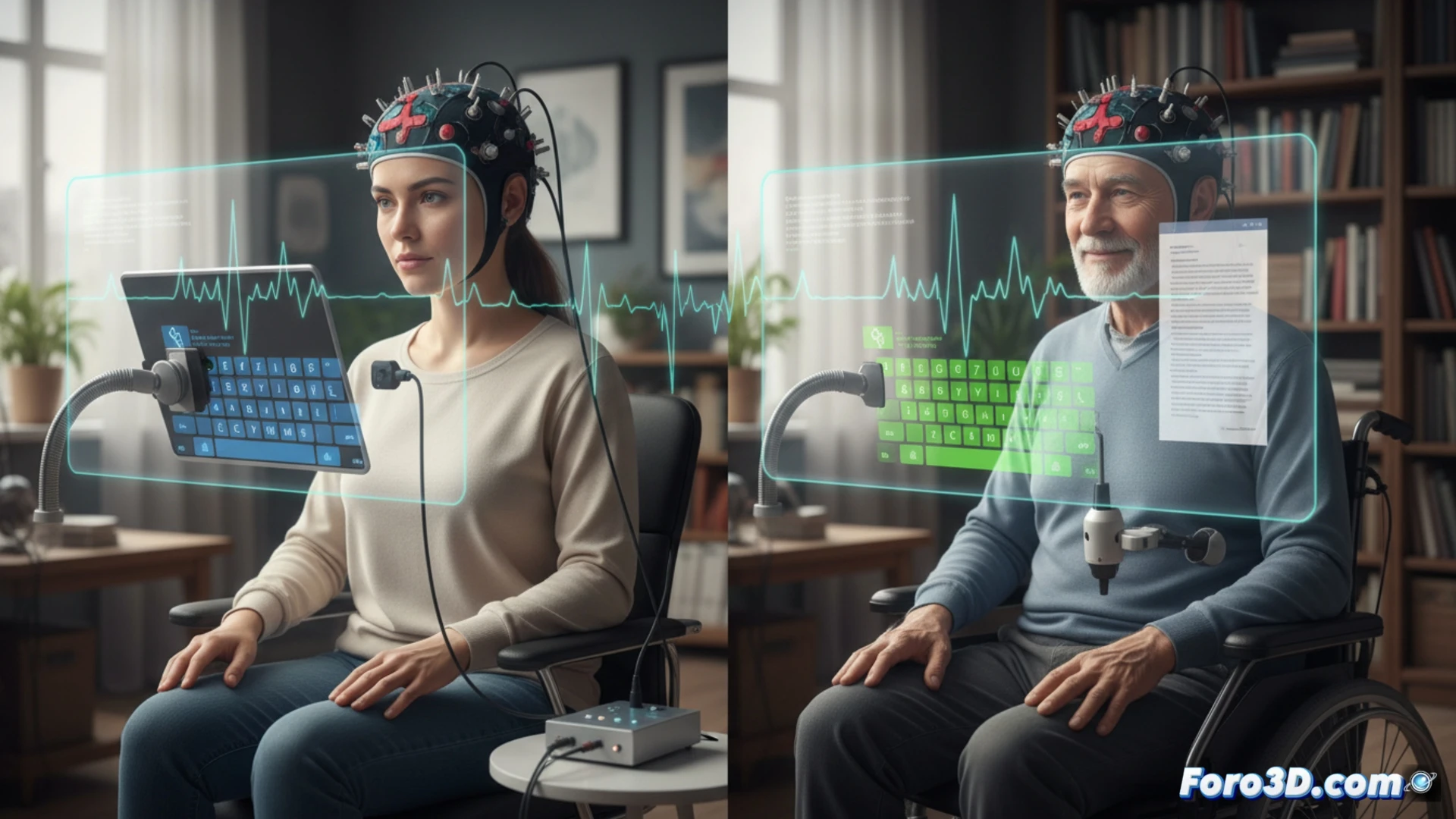
How the BrainGate neural decoder works 🧠
Microelectrodes are implanted in the motor cortex to record neuron activity. When the user imagines moving their hand to write, an algorithm translates those patterns into cursor commands over an on-screen QWERTY keyboard. A predictive language model, similar to that on phones, suggests words and corrects errors. The system requires initial training with about 30 sentences to calibrate.
The ultimate keyboard: neither mechanical nor membrane, neuronal ⌨️
With this, the excuse of one key broke on me becomes totally obsolete. That said, we'll have to see how the autocorrector handles it when you think one thing and the algorithm decides, on its own, that you meant something else. At least wrist problems from excessive mouse use are solved; now the effort will be mental. Will we end up having to defragment the motor cortex?