A discovery on the ocean floor modifies the understanding of oxygen production on Earth. Scientists have confirmed that polymetallic nodules, rocky formations rich in metals, can catalyze the electrolysis of seawater. This process generates oxygen abiotically, without intervention from algae or sunlight, challenging established paradigms.
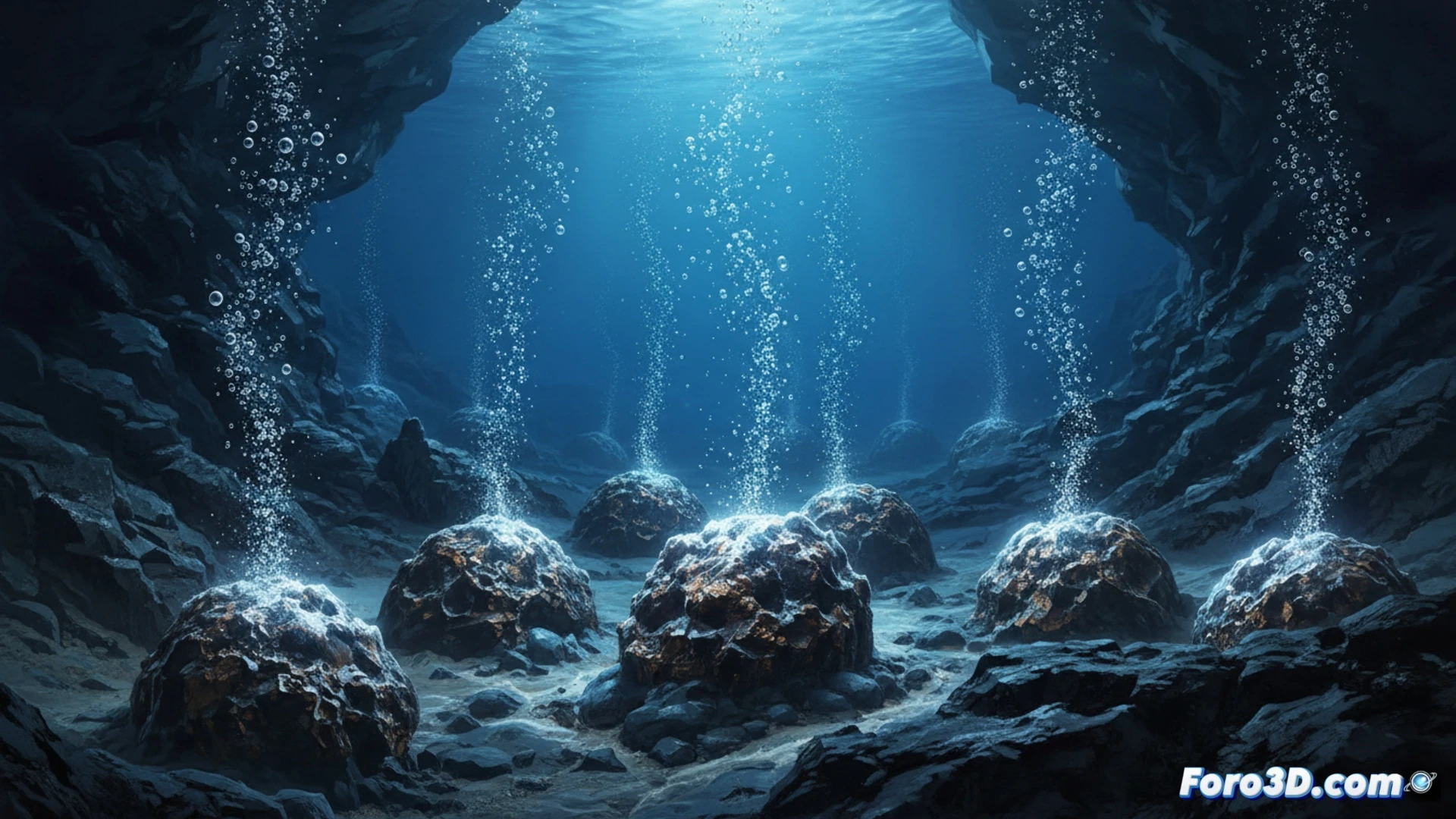
Electrochemical mechanism in manganese and iron nodules 🔬
The phenomenon is based on the composition of the nodules, which act as a natural cathode. Upon contact with seawater, rich in ions, and under certain pressure conditions, a potential difference is established. This triggers the splitting of water molecules (H2O), releasing molecular oxygen (O2) and hydrogen at the nodule site. The catalytic surface of these minerals accelerates the reaction.
The rocks are aiming for the photosynthesis business 😏
It seems that competition in the oxygen sector is getting interesting. While plants invest in chlorophyll and kill themselves for a ray of sun, these underwater rocks have been producing in the dark for millions of years, without making noise and without asking for a salary. An example of labor efficiency that puts the plant and animal kingdoms to shame, always so dependent on light. Maybe it's time for the forests to take note.