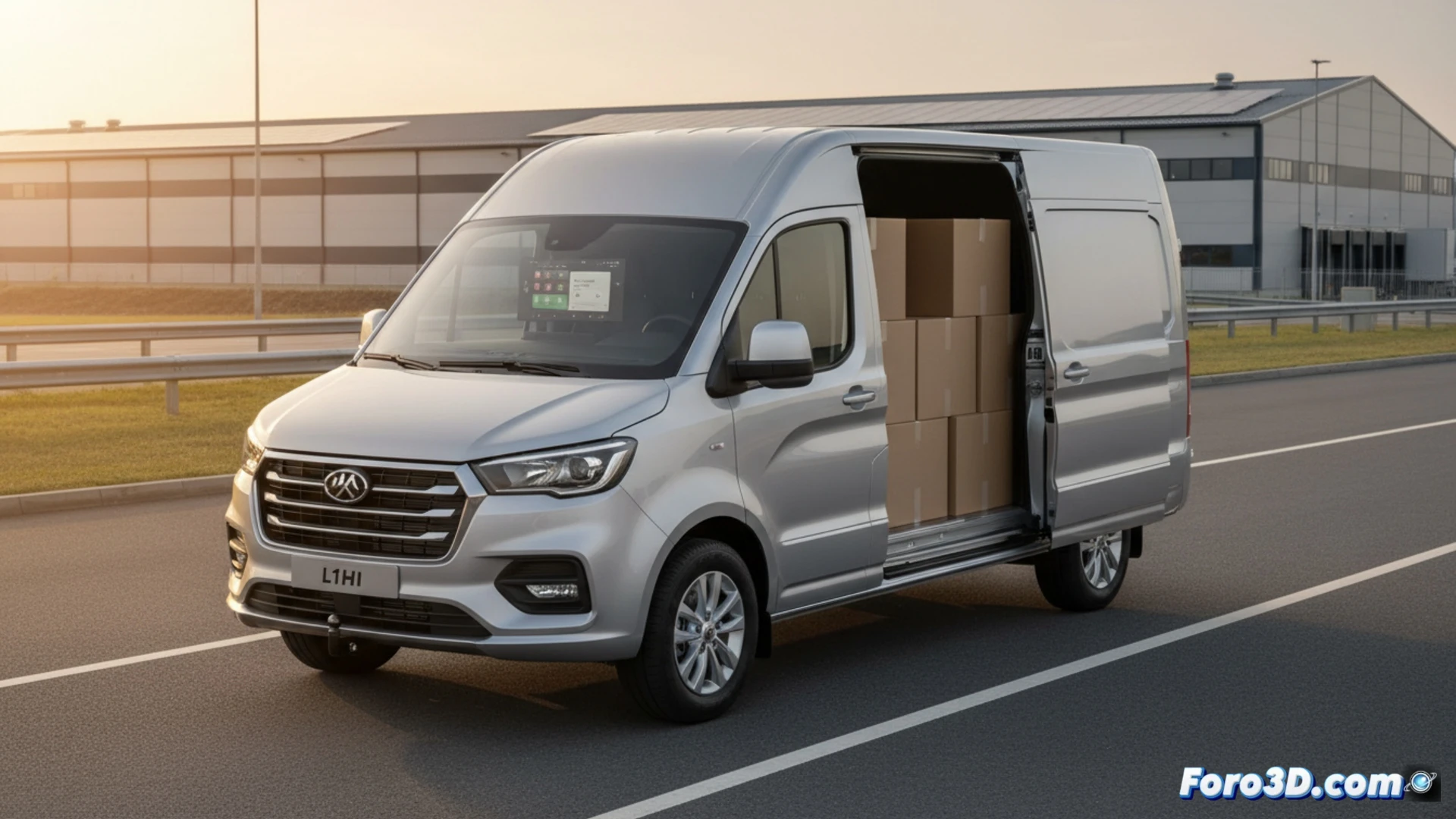
Maxus has presented the renewed Deliver 7, a medium van where engineering decisions are key. It highlights the new short L1H1 variant of 4.99 meters, which maintains a leading cargo volume of 6.3 m³. Technical improvements include a 2.0 diesel engine with 170 HP and greater payload capacity. This advancement is a clear result of design and digital simulation, fundamental for optimizing space, performance, and complying with strict safety regulations.
3D Modeling and Simulation: from Chassis to ADAS Systems 🛠️
The development of this van is unthinkable without 3D modeling and simulation tools. The design of the new short bodywork, which maximizes internal cargo volume, required an exhaustive analysis of structures and fluid dynamics. To integrate the ADAS systems mandatory under the GSR 2.3 regulation, digital simulation was crucial for positioning sensors, cameras, and radars, ensuring their effectiveness and reliability. Likewise, the expanded electrical architecture, with a digital screen and connectivity, is modeled in 3D to integrate wiring and controllers without interfering with the bodywork or cargo area.
Virtualization, a Competitive Advantage in Industrial Automotive 🚀
The evolution of the Deliver 7 exemplifies how 3D virtualization has become a pillar of industrial automotive. It allows rapid iteration in chassis and bodywork design, simulation of loading and structural stress scenarios, and validation of complex electronic systems before manufacturing a single physical prototype. This approach not only reduces costs and time but is the only viable way to comply with increasingly demanding regulations and offer optimized and competitive products.
How has 3D modeling and simulation influenced the optimization of cargo space and weight distribution in the new short L variant of the Maxus Deliver 7?
(P.S.: car electronics are like family: there's always a fuse that blows)