In an exclusive interview, David Vickery, visual effects supervisor for Jurassic World: Renaissance, reveals the complex processes behind the film's digital creatures. The work of Industrial Light & Magic (ILM) reaches new levels of detail, especially in iconic sequences like the inflatable boat chase. The collaboration with director Gareth Edwards and the use of cutting-edge technologies were key to integrating hyper-realistic dinosaurs into dynamic environments, maintaining the narrative essence of the saga.
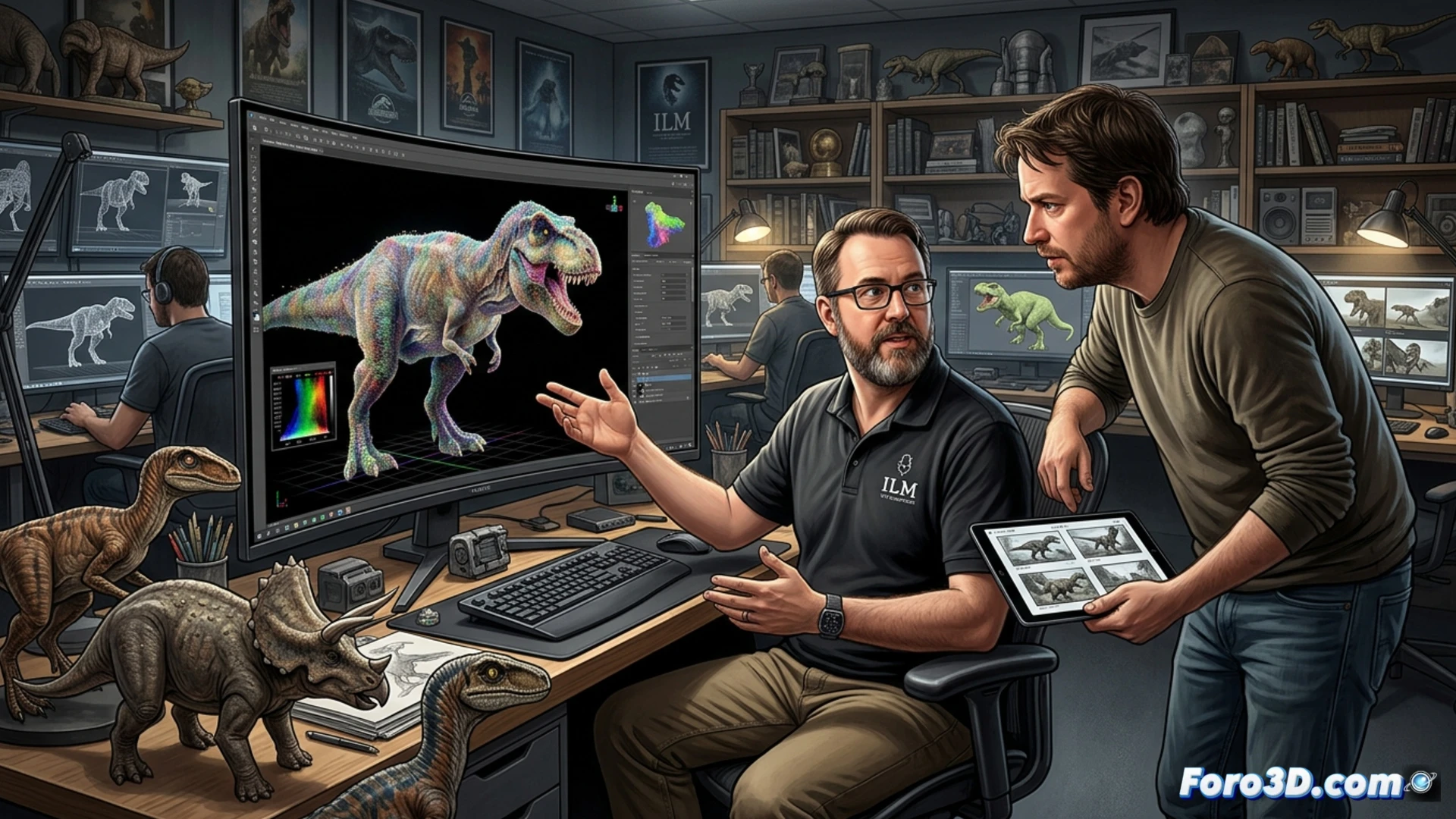
Gaussian Splatting and Previsualization: The Technology Behind the River Chaos 🚤
Vickery highlights two fundamental technical innovations. For the chaotic river sequence, with marine creatures attacking the boat, gaussian splatting was used, a 3D scene representation technique that allows extremely fast and realistic rendering of complex geometries like splashing water and foam. In parallel, previsualization (previz) was crucial. Edwards worked with a highly elaborate previz that included the real boat as a scale and movement reference, allowing for the planning of complex shots and ensuring that the digital dinosaurs interacted credibly with the actors and the environment from the earliest phase.
Animation as Narrative: From the T-Rex to the Titanosaurs 🦖
Beyond technology, realism was built from biology and behavior. To animate the T-Rex, the ILM team studied references of large animals like elephants and rhinoceroses, capturing their weight and visceral movement. The titanosaur courtship sequence was approached with deep research into animal rituals, transforming a visual effects moment into an emotional narrative point. This approach, where technique serves the story and biological credibility, defines the current state of the art in VFX for digital creatures.
How has the integration of artificial intelligence evolved in the creation of digital creatures like dinosaurs to achieve unprecedented realism in movements and textures?
(P.S.: VFX are like magic: when they work, no one asks how; when they fail, everyone notices.)