A group of researchers has trained a culture of human neurons to play the video game Doom. The system, named DishBrain, uses a Python-programmed interface that translates game information into electrical stimuli. In one week, the neurons learned to navigate the virtual map, surpassing the complexity of previous demonstrations like Pong. This advance brings biological computers closer to robotic control applications.
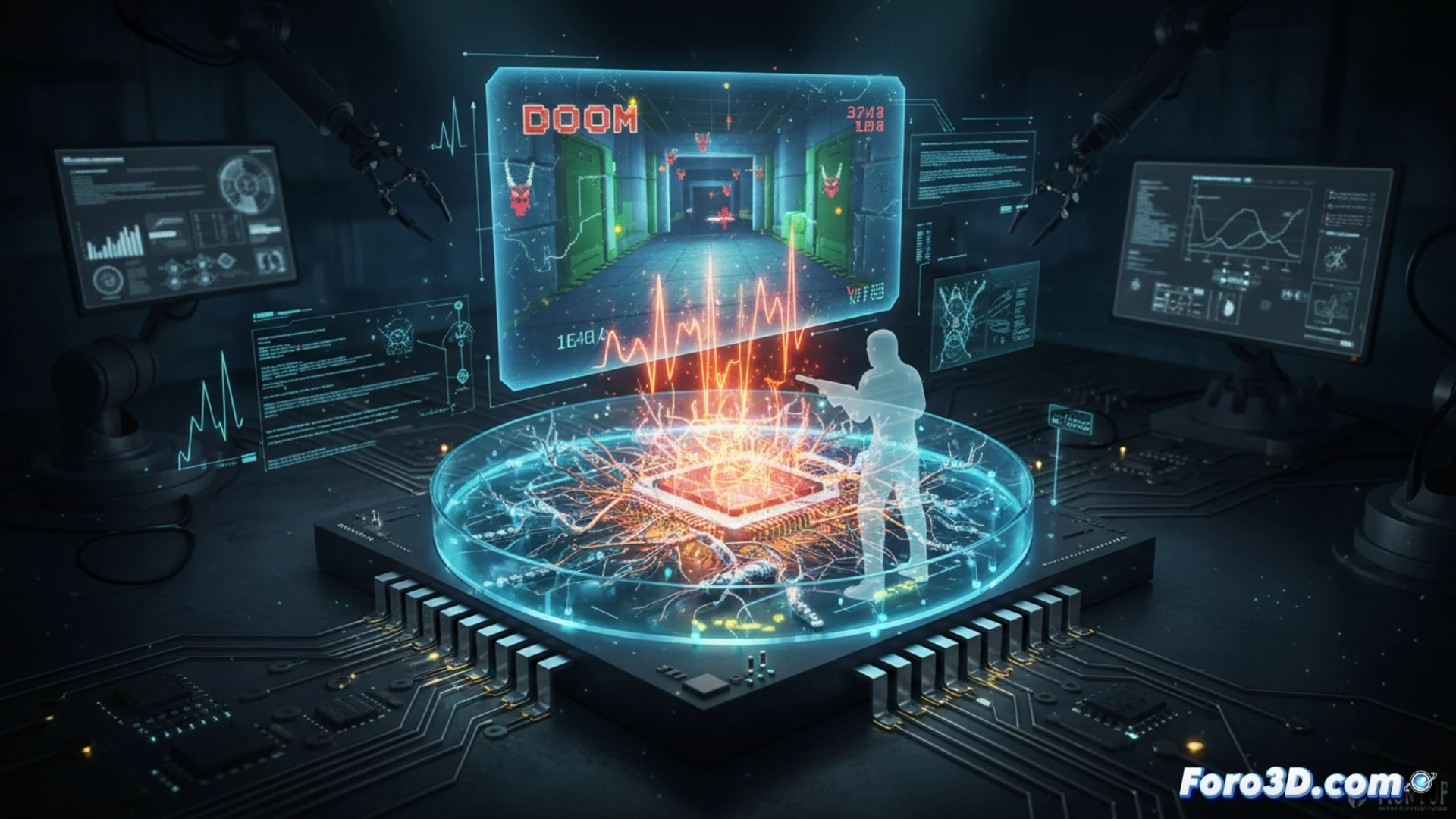
The Python interface that translates pixels to neuronal pulses 🧠
The technical core of the experiment is an interface that converts the Doom screen into a data stream interpretable by the neurons. A Python algorithm transforms the player's position and enemies into patterns of electrical stimulation. The neurons, in turn, respond with signals that are decoded to move the character. This feedback loop enables reward-based learning, where a deviation from the center of the screen is penalized.
The first "player" that literally feeds off the game 🎮
The image of a cell culture managing a Doom level raises curious scenes. We could imagine these neurons preferring dark and enclosed maps, replicating the environment of a Petri dish. The reward system is basic: if they miss, they receive an annoying buzz. Perhaps the next step is to teach them to type IDDQD to invoke god mode, although they probably already feel immortal living in a chip.