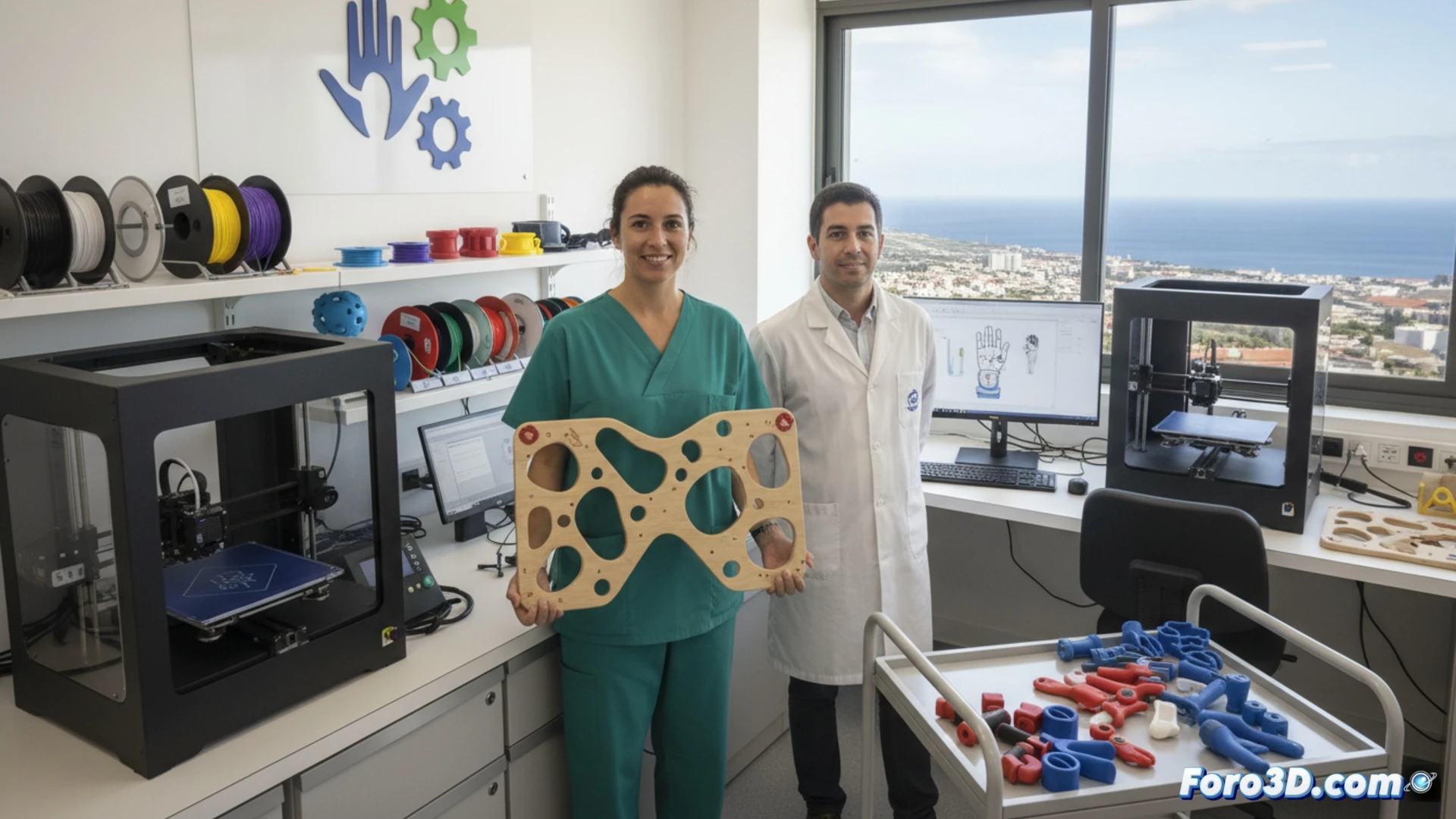
University Hospital La Candelaria in Tenerife has revolutionized its Occupational Therapy service through additive manufacturing. By producing customized rehabilitation tools, such as Canadian boards, they have reduced the cost per batch from 2,316 euros to just 56 euros, a savings of 97.6%. This customization, impossible with standard equipment, not only generates drastic savings but has tripled the therapists' care capacity, directly improving patient recovery.
From therapeutic customization to equipment maintenance 🛠️
The process, managed by the hospital's IT department, covers everything from design to printing functional prototypes. The initiative is not limited to therapy devices; it has extended to manufacturing spare parts for old medical equipment, thus avoiding costly renewals and extending the useful life of essential technology. This dual approach maximizes the return on investment in 3D printing, establishing it as a pillar of hospital efficiency. The hospital, a pioneer in the Canary Islands, has already incorporated a second printer to expand the project.
A scalable model for the national health system 🌍
The project's vision transcends the hospital. They plan to create a national database of their designs so that other centers in Spain can use them as a reference, facilitating the adoption of this practice. This model demonstrates that 3D printing in biomedicine is viable, sustainable, and replicable, setting a precedent for decentralized manufacturing of technical aids and the creation of a collaborative network that benefits the entire public health system.
How are digital models and on-demand 3D printing transforming the accessibility and customization of orthoses, beyond cost reduction?
(P.S.: 3D prostheses are so customized that they even have fingerprints.)