Two decades after the premiere of V for Vendetta, its director, James McTeigue, confirms that Alan Moore maintains his rejection of the adaptation. The creator of the original comic disapproves of the movie for not being a faithful transcription of his graphic novel. McTeigue recalls that Moore already distrusted Hollywood during the project's development. The director suggests that, if the author opposes adaptations so much, he should reclaim the rights to his material.
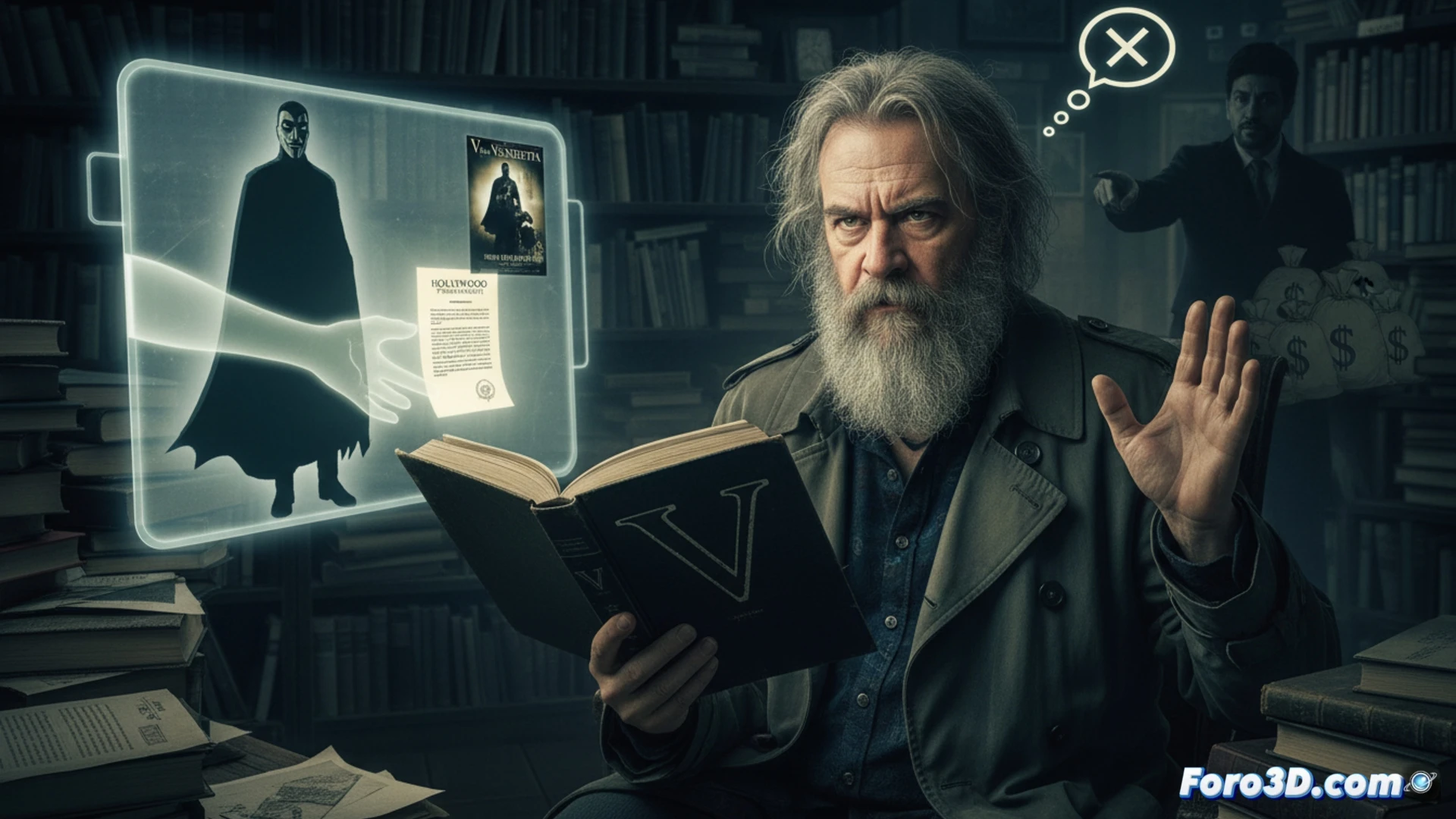
The adaptation as a technical process: beyond literal copying 🎬
McTeigue addresses a recurring technical debate in the forum: the cinematic adaptation is not a cloning process. Converting a static and sequential medium like the comic into a dynamic audiovisual language requires structural changes. The movie condensed the narrative, adjusted characters, and transposed the political message to a post-9/11 context. This "compilation" process to another language, far from being a betrayal, is a technical requirement of the target medium, something that many asset conversion projects understand.
Moore vs. Hollywood: an eternal compatibility bug 🔄
The situation has an infinite loop point. Moore, like a developer who writes perfect code in an obsolete language, watches in horror as Hollywood "translates" his work into a new framework full of special effects libraries. Every adaptation is like an unofficial patch that he did not authorize. Perhaps the solution is not to sell the rights and then complain about the fork, but to do like some and publish his work under a license that expressly prohibits any remake. Or simply, stop looking at others' commits.