Astronomers have detected for the first time a faint wind emanating from Sagittarius A*, the supermassive black hole at the center of our galaxy. This flow of gas and dust, though mild, could slow down star formation and modify the growth of the black hole itself. The finding changes the view of these objects as passive devourers.
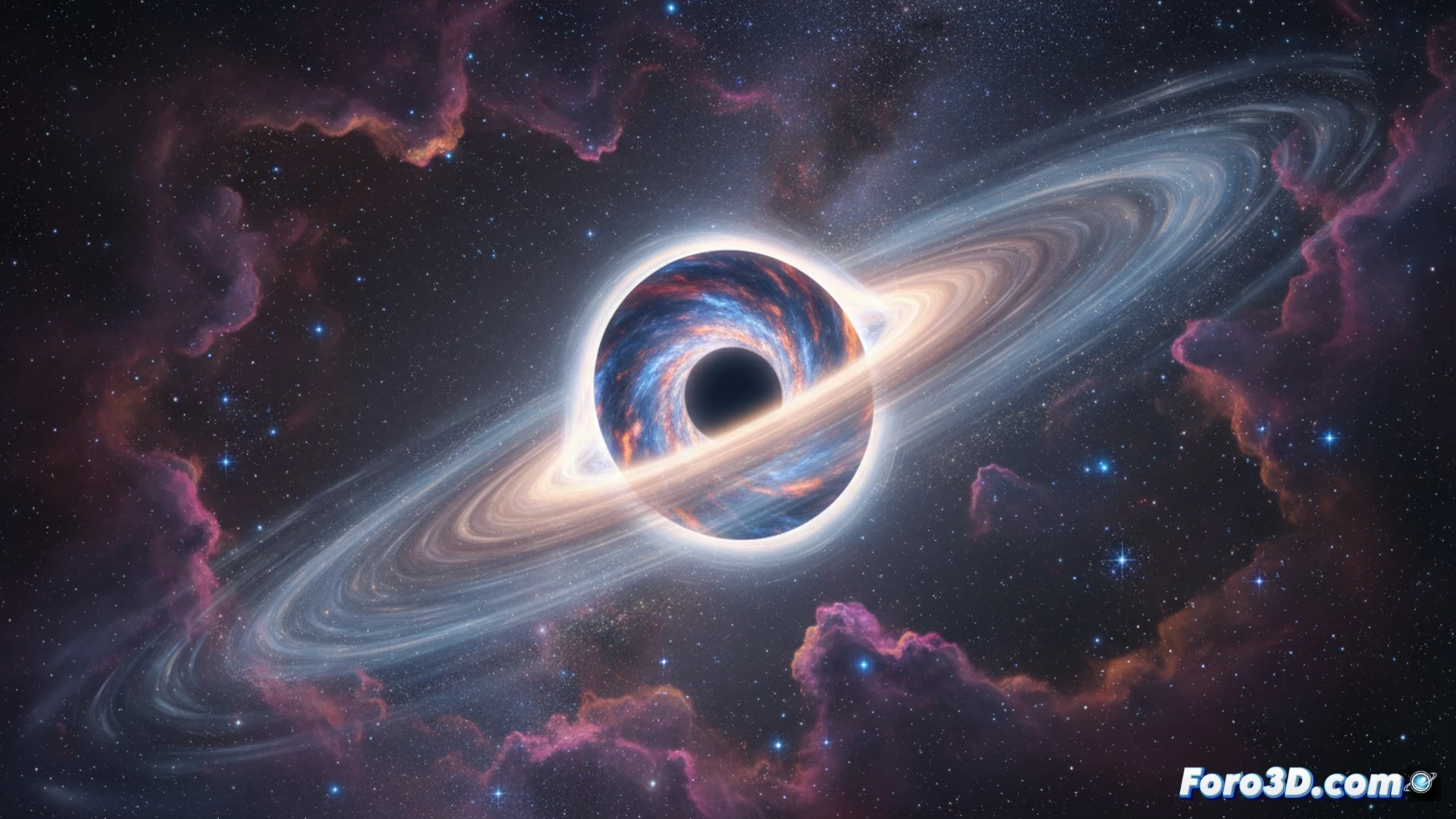
Telescope data and ejection model 🌌
The team used the Atacama Large Millimeter/submillimeter Array (ALMA) to observe carbon monoxide emission near the event horizon. They detected a flow of molecular gas moving away at low speeds, contrary to typical high-energy jets. This gentle wind transports material that would otherwise feed the black hole or form stars. The model suggests the wind is driven by radiation from the accretion disk, not by violent processes. The mass loss rate is sufficient to affect the galactic environment in the long term.
The cosmic breath nobody asked for 🌬️
It turns out the monster at the galactic center doesn't just swallow matter, but also exhales softly, like an elderly gentleman after a heavy dinner. This light wind is the astronomical version of a sigh: not very intimidating but enough to clear the table of stardust. Perhaps Sagittarius A* is just trying to keep its area clean, even at the cost of ruining the star formation party. At least we know it snores quietly.