Paula Santana, a girl from the Canary Islands, has seen her dream of playing the timple come true thanks to a prosthesis designed with 3D printing. Born without a hand, the traditional Canarian instrument seemed unattainable. However, the combination of accessible design and technology has broken down that barrier, demonstrating that innovation can open doors to personal goals that once seemed distant.
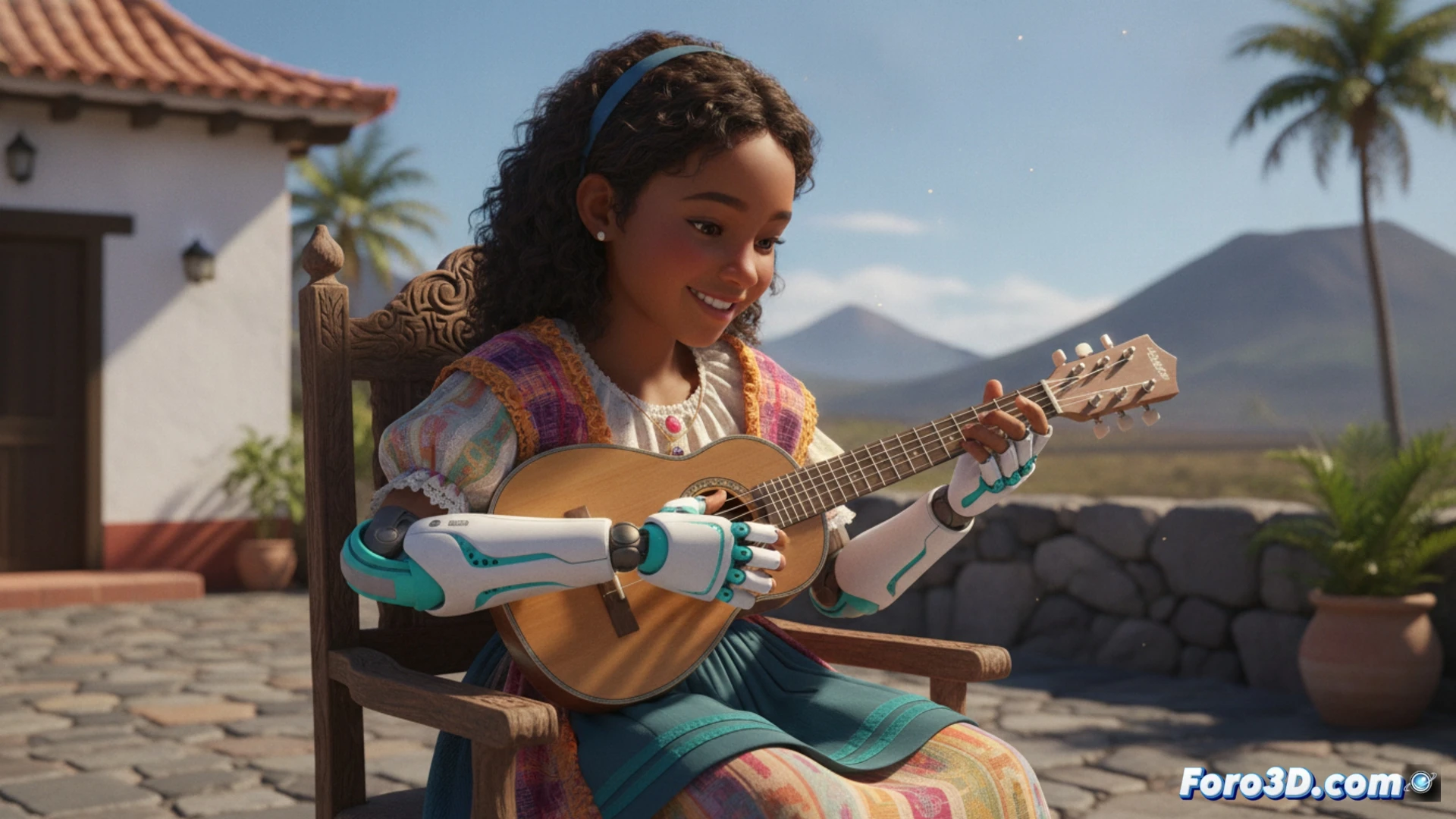
Parametric design and ergonomics applied to the timple 🎵
The development of the prosthesis involved a 3D scanning process of Paula's stump to adjust the socket. Using modeling software, a piece was designed that holds the pick and attaches to the forearm. Made from PLA filament, a lightweight and durable material, the prosthesis allows precise movements to strum the strings. The design was optimized after several tests, adjusting angles and support points to achieve the necessary fingering for the timple.
Now all that's left is for the timple to learn to play itself 🤖
Paula can already play, but the purists of Canarian folklore are already on alert: they fear the 3D prosthesis will unleash a revolution and that we will soon see robotic timple players at the romerías. The next step, they say, will be prostheses with wifi to sync chords with a mobile phone. For now, Paula just wants to play a folía. Technology, for once, is not here to complicate things, but to lend a hand. Literally.