Toyota has presented an engine that burns liquid hydrogen stored at 253 degrees below zero. The novelty is a superconductor inside the tank that allows capacity to increase from 220 to 300 liters and reduces fuel evaporation. The system eliminates CO2 emissions, but not NOx emissions, and its efficiency is lower than that of a conventional gasoline engine.
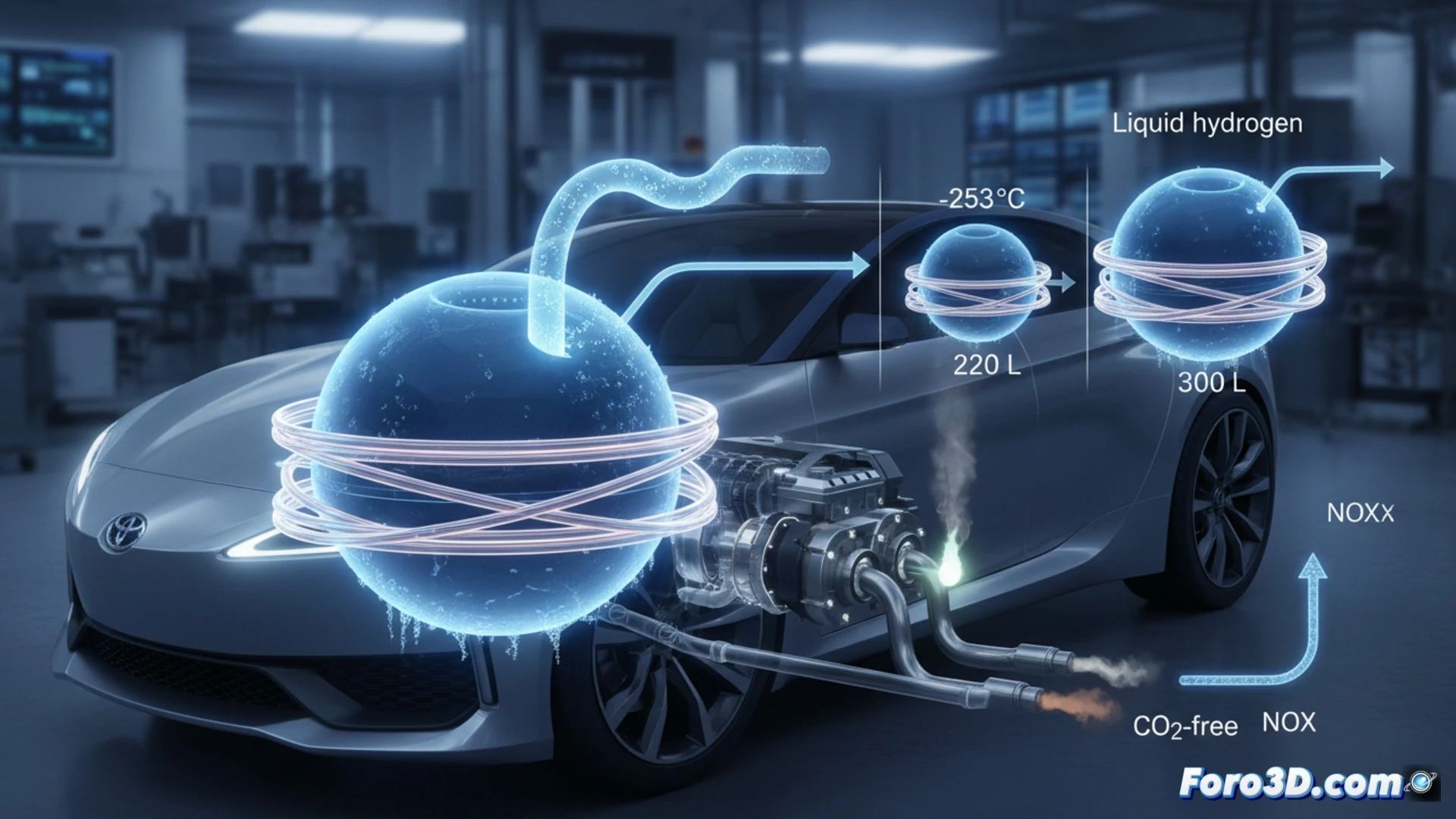
Cryogenic superconductor to contain liquid hydrogen 🧊
The tank uses a superconductor that keeps hydrogen at extreme temperatures without the need for constant active cooling systems. By increasing the density of the stored fuel, the vehicle's range increases without enlarging the tank. However, the engine still generates nitrogen oxides during combustion, and the thermal efficiency does not match that of gasoline. Toyota aims to reduce these emissions with after-treatment systems, although the technology is still in the experimental phase.
Zero CO2, but you breathe NOx and pay more for fewer kilometers 😅
Toyota has managed to keep hydrogen from escaping the tank, but has not yet succeeded in making the engine non-polluting or as efficient as a traditional four-cylinder. So you have a car that doesn't emit CO2, but fills your lungs with NOx and on top of that consumes more than a gasoline one. The good thing is that the tank looks like a laboratory refrigerator; the bad thing is that the rest of the car remains a thermal engine through and through.