Writer Teresa Vicente presented her work Dímelo Hilando in Alcázar, a book that recovers the stories and trades of rural women. Through its pages, traditional jobs and experiences that have been left out of official accounts are dusted off. For the public, this is an opportunity to value a female legacy that sustained entire communities, often from anonymity.
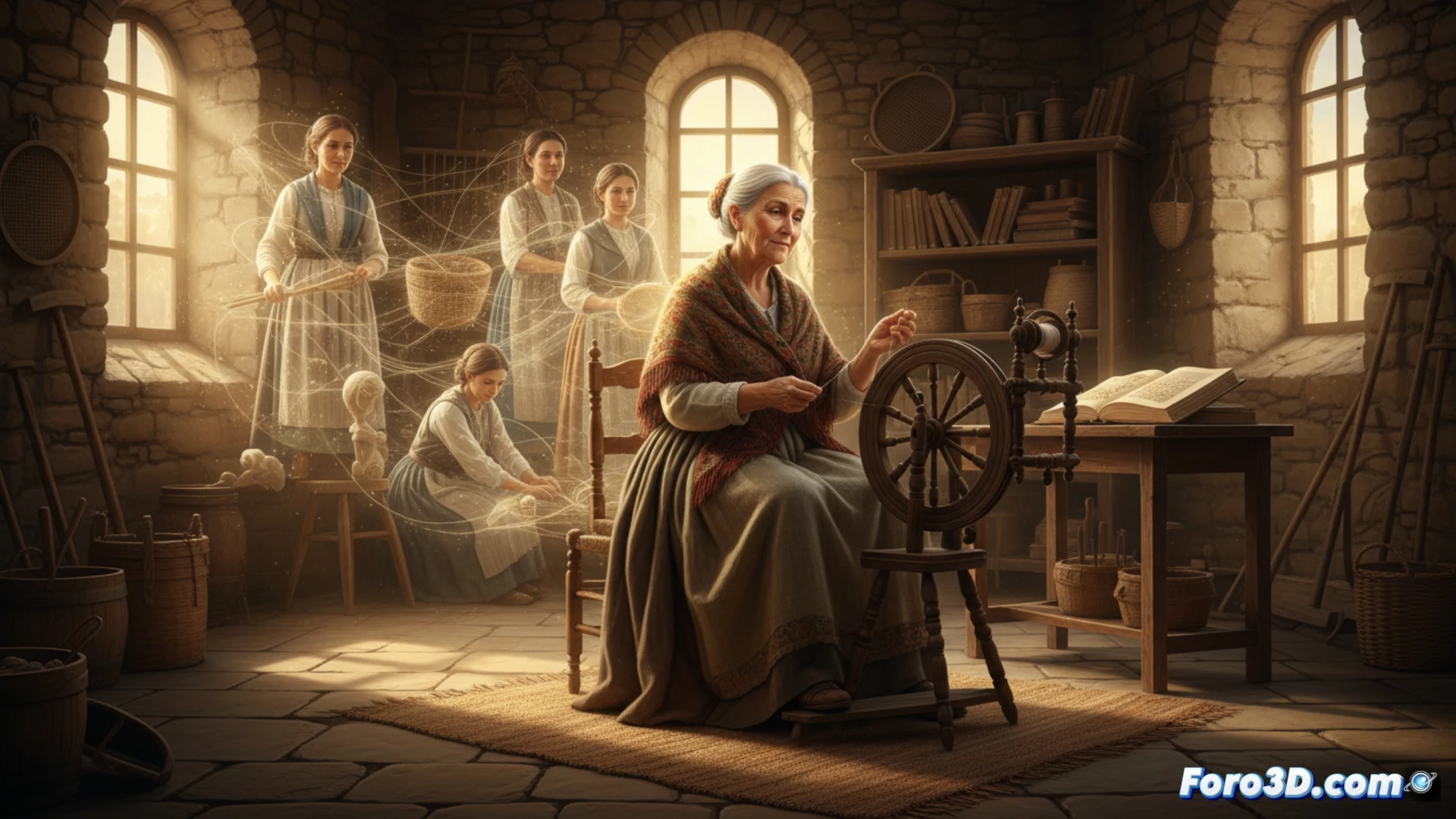
Technology as a tool to preserve the textile legacy 🧵
The digitization of archives and the use of web platforms today allow us to preserve and disseminate techniques such as spinning, embroidery, or lacemaking. Projects like Dímelo Hilando use digital repositories and interactive maps so that these skills are not lost. The development of augmented reality applications could even teach new generations the precise gestures of trades that, until recently, were only passed down from grandmother to granddaughter. Without this technical foundation, knowledge fades into oblivion.
The algorithm that couldn't spin fine 🤖
While Teresa Vicente collects real stories, social media is filled with macramé tutorials viewed by thousands. But watch out, artificial intelligence still can't tell a cross-stitch from a sailor's knot. For now, grandmothers can sleep easy: no bot is going to take their place as weavers. That said, if the algorithm learns to knit stockings, we might have to start charging them royalties.