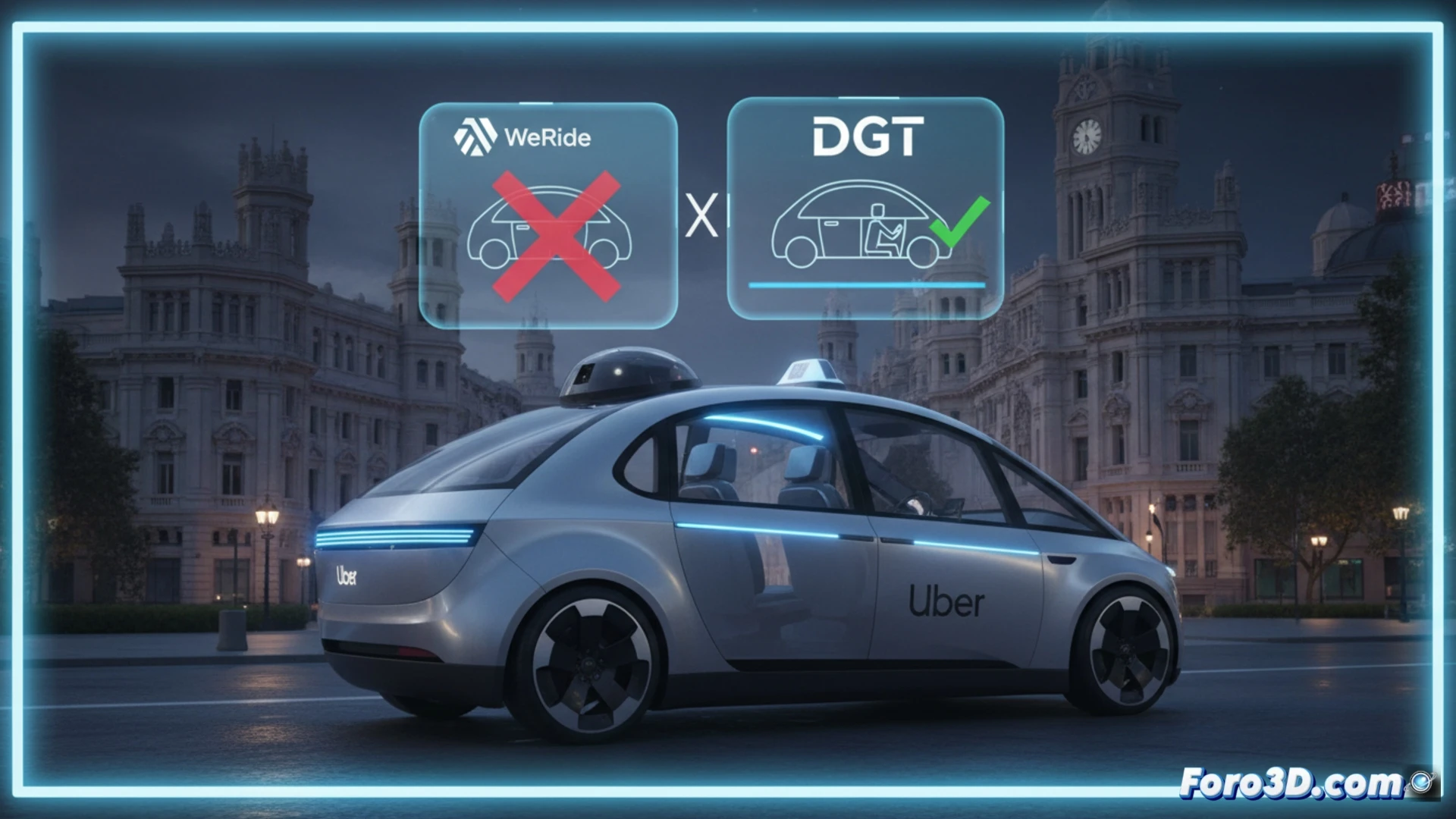
Uber has announced that its robotaxis will arrive in Madrid before the end of the year, in collaboration with WeRide and Avomo. However, the DGT has been clear: there is no authorization for driverless tests. Only controlled phases with safety operators on board are permitted, leaving the service in a regulatory limbo.
Technology colliding with bureaucracy 🚧
WeRide brings its autonomous driving platform, tested in controlled environments, and Avomo manages the fleet. But the DGT requires each vehicle to carry a human operator capable of intervening. This means that, technically, the car can drive itself, but the law requires someone to monitor. The Lidar system, cameras, and sensors are ready; the regulations, not so much.
Robotaxis with a driver: the irony of the future 😅
So Uber sells a driverless service, but the DGT requires someone to be at the wheel just in case. The result: a robotaxi with a person sitting there looking at their phone while the car parks itself. It's like buying a delivery drone and having to walk the package there yourself. The future has arrived, but with a mandatory safety passenger.