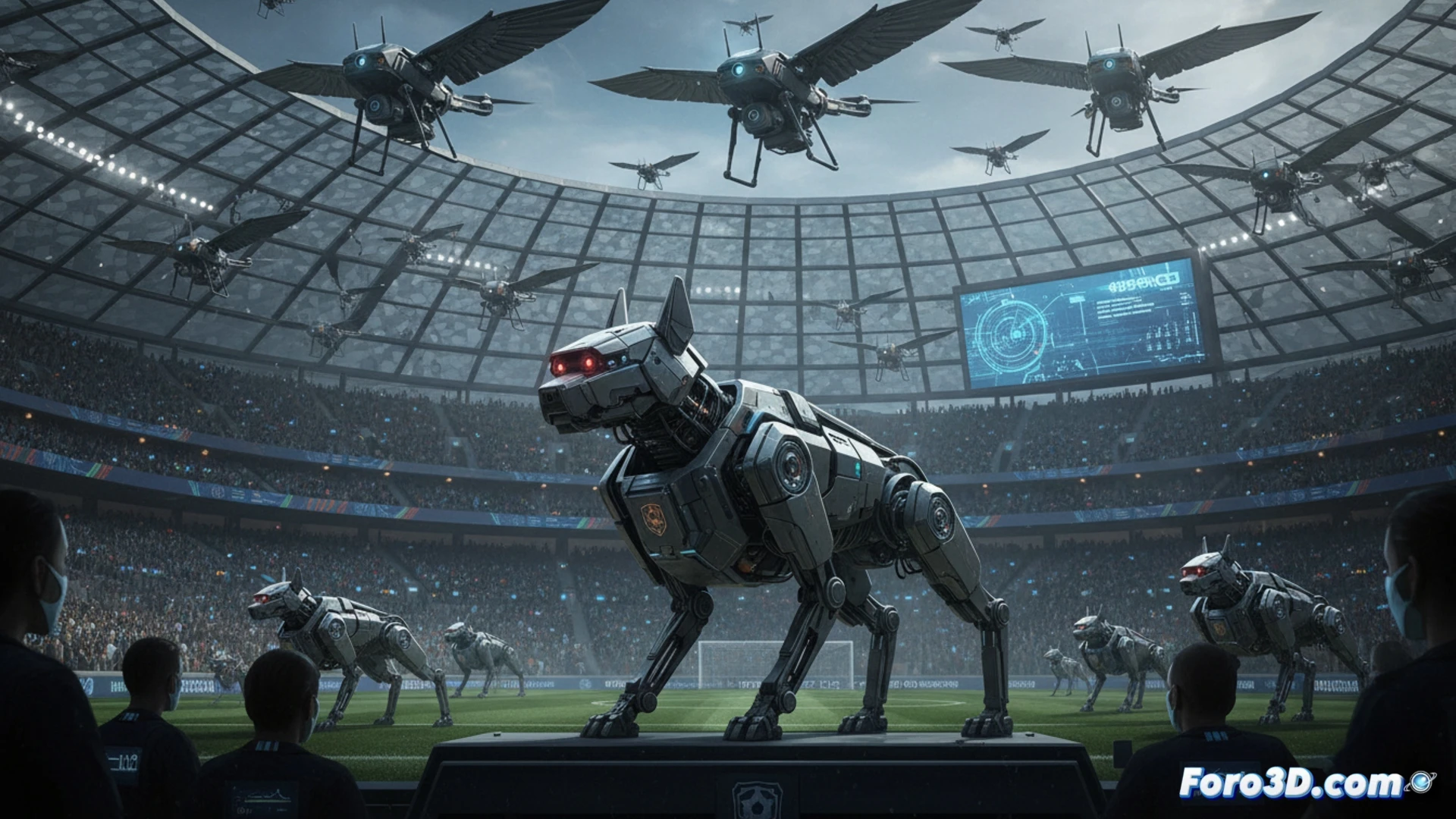
The 2026 World Cup promises an unprecedented security deployment: Boston Dynamics' robot dogs will inspect packages, anti-drone systems will cost 250 million, and the FBI will verify deepfakes. But beneath the discourse of sports innovation lies a lucrative gift to tech companies without public tender, while fan privacy takes a back seat.
Expensive technology and known failures 🤖
Robot dogs cost ten times more than a trained canine, but have already proven prone to falls and scaring children at previous events. The ban on facial recognition is a media concession, because anti-drone systems capture high-resolution images that violate privacy. The FBI will verify deepfakes, but does not clarify what it will do with real videos of violence captured by its own cameras.
250 million for a metal dog to fall on its ass 💸
Imagine arriving at the stadium, sweating and excited, and a robot dog trips over your shoelaces. For 250 million, you could have a new subway or real human security, but they prefer drones that spy on your selfie while pretending to protect you. In the end, the only thing that won't be a deepfake is the bill we all pay.