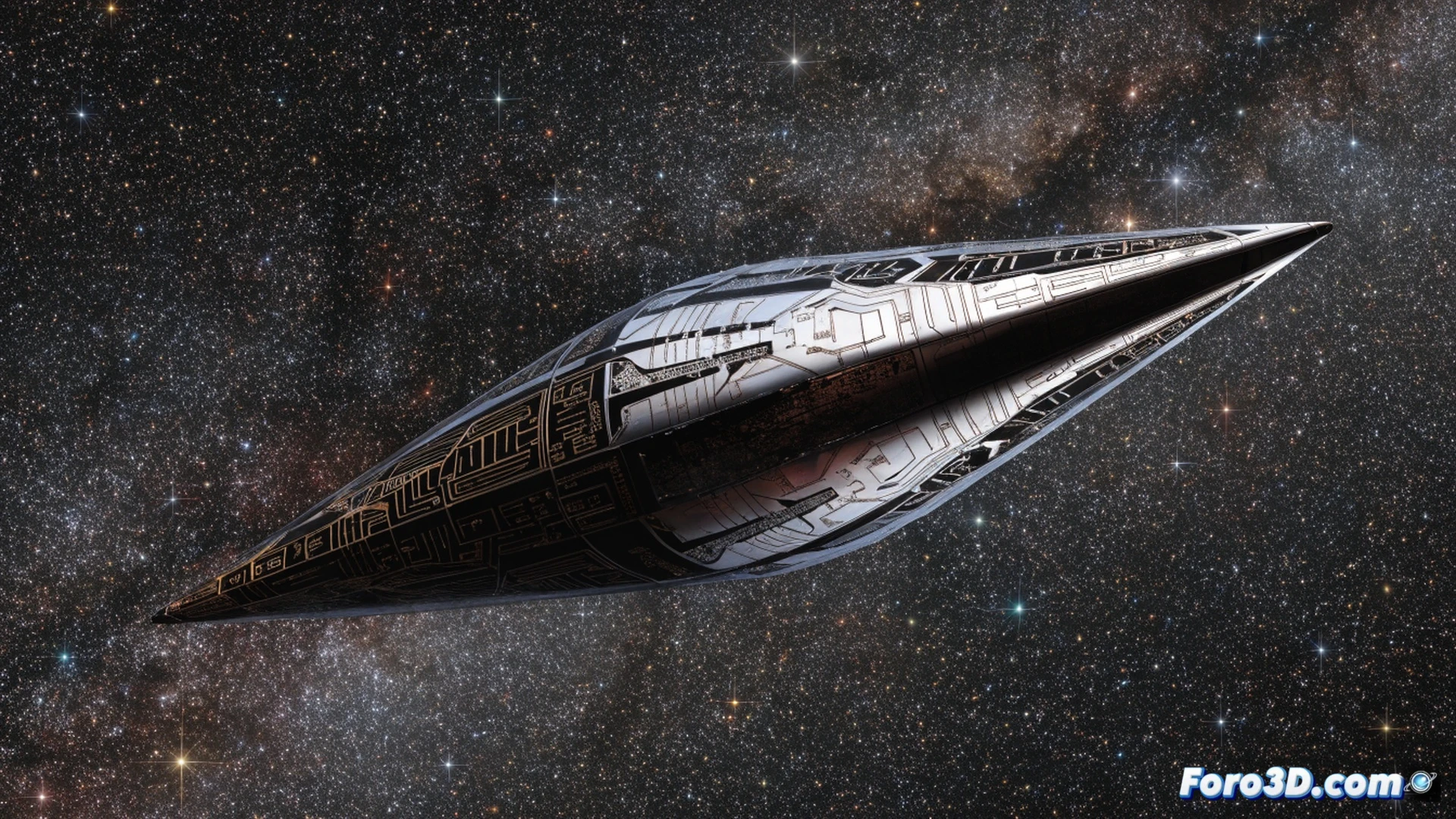
Avi Loeb, director of astronomy at Harvard, argues that Oumuamua, the interstellar object detected in 2017, was not an ordinary rock. According to his analysis, its elongated shape and anomalous acceleration without a visible tail indicate that it could be technology from a distant civilization. The scientific community is divided, but Loeb insists on searching for active signals.
Technical evidence of an interstellar artifact 🛸
Oumuamua exhibited a brightness variation ten times more intense than a typical asteroid, suggesting a flat or cylindrical shape. Additionally, its acceleration did not come from expelled gases, but from an unknown force. Loeb proposes that it could be a light solar sail, deployed by an intelligence to navigate between systems. Data from the Pan-STARRS observatory supports its hyperbolic trajectory.
Harvard and the rock that was not a rock 👽
Loeb has been saying for years that telescopes should look more at the sky, but many colleagues prefer to look for life by staring at their shoes. If Oumuamua was a ship, its design was so discreet that it passed for space debris. Perhaps the aliens also have a marketing department that failed to label the shipment: we received a mysterious object and called it an asteroid.