If you open the resource monitor and see several CPU cores idle while gaming, it's not an optimization failure. Most games rely on a main thread that handles physics and logic. When this thread becomes saturated, performance drops, even if other cores are available. When choosing a processor, per-core speed matters more than the total count.
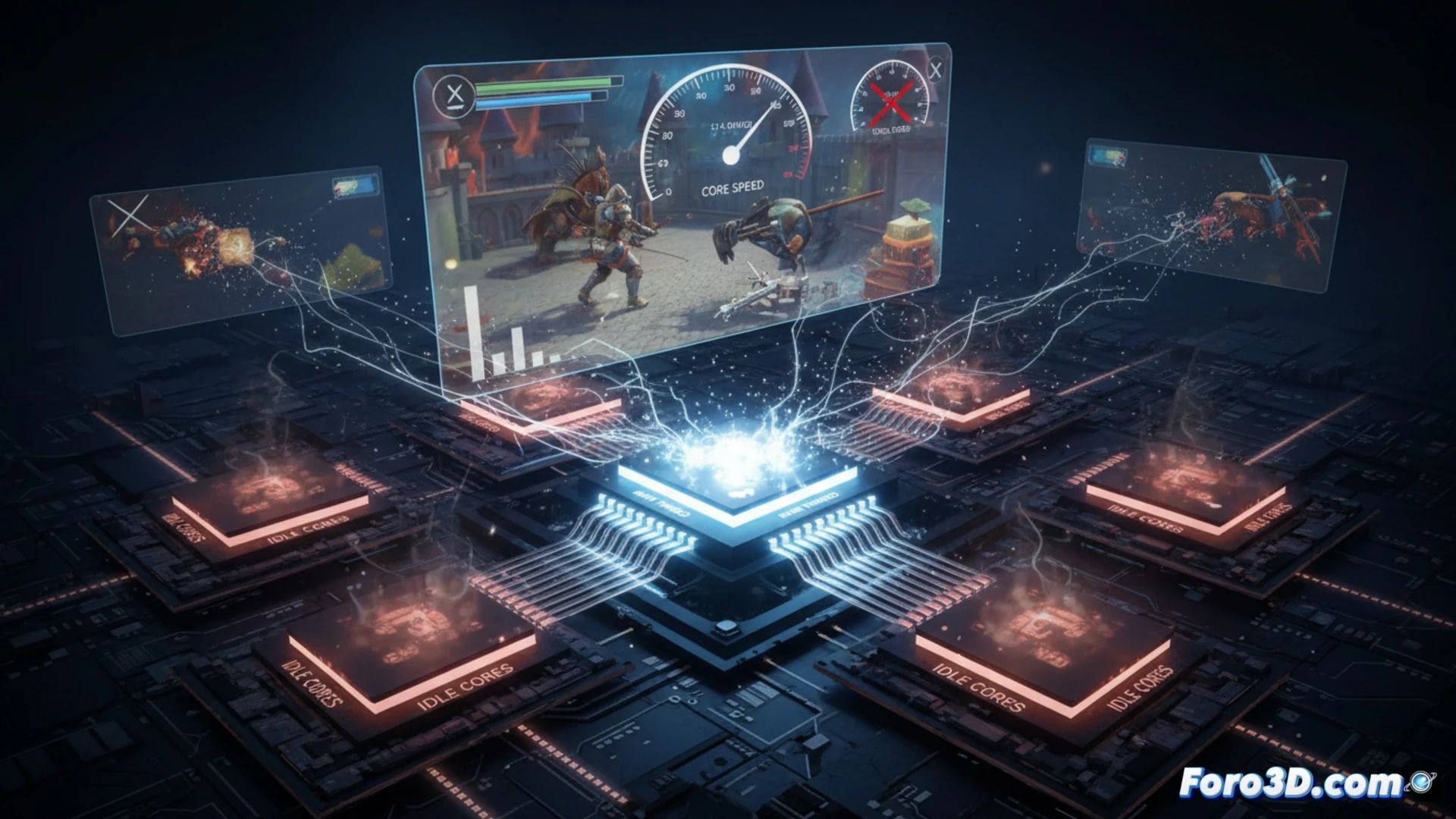
The main thread bottleneck in graphics engines 🎮
Engines like Unreal or Unity concentrate critical tasks on a director thread, limiting the use of the rest. While one core works at 100%, others wait for instructions. This explains why CPUs with fewer cores but higher frequency, like a high-speed i3, can perform better in games than a low-end Ryzen 7. Latency and IPC matter more than raw count.
Your 16-core CPU, the empty gym of video games 🚌
Having 16 cores in a current game is like buying a bus to go to work alone. The main thread is that driver who decides when to start, and the other passengers just watch. Developers try to distribute the load, but physics and AI remain solitary tasks. Meanwhile, your processor boasts muscle in the box, but in the game, it only uses one arm.