Canonical has released a new version of Mir, version 2-27, those libraries that bring graphical interfaces to life on Linux. This update focuses on improving Wayland support, allowing programs to choose between server-side or client-side decorations. It also brings changes to the Rust code for handling events and errors, along with various fixes and a revamped logging system. For the everyday user, this translates to more stable desktops with extra customization options.
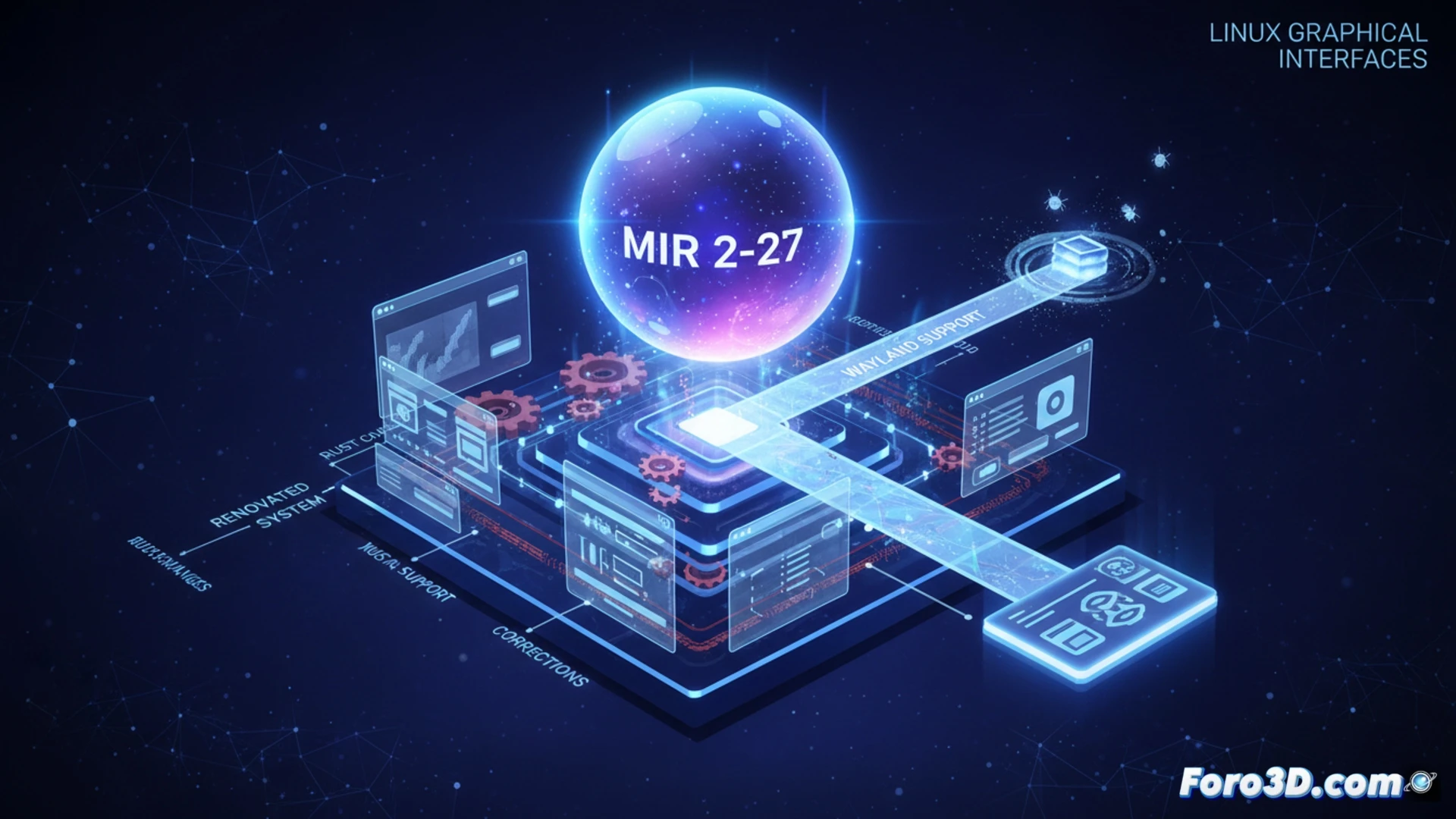
Expanded Wayland support and optimized Rust code 🖥️
The main novelty of Mir 2-27 is the flexibility in window decorations. Applications can now decide whether to use those offered by the Wayland server or their own, a technical detail that avoids visual conflicts. On the Rust front, event and error handlers have been adjusted, making the code cleaner and more predictable. Additionally, the new logging system promises to facilitate debugging, while bug fixes aim for greater overall stability in Linux environments.
Canonical polishes Mir: now with fewer bugs and more order 🛠️
Canonical is back at it with Mir, that library that promised to be the center of the graphical universe and, after years of ups and downs, is still going strong. Version 2-27 arrives with fixes and a logging system that, hopefully, will help developers avoid guessing why their desktop crashes. And the option to choose between server-side or client-side decorations sounds great, until you realize that, in the end, you always end up with the default theme because configuring is for the brave.