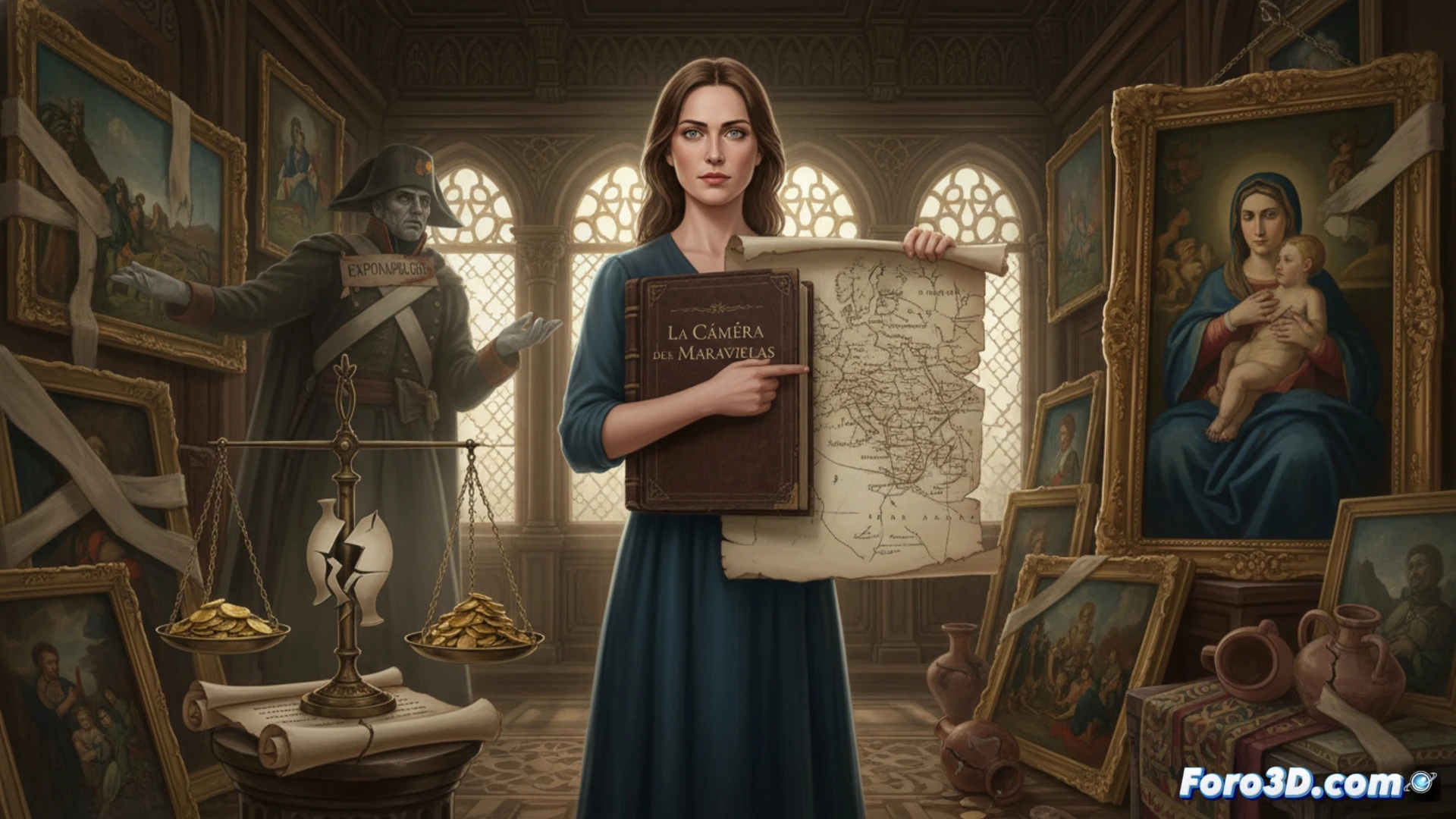
Writer María Oruña publishes The Cabinet of Wonders, a thriller set in the black market of art. In parallel, she denounces the new French law that allows the return of confiscated works but excludes the Napoleonic period. According to Oruña, this omission is a trap that leaves out paintings by artists such as Murillo, considered Spanish heritage.
Blockchain and digital registry to track looted art 🔗
Blockchain technology allows creating an immutable provenance record for artworks. Each transaction and change of ownership is sealed in a chain of blocks, making it difficult to falsify historical documents. Experts propose that Spain digitize its archives of Napoleonic lootings and link them to international databases. Thus, any Murillo painting in a French museum could be identified and claimed with verifiable digital evidence.
The French law: we return, but not so much 🎭
France says it wants to return looted works, but excludes the most profitable looting in its history. It's as if a thief returned the wallet but kept the watch because the watch is from an era before the invention of the wallet. Oruña calls it a trap; we call it cynicism with class. That said, if we use blockchain, at least we'll know where the watch is.