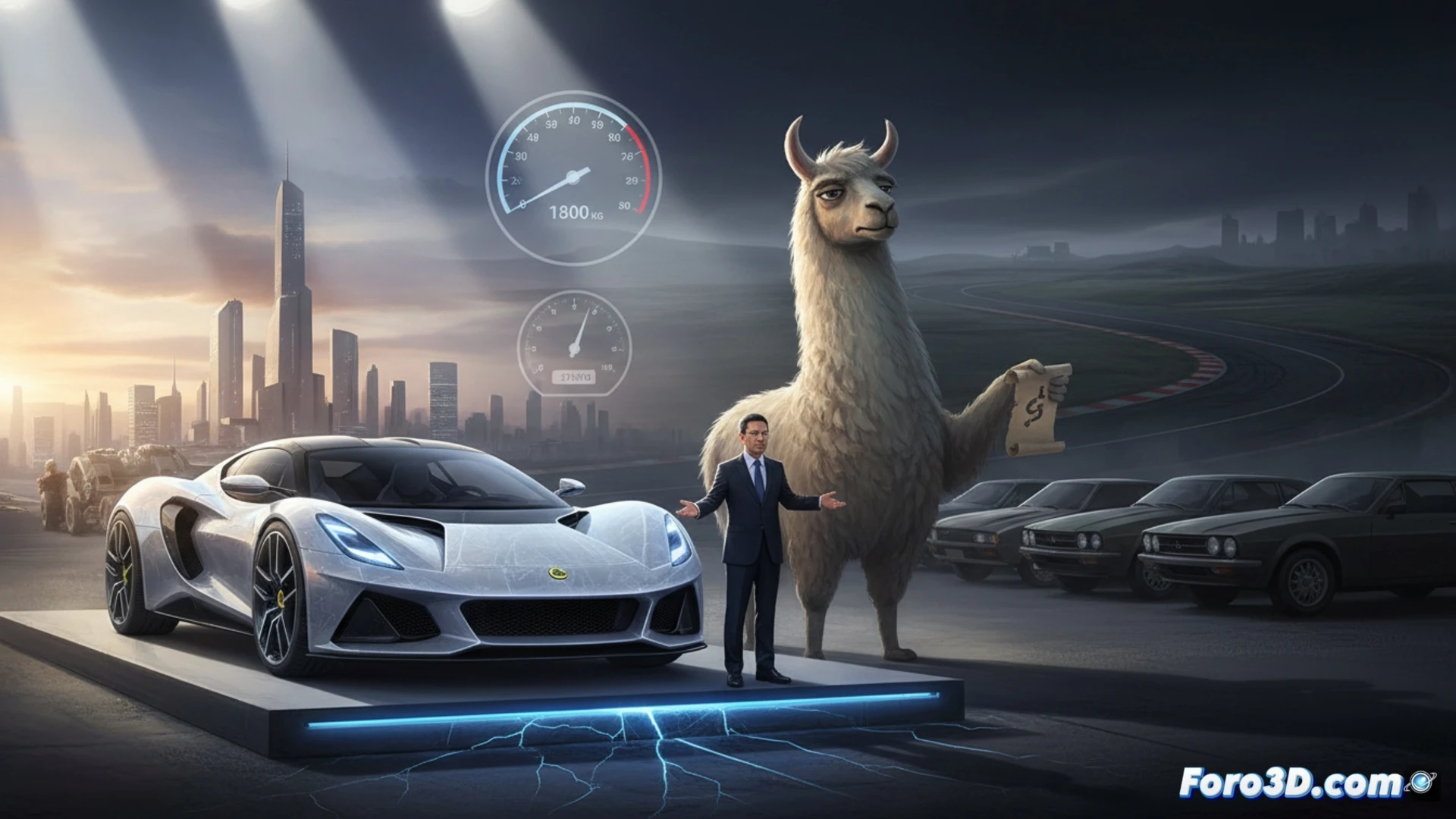
Lotus CEO Feng Qingfeng has described almost all of the brand's models as mediocre due to their excessive weight, exceeding 1,800 kg. In an unusual act of self-criticism, he states that the company has compensated for the lack of agility with brute power, instead of improving the chassis. The statement aims to create anticipation for a future lightweight Lotus, even though current owners have already paid high prices for these now-called mediocre cars.
Geely and the roadmap for the ultralight Lotus 🚗
The CEO's criticism is no coincidence: Lotus belongs to the Geely group, a Chinese conglomerate seeking to reposition the brand as a benchmark for electric lightness. The promised new model, a battery-powered sports car with reduced weight, would use technology developed by another firm within the holding, likely from the SEA platform. This strategy allows justifying a higher price without needing to demonstrate results, while current cars, heavy and high-performance, remain as transitional products that have already generated revenue.
The art of selling cars by calling them fat ⚖️
The move is textbook: if you say your car is bad, you seem honest. But watch out, you've already sold thousands of units of those bad cars at premium prices. Now it's time to announce the new lightweight model that will surely cost twice as much and weigh less... in the buyer's wallet. Meanwhile, current owners proudly drive their mediocre 2-ton Lotus, wondering if their car is a gym or a vehicle.