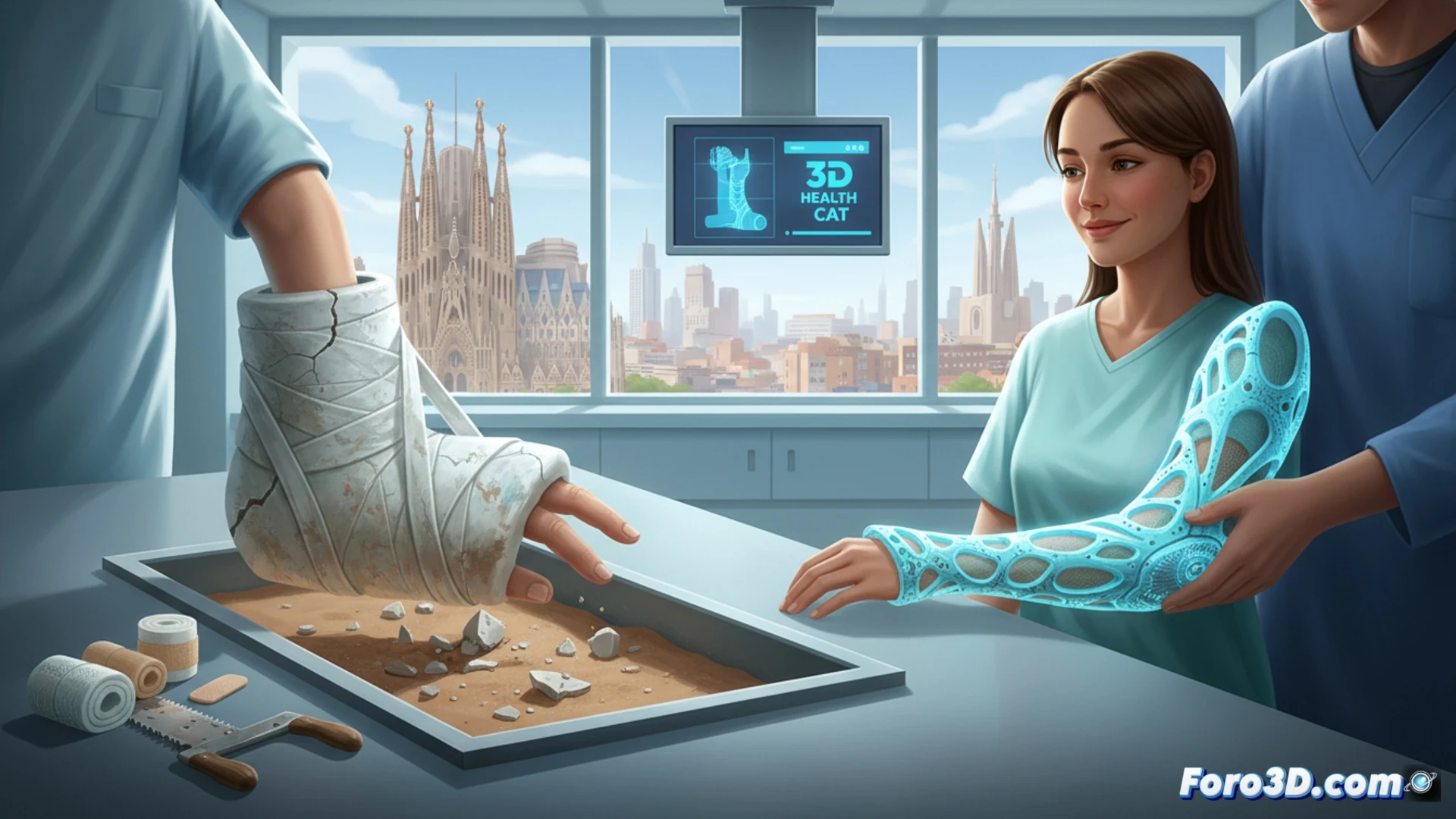
Catalan healthcare takes a step forward by replacing traditional plaster casts with 3D-printed splints. This new method creates customized immobilizers that are lighter and more breathable, promising to eliminate classic discomforts. For patients, this means less weight, zero itching, and a less tedious recovery, reducing follow-up visits and associated treatment costs.
Digital scanning and custom design for every fracture 🖨️
The process begins with a 3D scan of the affected limb, eliminating plaster molds. Software translates that data into a splint design with a honeycomb structure, providing rigidity without weighing it down. The printer uses filaments such as PLA or nylon, biocompatible and recyclable materials. The result is a ventilated, hypoallergenic piece that can be fitted in minutes. Additionally, being removable for hygiene, it facilitates medical follow-up without needing to cut or redo the bandage.
Plaster casts retire (and the leg bone won't miss them) 😂
Goodbye to that cement cylinder that weighed like a ton and smelled like a damp basement. With the 3D splint, patients will be able to scratch their leg without resorting to a bent coat hanger. Of course, the new invention has a danger: if before you boasted of an autograph signature on the plaster, now you'll have to ask the doctor to scan a doodle for you. Modernity has its prices.