An international team of scientists has succeeded in reading a Herculaneum papyrus carbonized by the eruption of Mount Vesuvius in 79 AD using artificial intelligence and high-resolution scanners. The text, which remained illegible for nearly two millennia, contains reflections on ethics and human behavior. This breakthrough demonstrates that non-invasive technologies can recover ancient documents without damaging them.
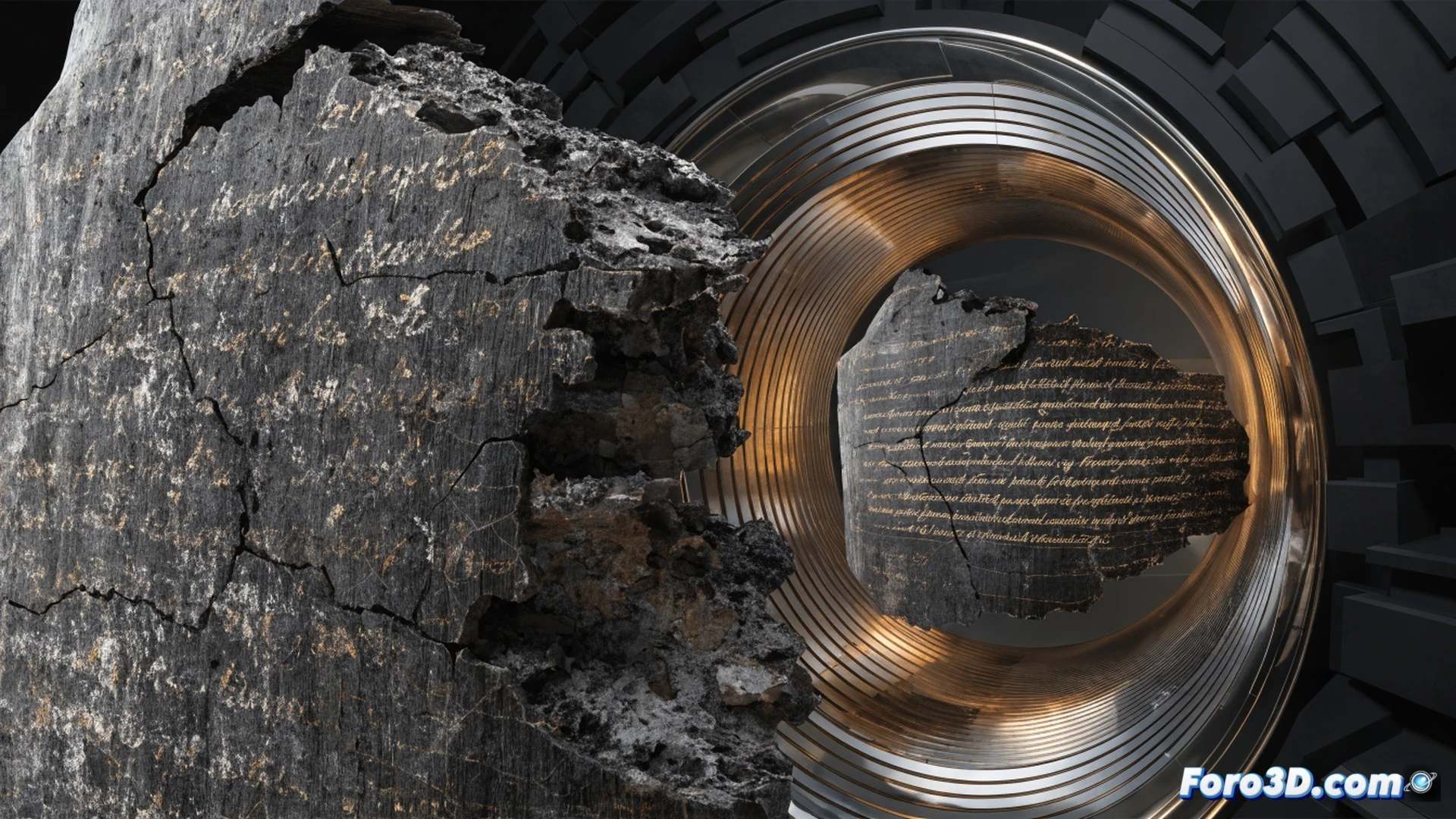
3D scanners and algorithms reveal hidden texts 🏛️
The process combined synchrotron X-ray tomography with AI models trained to detect ink traces on carbonized surfaces. The scrolls, too fragile to unroll, were scanned in submillimeter layers. The algorithms identified Greek writing patterns in the 3D images, reconstructing complete sentences. The method opens the door to reading hundreds of similar papyri without physical manipulation, a radical shift from previous techniques that destroyed the documents.
Ancient philosophers, now posthumous influencers 😅
While scientists celebrate, Greek philosophers must be turning in their urns: after 2,000 years of silence, their reflections on laziness or human ambition appear on social media as memes. The most ironic part is that we use artificial intelligence to read guys who debated whether technology corrupted the soul. At least now we know they were already complaining about young people back then.