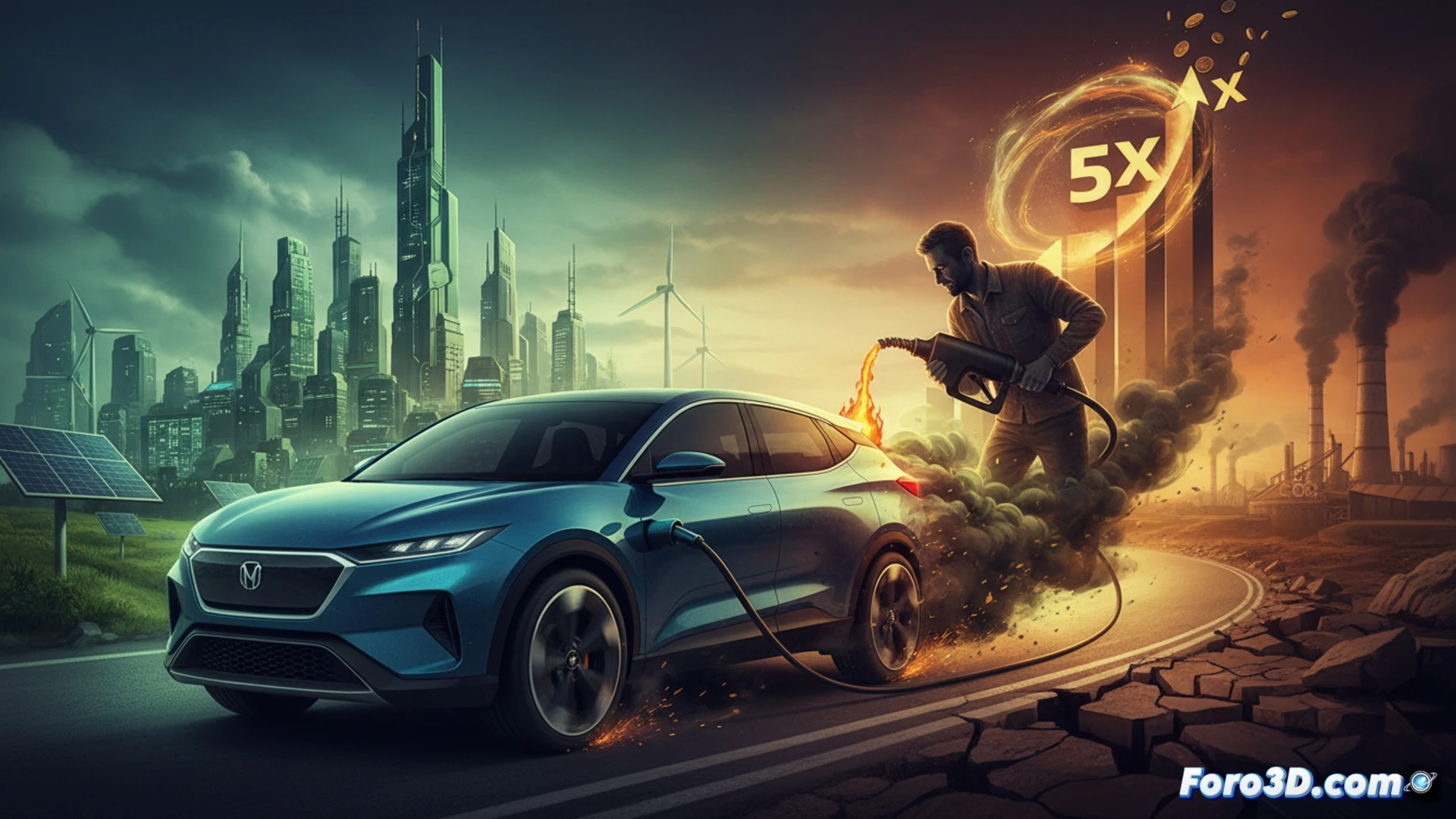
An ICCT analysis using data from eight million vehicles debunks the green promise of plug-in hybrids. The reality is that they emit up to five times more CO2 than their technical specifications indicate. The reason is simple: drivers do not plug them in as often as expected, which increases gasoline consumption and, consequently, the cost per refueling.
The gap between the homologation cycle and real-world use 🔍
The study reveals that real CO2 emissions are, on average, 350% higher than those declared in the WLTP homologation cycles. The discrepancy is due to these cars being tested with a full battery and under optimal conditions, but in daily use, users travel long distances without recharging. The combustion engine then works more hours, nullifying the advantage of the electric system and increasing fuel consumption.
The miracle of the car that charges itself... or not ⚡
It seems many drivers have confused the plug-in hybrid with a combustion car with superpowers. In theory, you plug it in at home and save money; in practice, you use it like a regular diesel, but paying more for the ECO label. In the end, the only miracle is how money disappears from your pocket every time you stop at the gas station, without the car having been recharged even once.