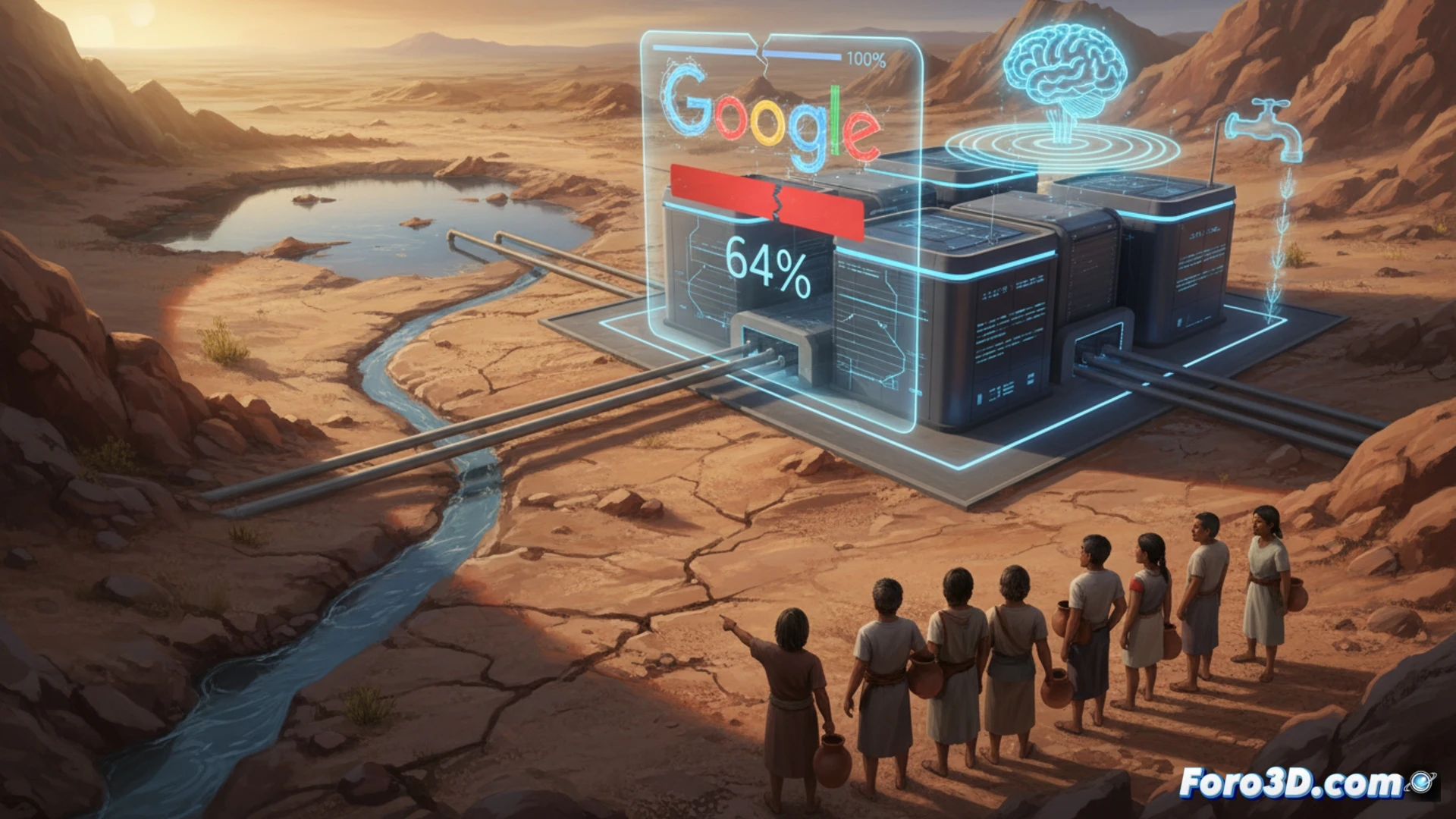
Google committed to replenishing more water than its data centers consume by 2030. However, in 2024 it barely reached 64% replenishment. Artificial intelligence is driving up water demand in regions with scarcity, generating distrust among communities that see how technological progress is drinking up their resources.
The hidden cost of training an AI 💧
Each query to a language model like GPT consumes about 10 milliliters of water to cool the servers. A massive training process can require millions of liters. Google uses evaporative cooling systems and internal recycling, but the increase in workload due to AI doubles consumption year after year. Technology advances, but water cannot keep up.
The miracle of water multiplication 🌊
Google says that by 2030 it will be like Moses parting the sea, but giving back the water. For now, the remaining 36% has been drunk by AI, which must be very thirsty for data. Meanwhile, residents of dry areas look at their taps and think: if only the cloud would let a little real rain fall.