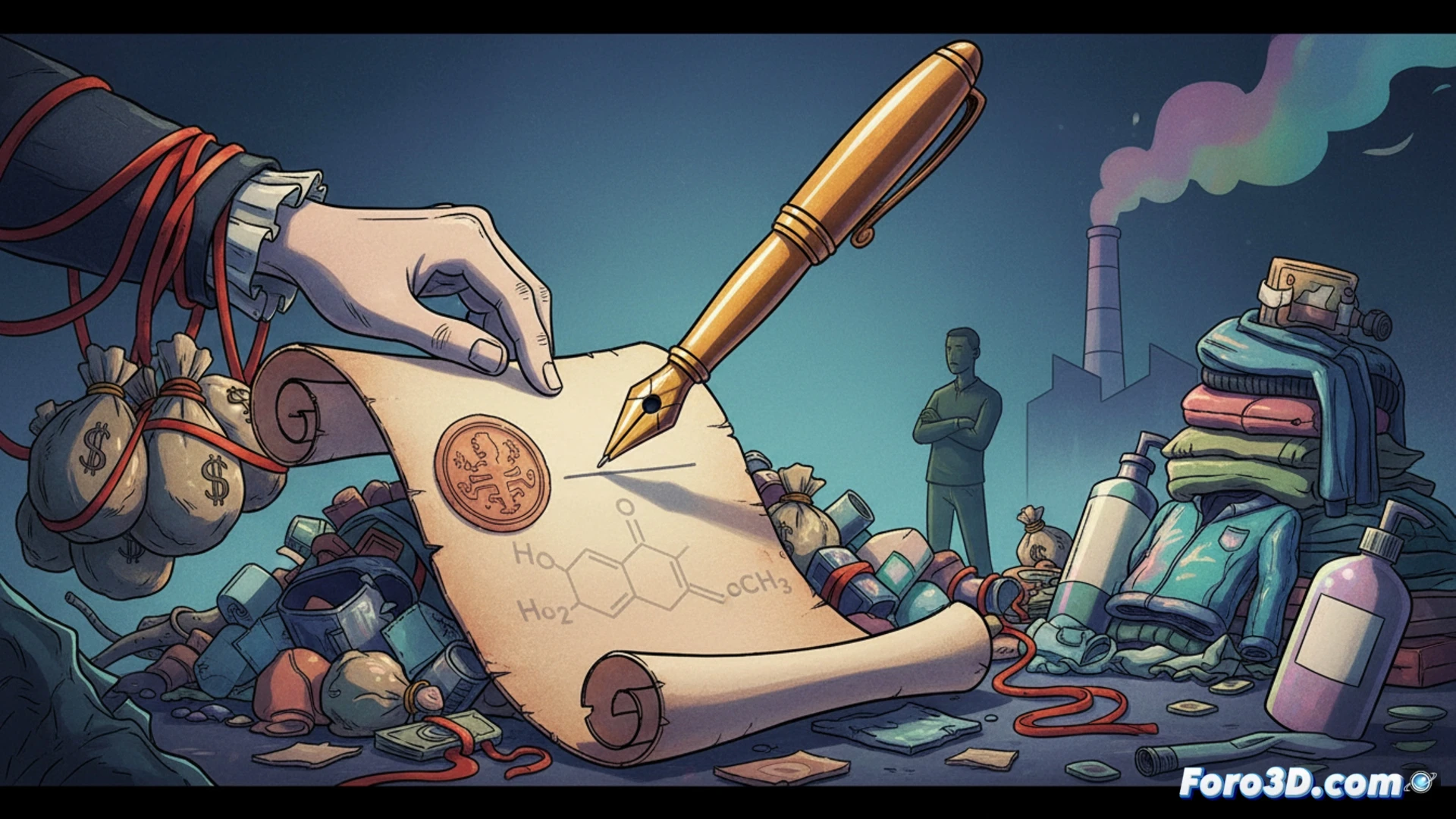
France passed a law to ban PFAS, the forever chemicals found in cosmetics and clothing, but six months later the regulation is not being enforced. The antitrust authority lacks resources for mass inspections, leaving manufacturers without effective oversight. The problem persists.
Detection technology clashes with lack of resources 🧪
PFAS require equipment such as mass spectrometers for detection in fabrics and creams, an expensive and slow process. Without a systematic inspection plan, companies can continue using these compounds without fear of fines. The law advances on paper, but the technical logistics to enforce it have not been implemented. The cosmetics and textile industry, with global supply chains, further complicates tracking.
The anti-PFAS law: more eternal than the chemicals it bans ⏳
PFAS last for centuries in the environment, but the French law is breaking records: it has been unenforced for six months. It seems the forever chemicals have found an unexpected ally in bureaucracy. Meanwhile, manufacturers must be celebrating: no inspections, no fines, just a regulation that, like PFAS, does not disappear but also does not act.