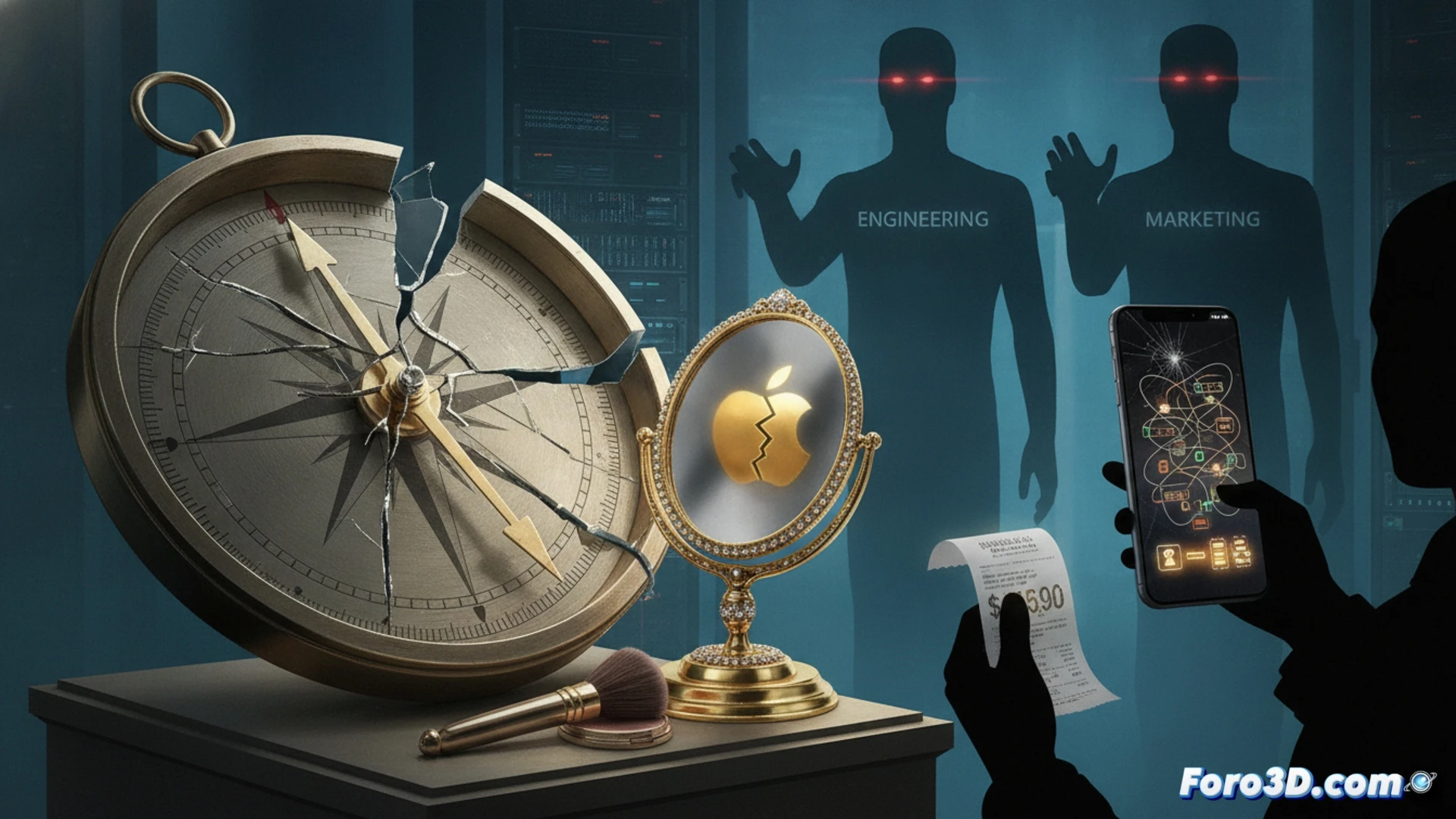
Design has gone from being a strategic tool that could steer a company, as Apple demonstrated, to a mere consultative and decorative department. Organizations treat it as production, not decision-making, relegating it to making pretty products while engineering and marketing decide based on costs and deadlines. The citizen pays for good external design but suffers from bad internal design: fixed batteries, confusing menus, and planned obsolescence.
The luxury trap: design as a coat of paint on a rotten structure 🎨
While Apple maintains its model because its business depends on the perception of quality, most companies have reduced design to a subordinate makeup department. Designers accepted this role because they prefer to work for luxury brands rather than for social needs. The result is products with attractive packaging but deep flaws: interfaces that confuse users, soldered components that prevent repairs, and short life cycles. Technology advances, but the actual user experience worsens because key decisions are made in cost silos.
Luxury designers: the social revolution is sold for an expensive handbag 💼
It turns out that design as a tool for social transformation died when creatives decided it was cooler to design a thousand-euro handbag than a chair for a public hospital. Now they complain that companies treat them as makeup artists, but they themselves accepted the role when they preferred to design the logo for a delivery app rather than redesign a traffic light. Ironies of life: they wanted to change the world, but the world asked them to make the menu more intuitive for ordering hamburgers.