Extreme heat demands breathable garments, and Voronoi geometry has become the favorite technical solution for designing aerated meshes in 3D textiles. This tutorial explains how to create a parametric ventilation pattern in Blender, apply it to a base tank top, and simulate its flexible behavior. The goal is to achieve a lightweight, breathable garment suitable for additive manufacturing, ideal for all audiences looking to combat high temperatures without sacrificing style.
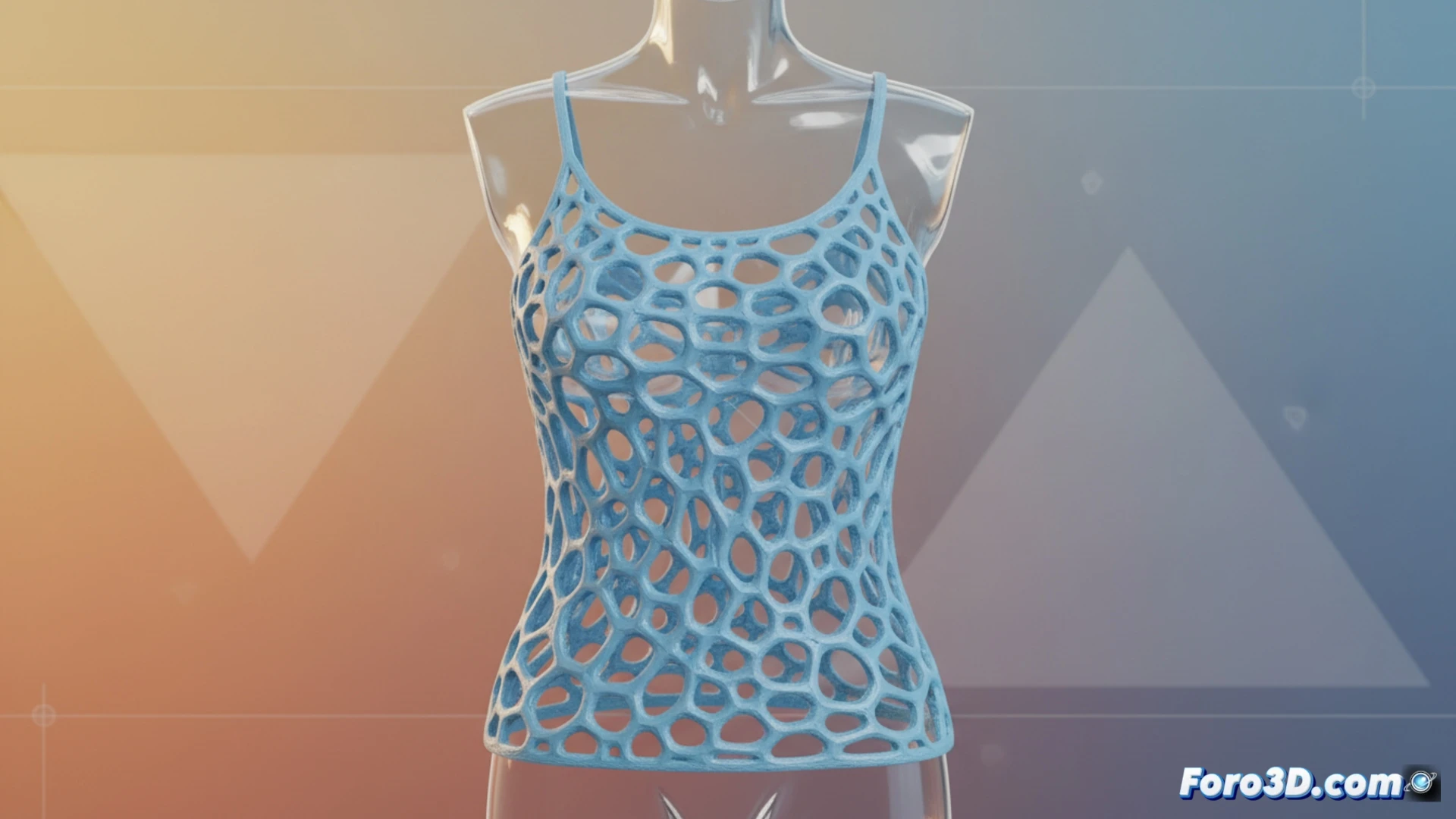
Parametric modeling of the Voronoi mesh in Blender 🌬️
Start by creating a base surface with the tank top silhouette. Activate the Extra Objects add-on and generate a 2D Voronoi mesh using the Distribute Points on Faces node and the Geometry Nodes modifier. Configure the density parameters so that the irregular polygons leave open spaces covering 40% to 60% of the total area. Apply the Solidify modifier with a thickness of 0.8 mm to simulate the stiffness of the flexible textile material. To optimize ventilation, use the Voronoi Texture node in Distance to Edge mode and adjust the scale between 0.5 and 1.5 to control the pore size. Finally, use the Subdivision Surface modifier with level 2 to smooth the edges without losing the open structure.
Keys to ventilation and material flexibility 🧵
Voronoi geometry works best when the pores are distributed in high-sweat areas, such as the armpits and back. For fabric simulation, use the Cloth physics engine with a weight of 0.1 kg and structural stiffness at 20%, allowing the mesh to stretch without breaking. Export the pattern in OBJ or STL format with a resolution of 0.2 mm for 3D printing in flexible TPU filament. A critical tip: add a solid border of 5 mm on the garment edges to prevent the mesh from tearing during use. This parametric design not only improves breathability but also reduces the total weight of the tank top by up to 30% compared to conventional fabrics.
As a 3D fashion textile designer, how do you optimize the density and thickness of the Voronoi mesh in a summer tank top to ensure maximum breathability without compromising structural integrity and tear resistance during active use?
(PS: Designing fashion in 3D has the advantage that you never have to sew a button.)