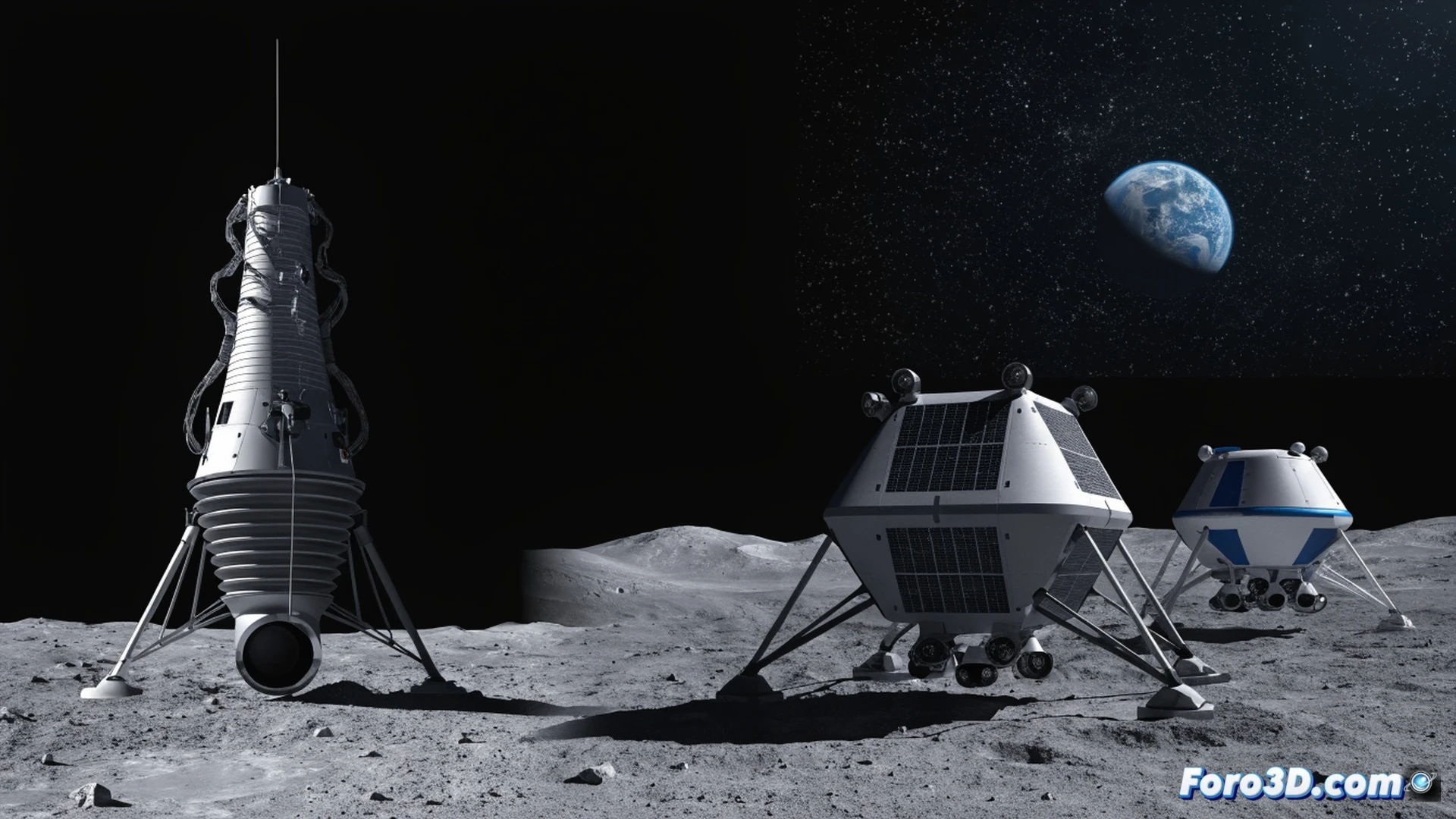
A recent Chinese study has criticized NASA for planning a lunar lander with a single engine, calling it an unnecessary risk. However, the analysis misses a key detail: NASA has already discarded that design. In the Artemis missions, the Orion spacecraft will dock in lunar orbit with landers from SpaceX or Blue Origin, vehicles that feature multiple engines for greater redundancy and safety.
Artemis and the Redundancy of Multiple Engines 🚀
NASA's current plan for Artemis III and IV uses SpaceX's Starship or Blue Origin's Blue Moon as landers. Both are designed with multiple engines: Starship has six Raptors in its descent stage, while Blue Moon employs several BE-7 engines. This eliminates the risk of a single point of failure. The Chinese criticism is based on a preliminary concept from years ago, not on the final approved design. The safety of the lunar landing is not compromised by this technical confusion.
China Criticizes a Lunar Ghost 🌕
It is curious that a Chinese study is so concerned about a lander that NASA is not even going to use. It is like criticizing the engine of a car that was never built. Meanwhile, engineers at SpaceX and Blue Origin are already testing their engines in Texas and Alabama. Perhaps the next study should review the current specifications before alarming the public. The only surprise here is that the error was not detected before publishing the report.