A knitted vest with PCM fibers promises to passively regulate body temperature. Its secret: a phase-change material that solidifies upon reaching 25°C, absorbing heat from the body. When no longer needed, simply placing it in the shade allows the material to regenerate and be ready again. A garment that aims to be practical, not magical.
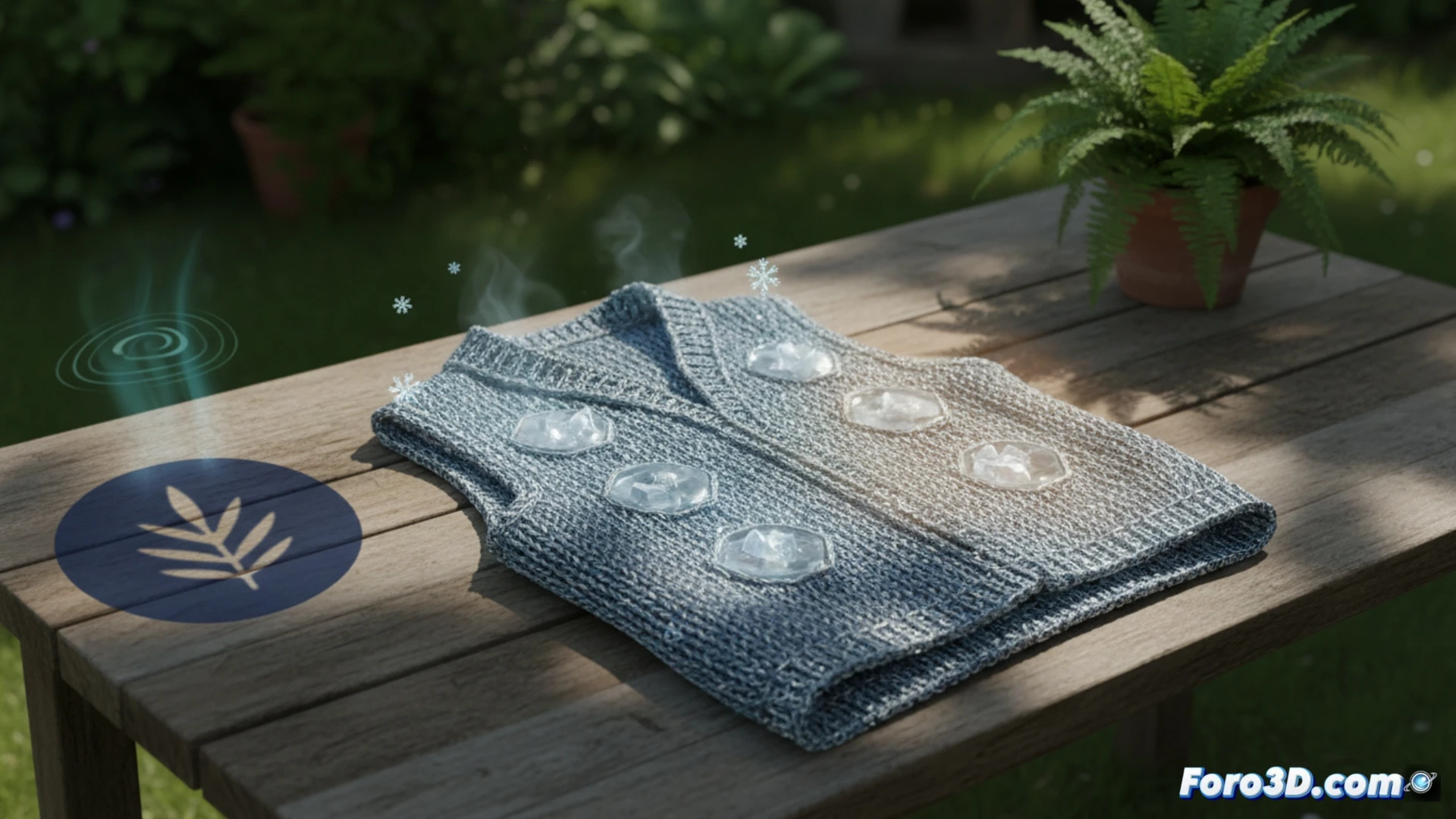
How the thermoregulating fiber works 🧊
PCM, or phase-change material, is encapsulated in microcapsules integrated into the fabric fibers. Upon reaching 25°C, the solid material absorbs heat and liquefies, cooling the surface. When the ambient temperature drops or the garment is placed in the shade, the process reverses: the material releases the stored heat and returns to its solid state. It requires no batteries or plugs, only suitable environmental conditions. Its effectiveness depends on the thermal gradient and the number of microcapsules per square meter.
The vest that takes a break in the shade 😅
So, the vest works like an office employee: it works while it's hot, but as soon as you put it in the shade, it takes a pause to regenerate. It doesn't ask for coffee or check its phone, just a spot without direct sunlight. If the summer is extreme, you might need two units: one on and one recharging. At least you don't have to change its clothes or feed it.