The CERN team has succeeded in measuring the hyperfine splitting of antihydrogen with a precision a hundred times greater than before. This data, which describes how the spins of antimatter particles behave, serves as a litmus test for the Standard Model and for understanding why the universe is made of matter and not its opposite.
The technical leap behind the measurement 🔬
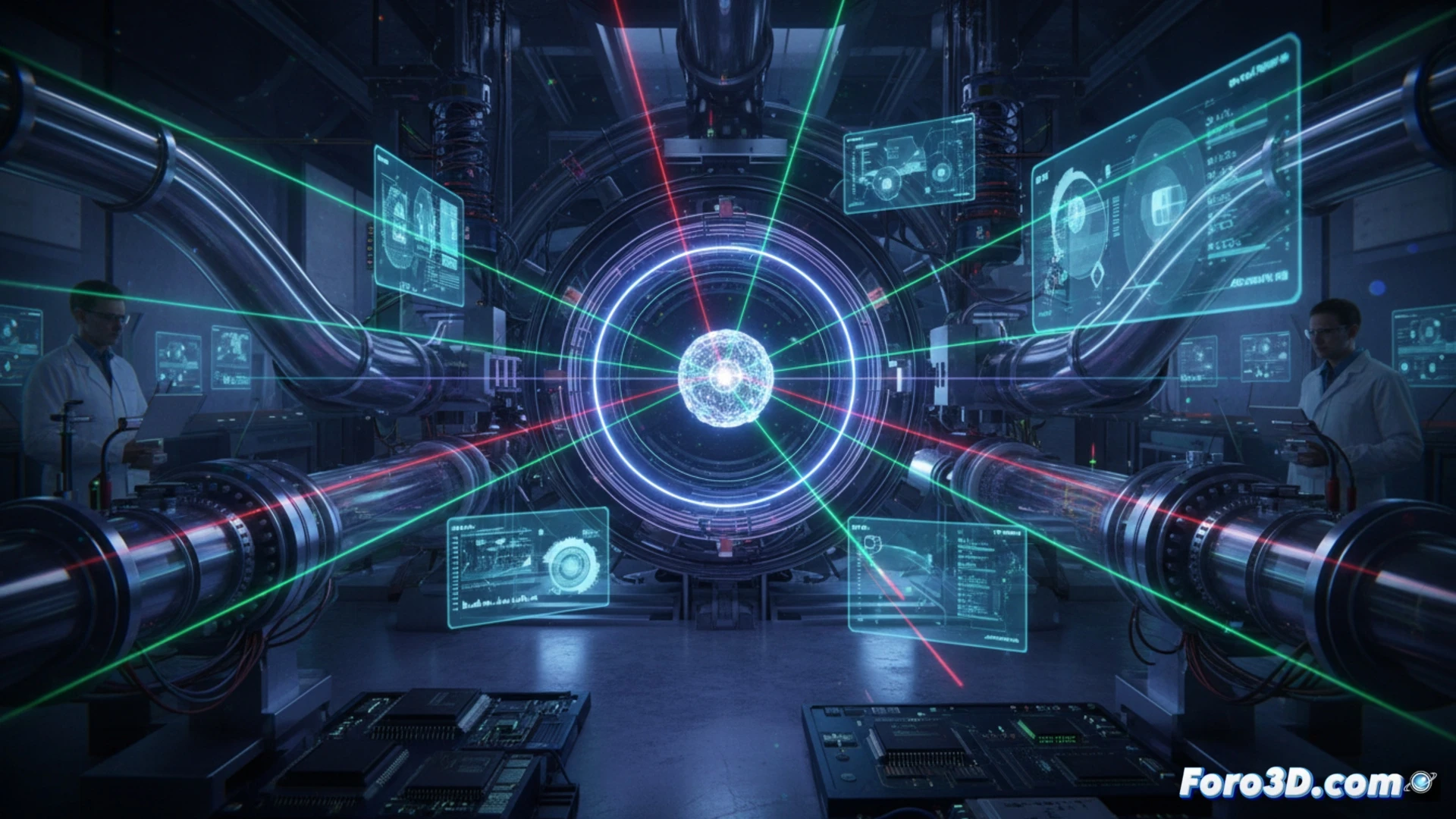
To achieve this feat, scientists trapped antihydrogen atoms in a magnetic field inside the ALPHA-2 experiment. They then bombarded the sample with microwaves of controlled frequency, detecting when the antispins changed state. The key was increasing the confinement time of the anti-atoms, from seconds to several minutes, which allowed enough statistics to be accumulated to reduce the margin of error.
Antimatter: so expensive it hurts the wallet 💸
Producing a single antihydrogen atom costs more than a business-class trip to the Moon. Luckily, CERN scientists are patient and don't have to pay the lab's electricity bill. If antimatter were used for mobile phone batteries, charging the phone would cost as much as buying a small country. Good thing they only use it to confirm that the laws of physics haven't gone crazy.