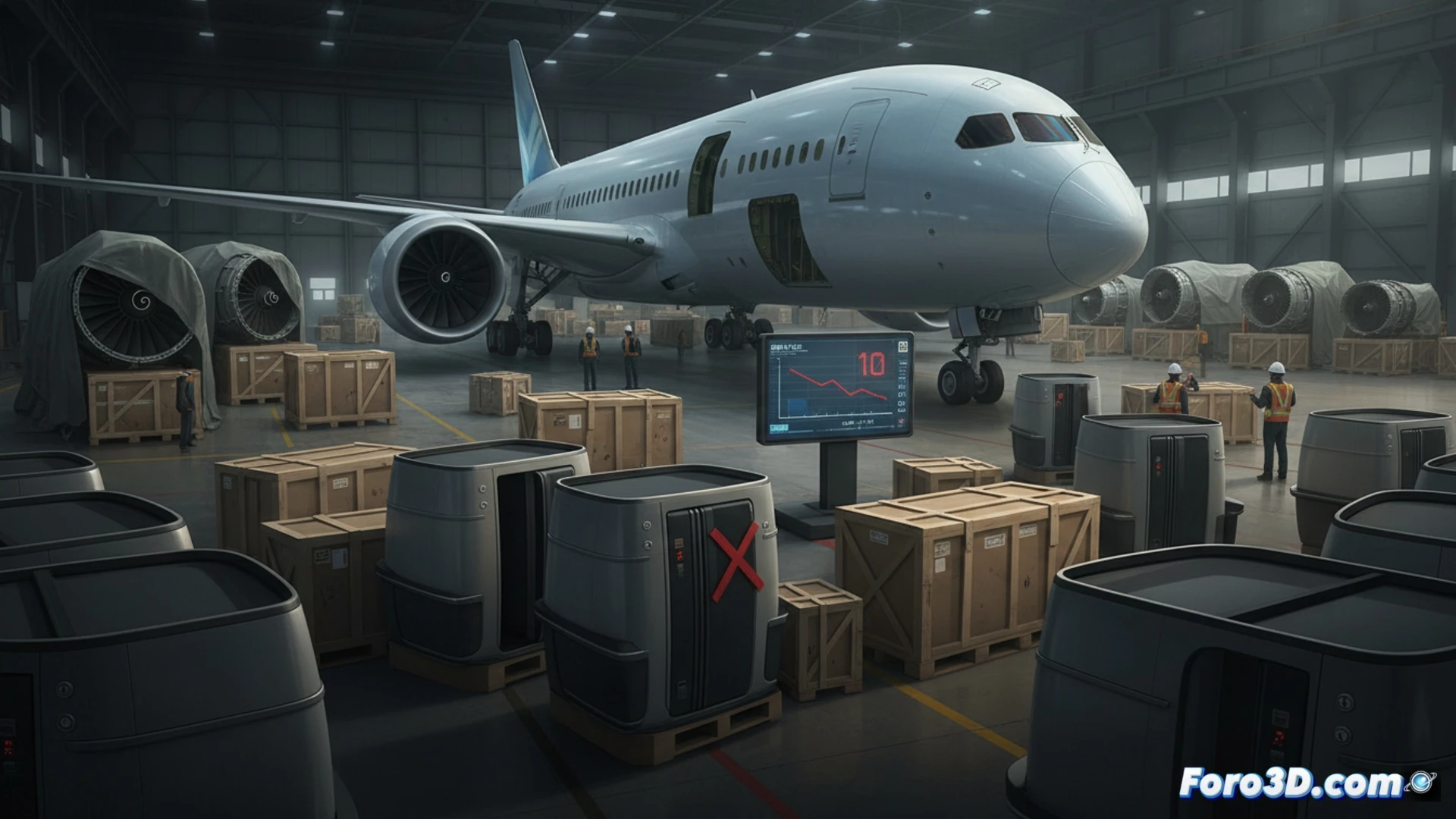
Boeing plans to increase production of the 787 Dreamliner from 8 to 10 units per month, but two obstacles are slowing the pace: the engine supply chain is falling short, and certification of new business class seats with doors is delayed. This leaves finished aircraft grounded, waiting for key parts to be delivered to customers.
Engines and seats: the two technical bottlenecks 🛑
The first problem is the GEnx and Trent 1000 engines, whose manufacturers, GE and Rolls-Royce, report delays in delivering critical components. The second is business class seats, designed with sliding doors for greater privacy. The FAA requires additional strength and safety tests before certifying them. Without these elements, 787 fuselages leave the assembly line but cannot fly to their owners.
The seat with a door that has no exit door 🚪
Boeing dreamed of a business seat that looked like a hotel suite, but now it seems more like a revolving door: engineers rush, the FAA reviews, and the aircraft wait in the parking lot. Meanwhile, first-class passengers can keep dreaming about their privacy, even if for now they have to share the plane with the missing parts. At least the engines don't complain, they just arrive late.