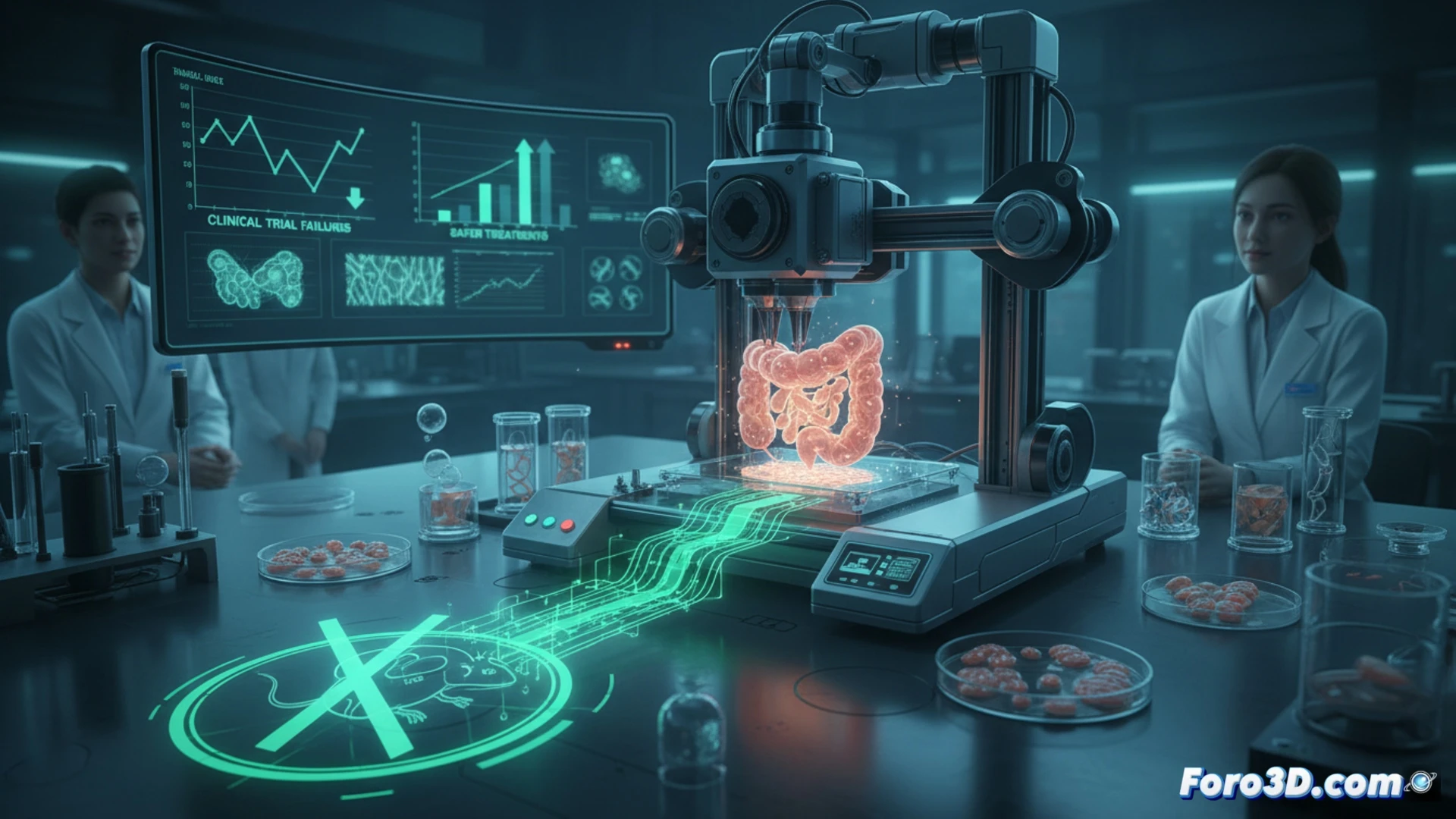
A team from Newcastle University has developed a 3D bioprinting method capable of producing functional human tissues for drug testing. This represents an advance over animal models, which fail to predict how the human body will react. The goal is to reduce the failure rate of 75% of drugs in clinical trials and offer safer, more affordable treatments for the public.
Printed tissues that mimic the real body 🧬
The technique uses human cells cultured in a biocompatible hydrogel, deposited layer by layer to form three-dimensional structures. These mimic the cell density and vascularization of real organs, allowing the toxicity of a compound to be observed before it reaches a patient. Scientists claim the process is scalable and reproducible, which could be integrated into pharmaceutical labs without major infrastructure changes.
Goodbye, mice; hello, artificial meat printers 🐭
Laboratory mice can breathe a sigh of relief: their future as guinea pigs hangs by a thread of biological plastic. The bioprinter doesn't need cages, doesn't complain when you poke it, and never eats the experiment's cookies. That said, it still can't print a liver that can handle a New Year's Eve dinner, but for testing drugs, it will serve without complaint.