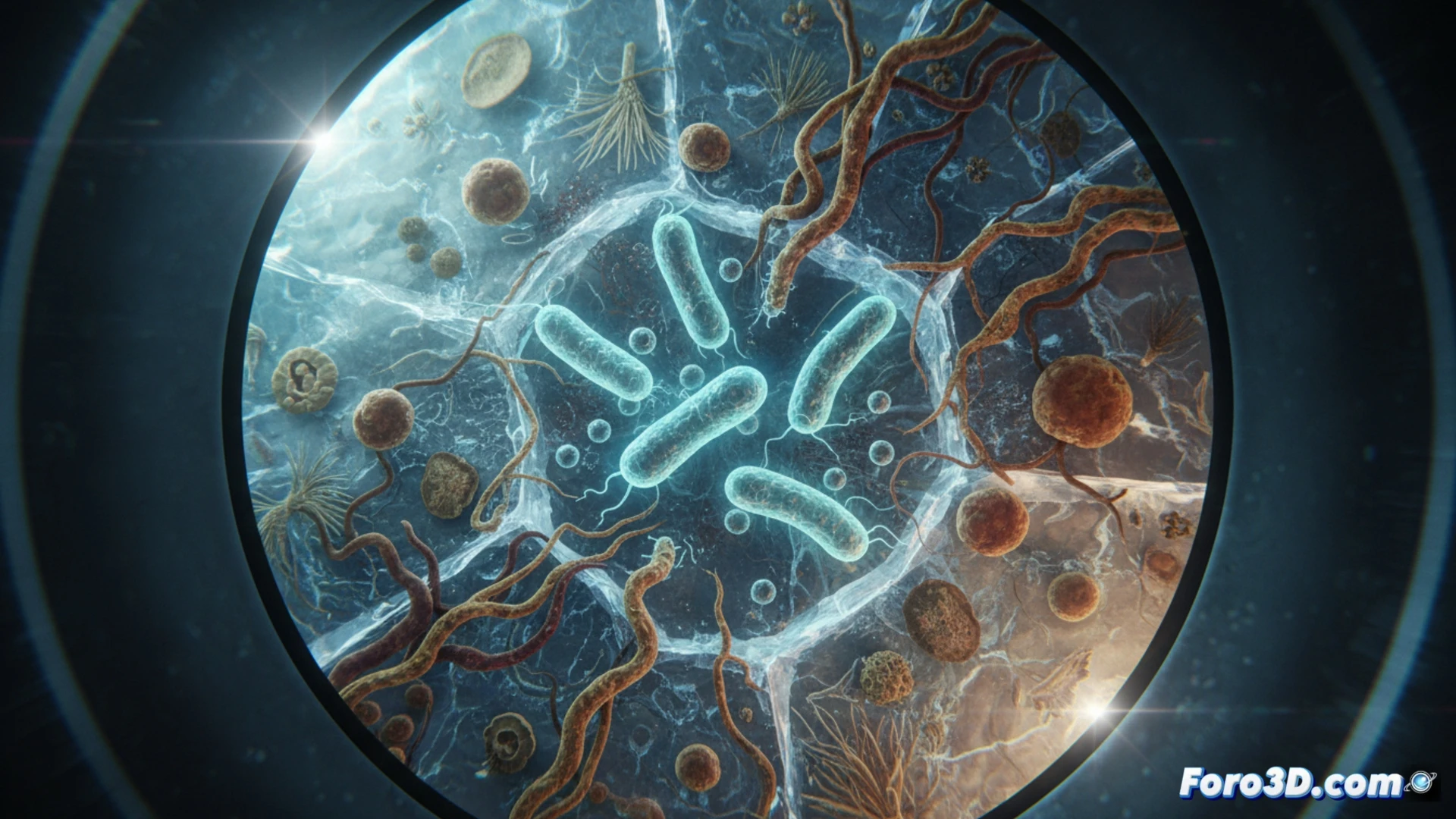
Scientists have discovered living bacteria in the remains of Ötzi, the Iceman mummified over five millennia ago. Alongside them, they found fungi that grew after his death. The finding indicates that ancient microbes can remain active, offering clues about survival in extreme conditions and potential applications in medicine or food preservation.
Technological implications for biology and conservation 🧬
This discovery allows for analyzing how certain microorganisms manage to resist desiccation and extreme cold for millennia. From a technical standpoint, their study could be applied to developing more efficient cryopreservation methods for tissues or food. It also opens avenues for investigating ancient pathogens and understanding their evolution, which would help prepare responses to potential emerging diseases. The ability of these microbes to reactivate after centuries of inactivity is a phenomenon that science is only beginning to understand.
Ötzi, the host who didn't ask for dinner 🍽️
After 5,300 years, Ötzi is still making headlines not for his copper gear or his last meal, but for the tenants he let in. It turns out his body became an Airbnb for bacteria and fungi that didn't even pay rent. The worst part is that these late guests, besides contributing nothing, take all the scientific credit. At least Ötzi can boast of having the oldest gut flora in the world, even though no one asked him if he wanted to be the host of a millennial experiment.