At the recent Art Osaka fair, a new generation of artists from Kansai has put a simple yet uncomfortable question on the table: what have we done with our relationship with nature in the digital age. Their works, accessible to any citizen, address everything from excessive mobile phone use to the loss of contact with the environment. These are not cryptic pieces, but mirrors in which we can see ourselves reflected with phone in hand.
Codes, sensors, and wood: the technique behind the digital critique 🌿
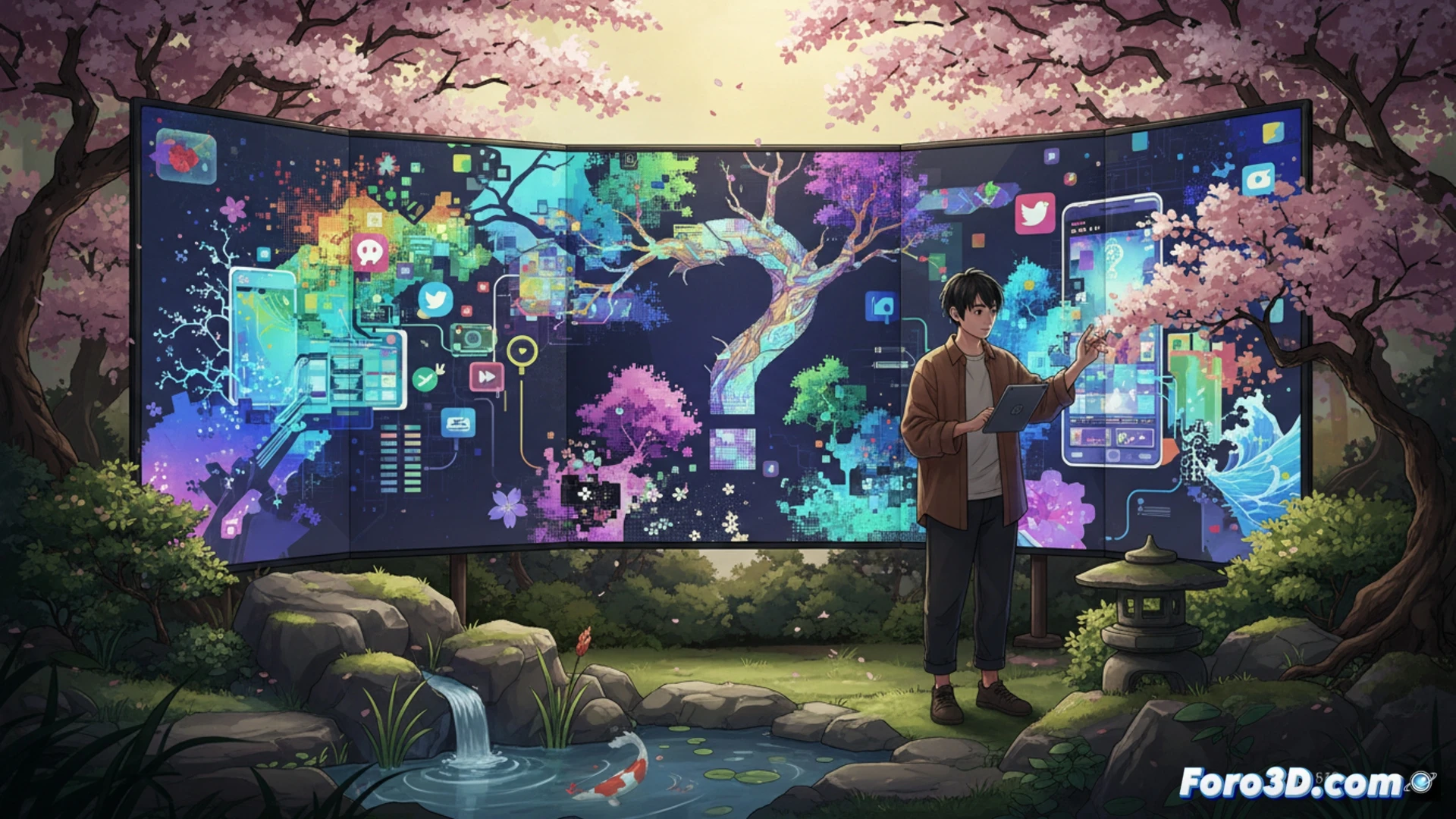
The most striking installations integrate motion sensors and LED screens to simulate how the natural landscape fragments when observed through devices. A local artist presented a series of wooden sculptures with printed circuits that react to ambient light, showing how a simple change in lighting alters the perception of the object. Another work uses augmented reality to overlay electricity consumption data onto forest projections, highlighting the energy cost of hyperconnectivity. The result is a technical reflection on how software shapes our experience of the physical world, without overwhelming the visitor with specialized jargon.
The art of not looking at your mobile even to read the sign 📱
The curious thing about the event is that, while the artists reflect on our addiction to screens, several attendees missed the artwork because they were recording it to post on social media. A video showed a virtual tree that withered every time someone took out their phone. The most visited piece, ironically, was the only one without Wi-Fi: a zen garden where people, desperate for lack of signal, ended up observing the stones. In the end, no one knows if the art changed anything, but at least the plants on the premises breathed a sigh of relief at not receiving flash.