A power outage left 7,600 homes in Reutlingen in the dark, with the LKA quickly pointing to the far left. Police are investigating whether it was a terrorist attack, although power was restored to the city center and a hospital within a few hours. The incident, quickly resolved, occurs in the midst of the German election campaign, prompting questions about whether fear of a diffuse enemy hides other political agendas.
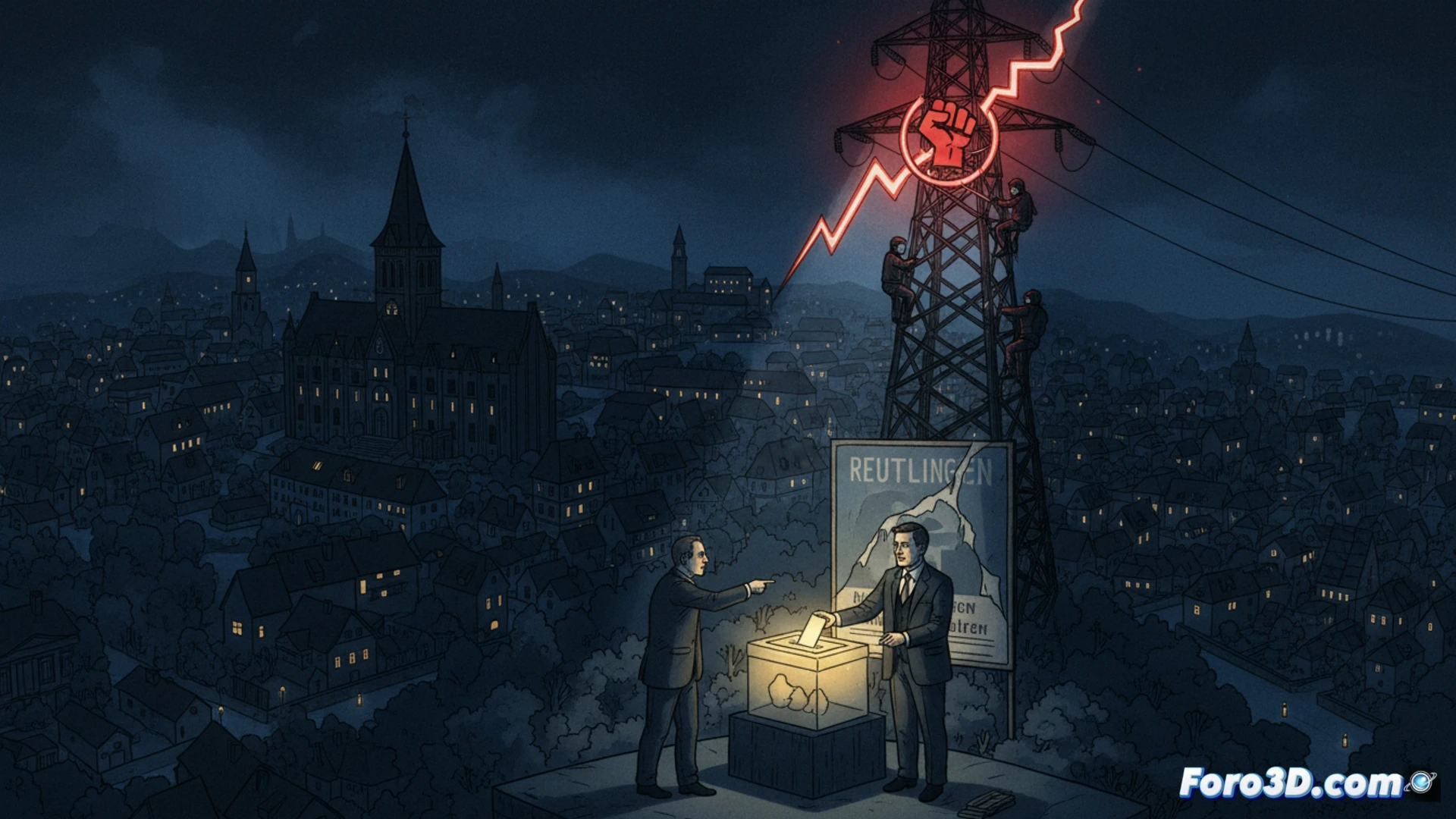
The technical fragility of residential power grids ⚡
From a technical standpoint, a blackout in residential areas is usually due to overloads, maintenance failures, or minor acts of vandalism. The substations that supply neighborhoods are not critical infrastructure; their rapid restoration indicates limited damage. Attributing it to an organized plot without solid evidence is questionable, especially when statistics show that real sabotage of the German power grid often comes from far-right groups or corporate negligence.
The LKA and the art of seeing leftist ghosts 👻
Apparently, in Germany, any blown fuse is already suspected of terrorism. The LKA must have bought far-left detectors on Amazon, because in Reutlingen they saw a three-hour blackout and thought: this smells like a conspiracy. Meanwhile, the neighbors just wanted to know if the morning coffee would be made by candlelight. But of course, in an election campaign, a short circuit is better than a debate on cuts to civil liberties.