Director Paco Azorín has brought his particular reading of Verdi's opera Aida to Seville's Teatro Maestranza, with filmmaker Stanley Kubrick as conceptual inspiration. The proposal seeks to translate the emotions of the director of 2001: A Space Odyssey to the lyrical stage, but the final result contradicts its own message. For the viewer, the promise of an immersive experience falls short, although the third act, with its evocative Nile and soprano Marigona Qerkezi, achieves moments of interest.
When the staging clashes with the score 🎭
The central problem lies in the disconnect between visual ambition and dramatic development. Azorín uses projections and a cold aesthetic, inherited from the most meticulous Kubrick, but the scenic rigidity hampers Verdi's musical flow. The tempo changes seem forced by technology, not by the score. The lighting, seeking Kubrickian symmetry, generates static planes that clash with the passion required in the duets. It is a formal exercise that consumes the content, leaving the audience with the feeling of watching a soulless storyboard.
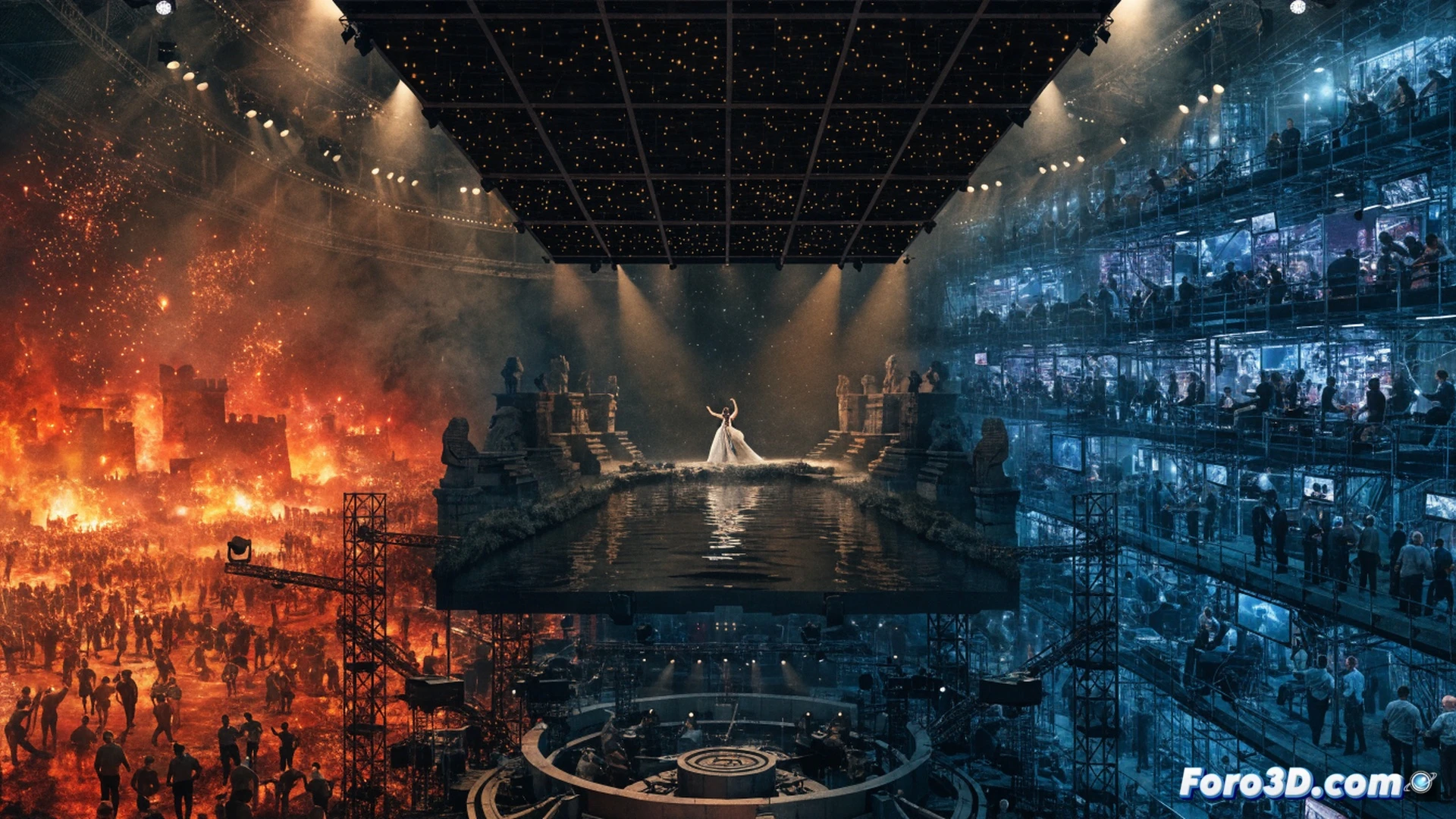
The Nile saves the show, Kubrick remains in the scenery 🌊
Thank goodness the third act arrived, because otherwise, things were heading for total disaster. There, with the Nile in the background and Marigona Qerkezi singing as if there were no tomorrow, one almost forgot they were watching a tribute to Kubrick. The rest of the time, the show feels like an advertisement for designer furniture: very pretty, very symmetrical, but without a single trace of emotion. In the end, the most Kubrickian thing was the feeling of existential emptiness upon leaving the theater, wondering what you had just actually seen.