The Government has decided to retire emergency triangles and make the V16 beacon the only signaling device. The measure is legal, but its implementation has been chaotic. Brussels first questioned the process due to a notification error and then endorsed it. Too much fuss for a little magnetic light that, yes, the driver is already paying for while throwing away triangles that still worked.
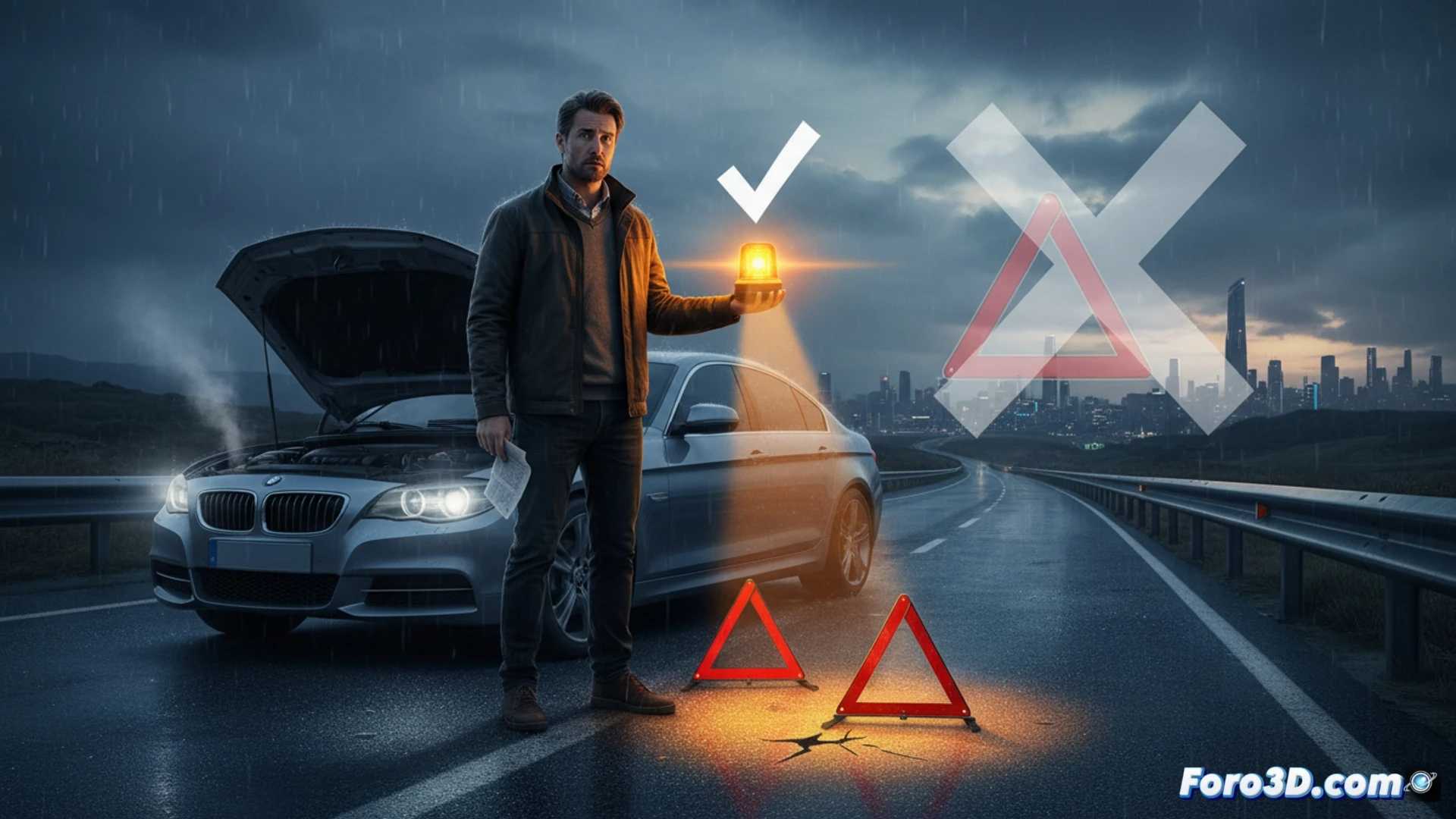
How the V16 beacon works: simple technology, but with a plug 🔌
The V16 is a standalone device with a battery, an intermittent orange light, and a magnet to attach it to the roof. Its visual range exceeds that of the triangle and prevents the driver from getting out of the car on the shoulder. The technical problem is not with the device, but with the management: the DGT requires it to be certified and connected to its platform, but the deadlines have been moved several times. In the end, the user buys a gadget worth between 30 and 50 euros, and the rest is paperwork.
The perfect mess: changing the rule and making the same people pay for it 💸
The best part is that, while politicians and officials collect their salaries without any issues, the driver takes the hit. Buys a beacon, throws away triangles, finds out that Brussels complained, then that it didn't, and in the end, everything stays the same. Next time you stop on the shoulder, put on the little light, smile, and remember: road safety comes first, but improvisation also has its cost. And you, as always, foot the bill.