The Spanish government injects $28.8 million into DNEG, a multinational visual effects company, so it can acquire Anima Kitchent in the Canary Islands. The operation is sold as job creation, but the 54% tax incentives were already attracting the company. Public money finances massive tax savings for a foreign firm.
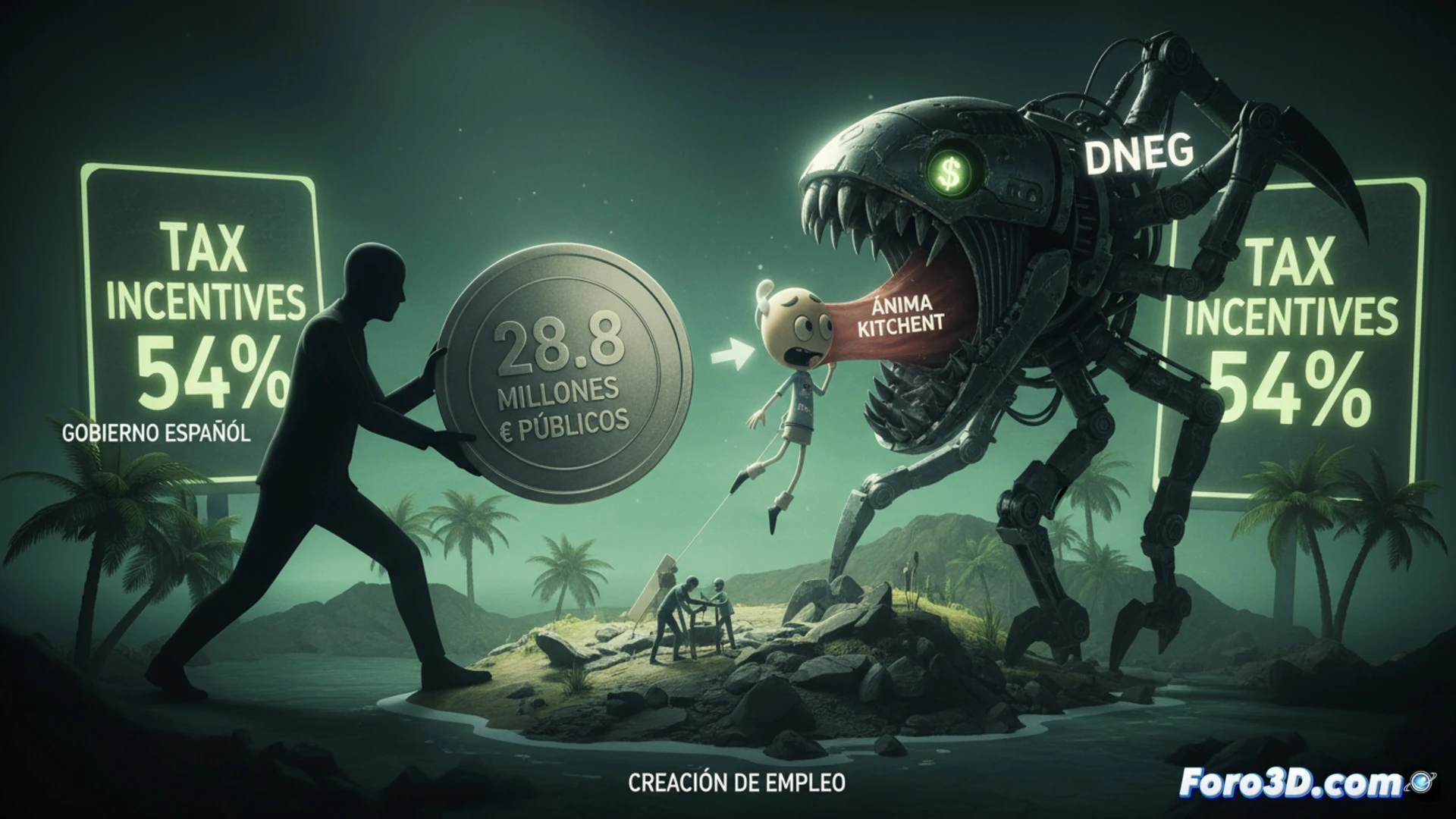
Tax incentives and job insecurity in Canarian animation 🎬
The Canary Islands offer a 54% tax deduction, one of the most aggressive regimes in Europe. DNEG, headquartered in London, takes advantage of this benefit to establish a service center. The promised jobs will be temporary, tied to specific projects, with no permanence clauses. The acquisition of Anima Kitchent eliminates its creative independence, turning it into a subcontracting workshop. Salaries, adjusted to the minimum, will not retain local talent.
The Canarian miracle: paying so a company pays less 💸
So the Canarian citizen finances with their taxes that a multinational saves more than half of its own. It's like inviting a friend to dinner and having him take your wallet. Profits fly to London while here we count jobs that last as long as a seasonal contract. Good thing creativity doesn't pay taxes, because what remains in the Canary Islands is little.