Robert Eggers returns after the success of Nosferatu. His new bet, Werwulf, premieres in December and transports us to 13th-century England. A cursed peasant transforms into a monster, but don't expect a classic werewolf. The film bets on cold colors and dense shadows to create discomfort, dispensing with black and white. A horror experience that promises to be original and unsettling for genre fans.
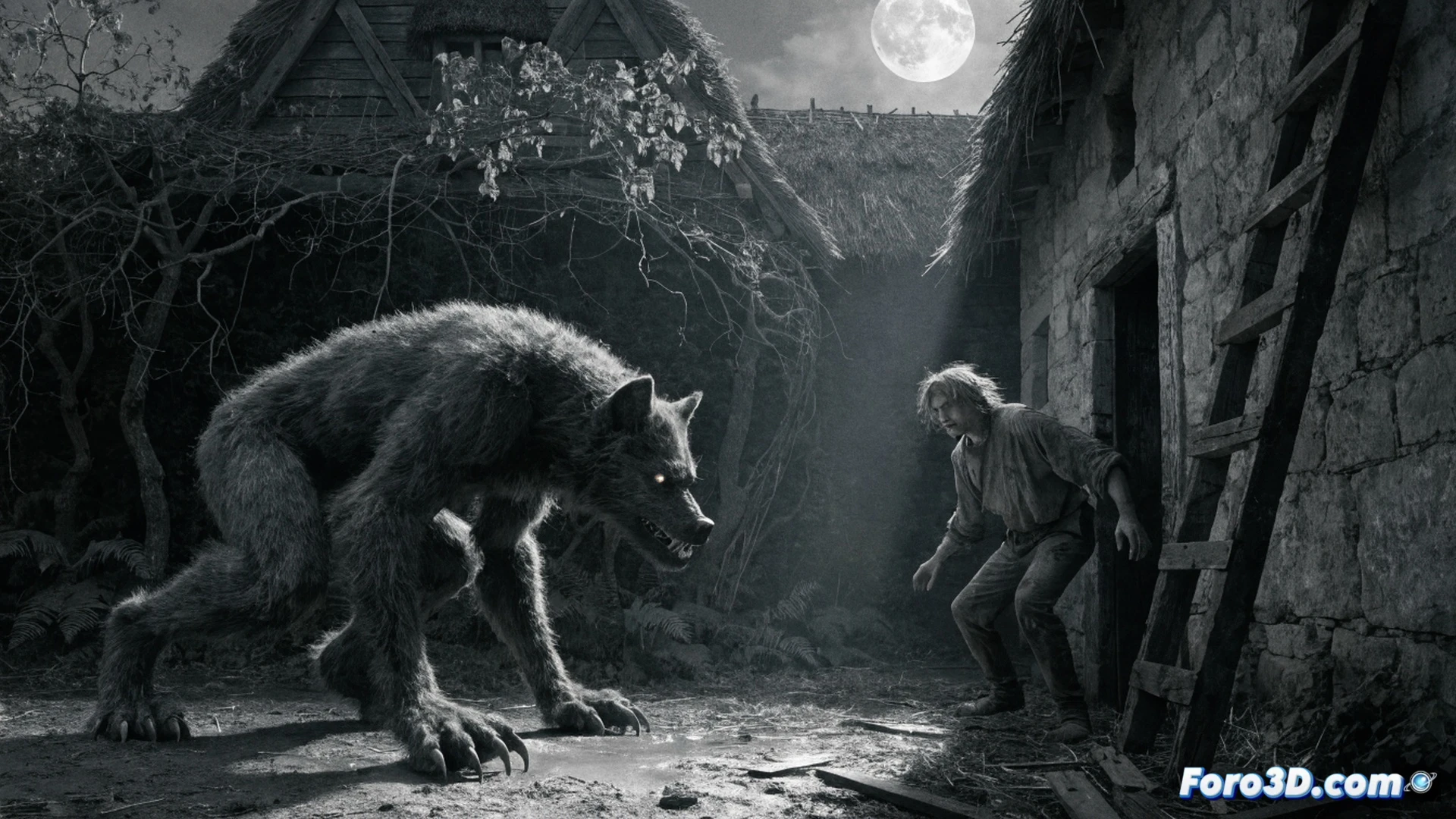
The visual trick: dense shadows and an icy palette 🎥
Eggers avoids black and white, but his chromatic bet is equally aggressive. The film uses a range of blues, grays, and deep blacks that reduce saturation to a minimum. Shadows not only conceal but also shape the protagonist's transformation. The lighting, almost always lateral and harsh, creates rough textures on faces and the landscape. The director has worked with the same photography team from Nosferatu to ensure every shot conveys a feeling of cold and medieval claustrophobia.
The big bad wolf of the 13th century who doesn't ask for a hug 🐺
If you were expecting a sensitive lycanthrope with self-esteem issues, better look for another show. Here, the cursed peasant has no time for monologues: he transforms and that's it. That said, the atmosphere is so oppressive that even the viewer will want to put on a coat. The funniest part is that, with so much gray and shadow, maybe the biggest scare is not being able to tell if what's moving is the monster or a piece of period furniture.