Katana counterfeiting has reached a sophisticated technical level with the alteration of the surface cooling pattern, known as Hamon. This process, which previously required real differential hardening, is now simulated using laser-assisted chemical micro-etching. To detect these anomalies, a 3D pipeline is employed that combines computed tomography with VGSTUDIO MAX and mesh analysis in MeshLab.
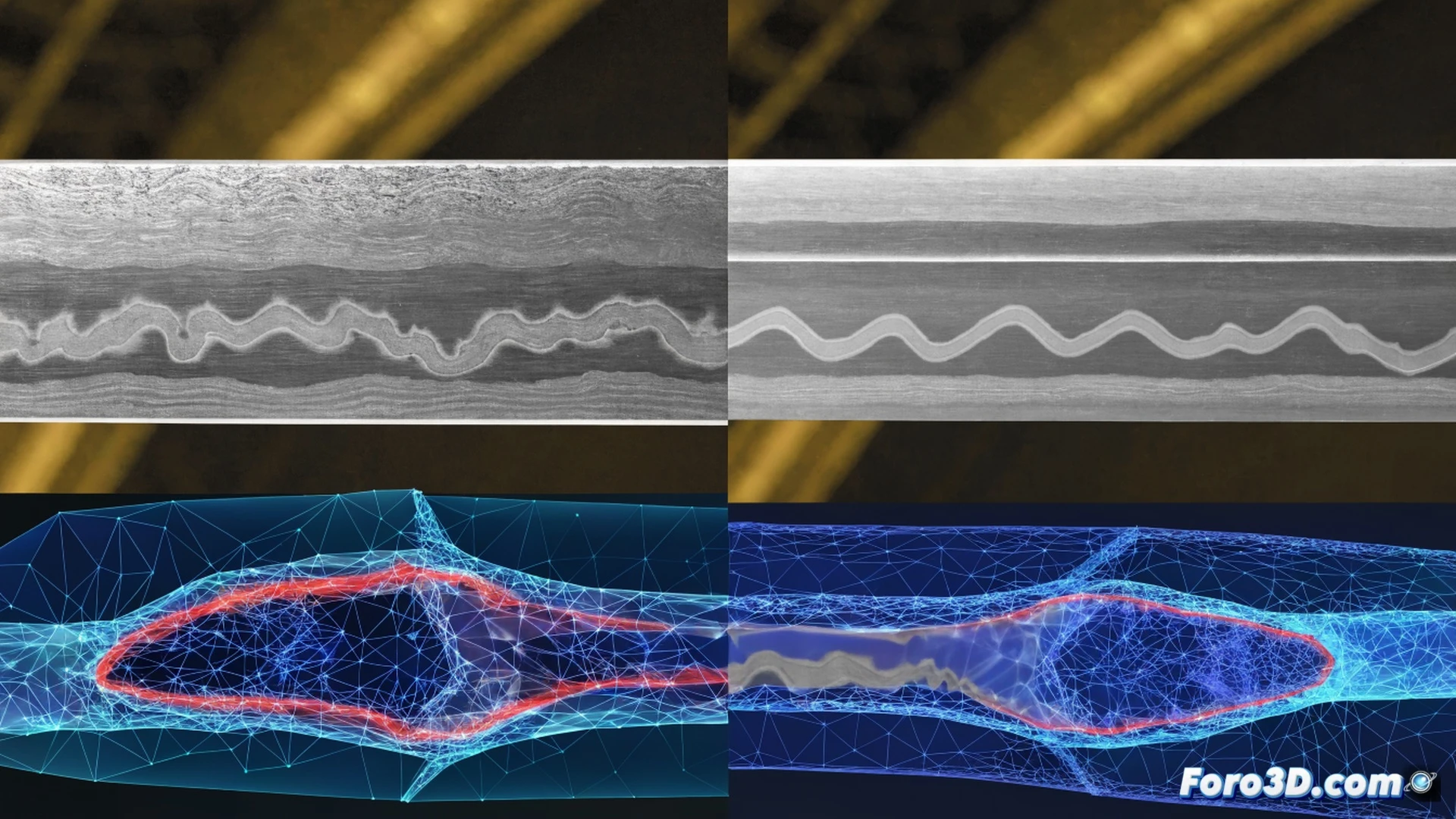
Detection Pipeline: VGSTUDIO MAX and MeshLab 🛡️
The workflow begins with a volumetric scan of the blade using VGSTUDIO MAX. This software allows examining the internal structure and density of the steel, identifying areas where the laser etching has removed surface material. Then, the point cloud is exported to MeshLab to generate a high-resolution 3D mesh. There, curvature filters and normal analysis are applied, revealing the micro-depressions of the false Hamon, exposing the lack of real martensitic transition.
The Disposable Hamon ⚔️
The curious thing is that these forgers put more effort into imitating the Hamon than into properly hardening the steel. They spend hours with a laser to draw a wavy line, but the blade bends like a plastic fork at the first strike. With VGSTUDIO MAX, you detect the deception in minutes; the fake samurai is left without a katana and with a lighter wallet. At least, the laser leaves a pretty pattern to hang on the wall.