The counterfeiting of Ming Dynasty swords has reached a technical level that challenges experts. Now, forgers employ electrodeposition and controlled acid etching to artificially recreate the structural patina. The process relies on a 3D pipeline that uses VGSTUDIO MAX for volumetric analysis of authentic pieces and MeshLab to clean and align the meshes, allowing the replication of even the most subtle corrosion marks.
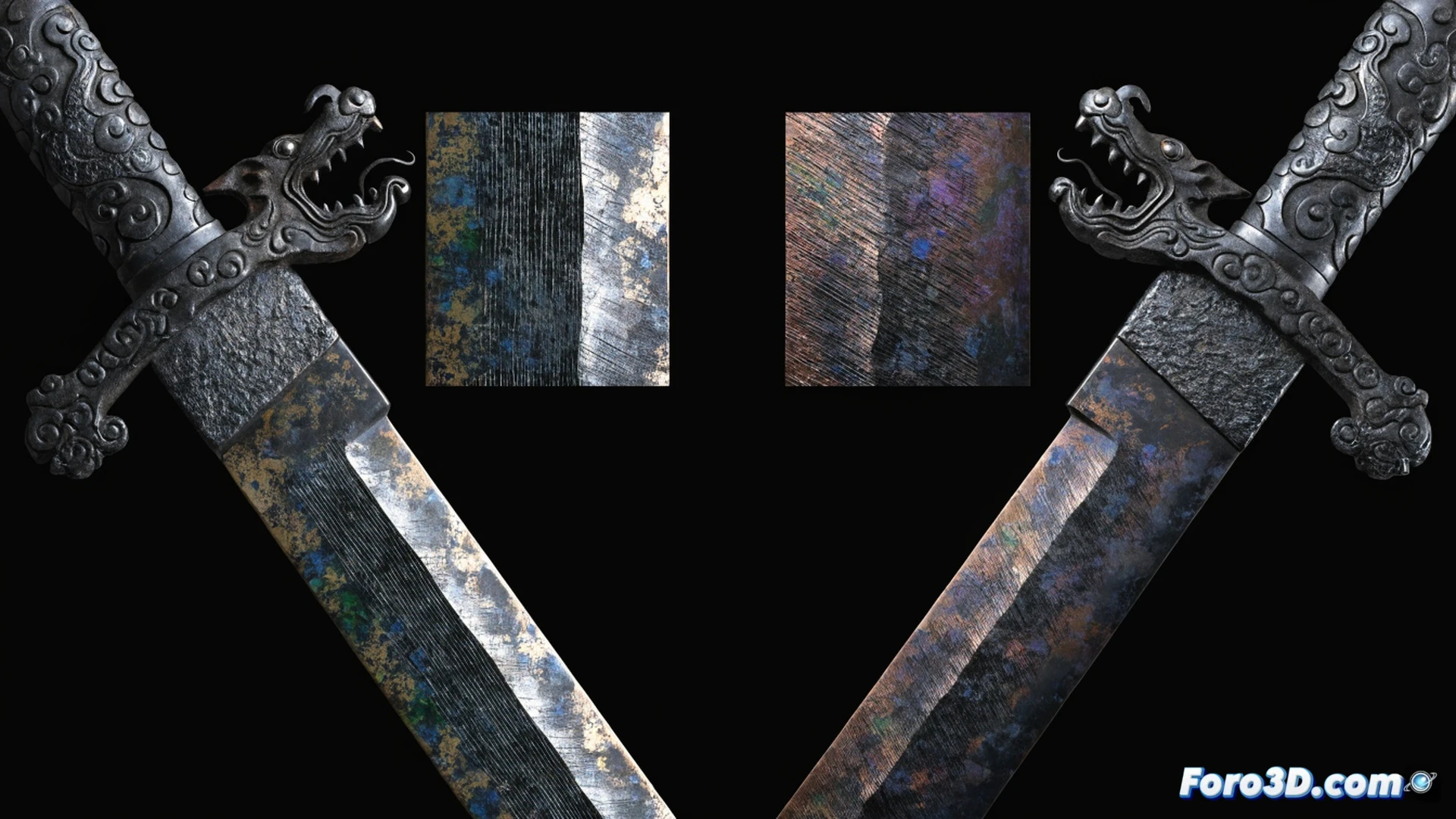
3D Pipeline: from tomography to artificial patina 🛡️
The process begins with scanning an original sword using computed tomography. The data is processed in VGSTUDIO MAX to extract internal geometry and surface irregularities. Then, in MeshLab, the mesh is refined and a roughness map is generated. This map guides the application of the patina: first, a copper base layer via electrodeposition; then, a selective acid etching that reproduces the pitting and discoloration of age. The result is a copy that withstands basic visual and tactile analyses.
The collector who bought a sword with workshop patina 😅
A collector paid a fortune for a supposed Ming sword, proud of its thousand-year-old patina. Upon scraping it with his fingernail, he discovered that the rust came off in flakes. It turned out to be a replica from three months ago, with patina applied using a workshop brush. The seller, with all seriousness, told him it was a secret process of the dynasty. The collector now uses his white gloves only to touch the receipt.