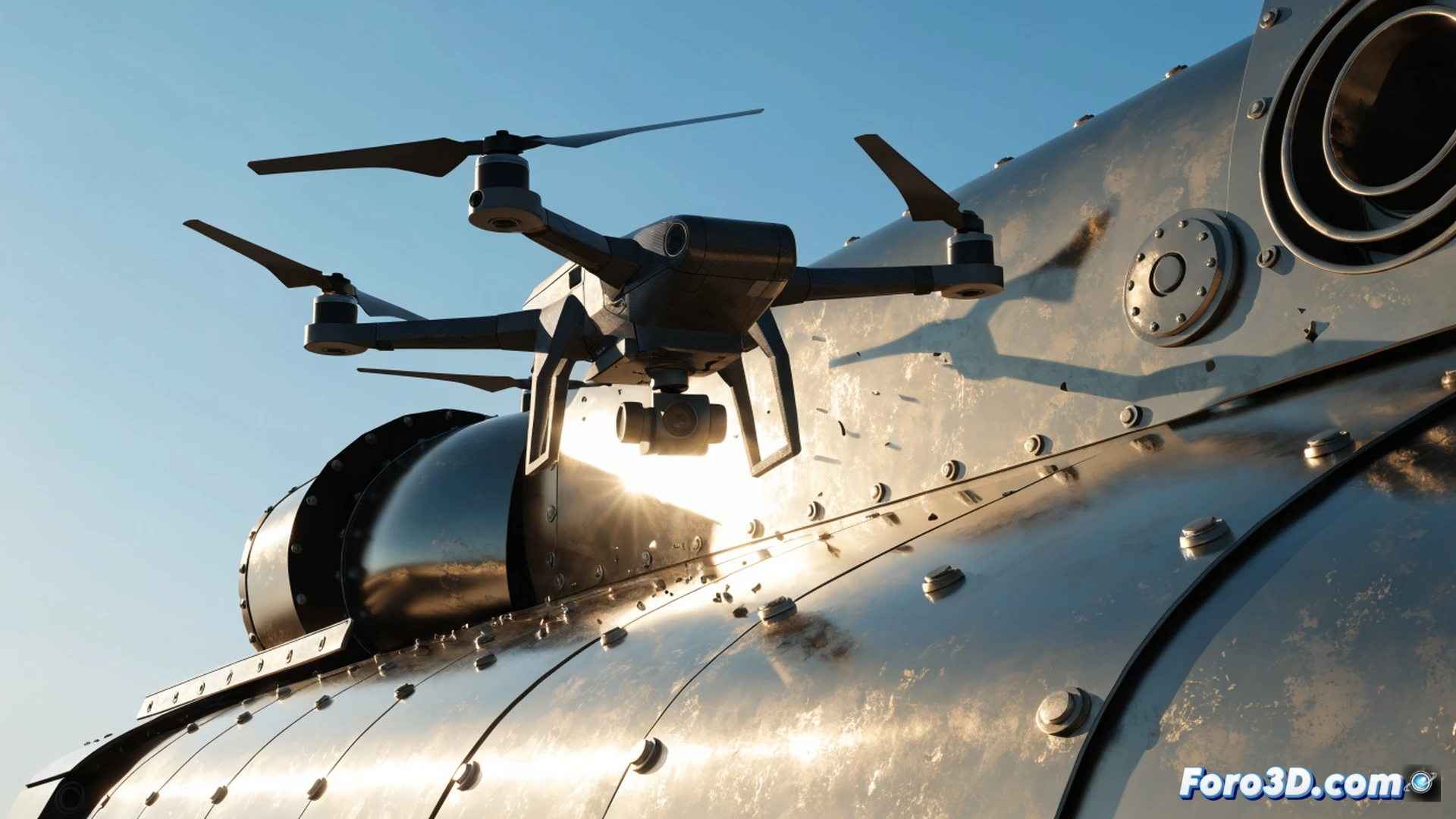
Fuel tank inspection with drones promises efficiency, but a failure in the optical flow sensor caused a direct collision against the internal walls. The problem: reflections from polished metal deceived the system, confusing flight stability. In the 3D pipeline, ROS Gazebo was used to simulate the environment and CloudCompare to analyze the point cloud of the impact.
3D Pipeline: simulation in Gazebo and post-collision analysis 🤖
The simulation in ROS Gazebo replicated the tank with reflective surfaces, but the model did not anticipate the optical distortion of curved metal. The drone lost visual reference by confusing the reflection of its own light with the real ground. CloudCompare allowed aligning pre- and post-impact LiDAR data, revealing a 12 cm error in altitude estimation. The proposed solution: combine ultrasonic sensors to avoid relying solely on the optical camera in specular environments.
The drone fell in love with its own reflection (and crashed) 💥
The optical flow sensor saw its light bouncing off the metal and thought: this must be the ground. Spoiler: it wasn't. The drone, like a modern Narcissus, launched itself to greet its reflection and ended up kissing the metal sheet. At least now we know that drones also fall for the selfie trap. CloudCompare confirmed it: the impact point coincides with the brightest area of the tank. Ironies of metal.