Last month, a suction dredger suffered a broken impeller shaft after hitting an undetected submerged rock. The incident halted dredging operations for several days. To analyze the causes and plan the repair, the technical team used a specific 3D pipeline. PolyWorks was employed for scanning and reverse engineering the damaged parts, and ANSYS Fluent was used to simulate the flow of the water-sediment mixture and the stresses on the new shaft design.
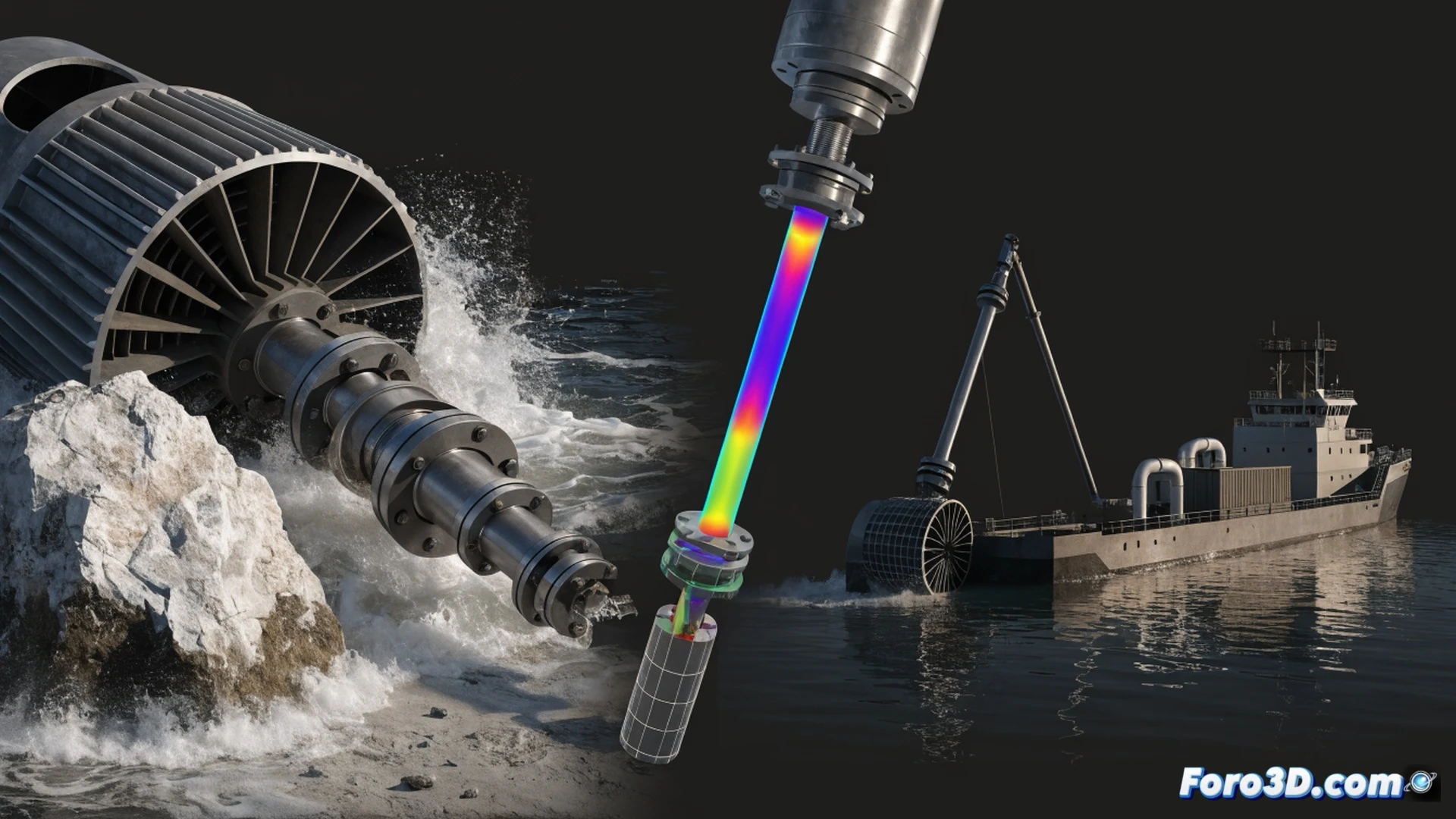
3D Pipeline: From Point Cloud to Fluid Simulation 🛠️
The process began with laser scanning of the impeller housing and fractured shaft using PolyWorks. With the point cloud data, a CAD model of the actual geometry was generated. This model was imported into ANSYS Fluent to perform a computational fluid dynamics analysis. The simulation evaluated the flow pattern and hydraulic loads on the impeller. The results indicated that the impact generated a point overload that exceeded the steel's fatigue limit, initiating the crack at the shaft neck.
The Rock That Broke Everything (Literally) 🪨
The most curious part of the case is that, according to the sonar, the rock had been there for years, just minding its own business. No one had seen it because it was right in the blind spot of the last bathymetry survey, that spot everyone swears they checked. Now the rock has its own technical file, and the maintenance manager has promised that next time he'll use a metal detector, a dowser, and a crystal ball. Just in case, the new shaft has a vibration sensor that beeps like an alarm clock if it sees a stone.