The gas extraction well suffered a catastrophic collapse of the casing pipe due to tectonic shear stresses. This type of failure, caused by lateral movements of rock layers, deforms the casing until it fractures. The incident forced a review of geomechanical design protocols and the use of advanced simulation tools to understand what actually happened underground.
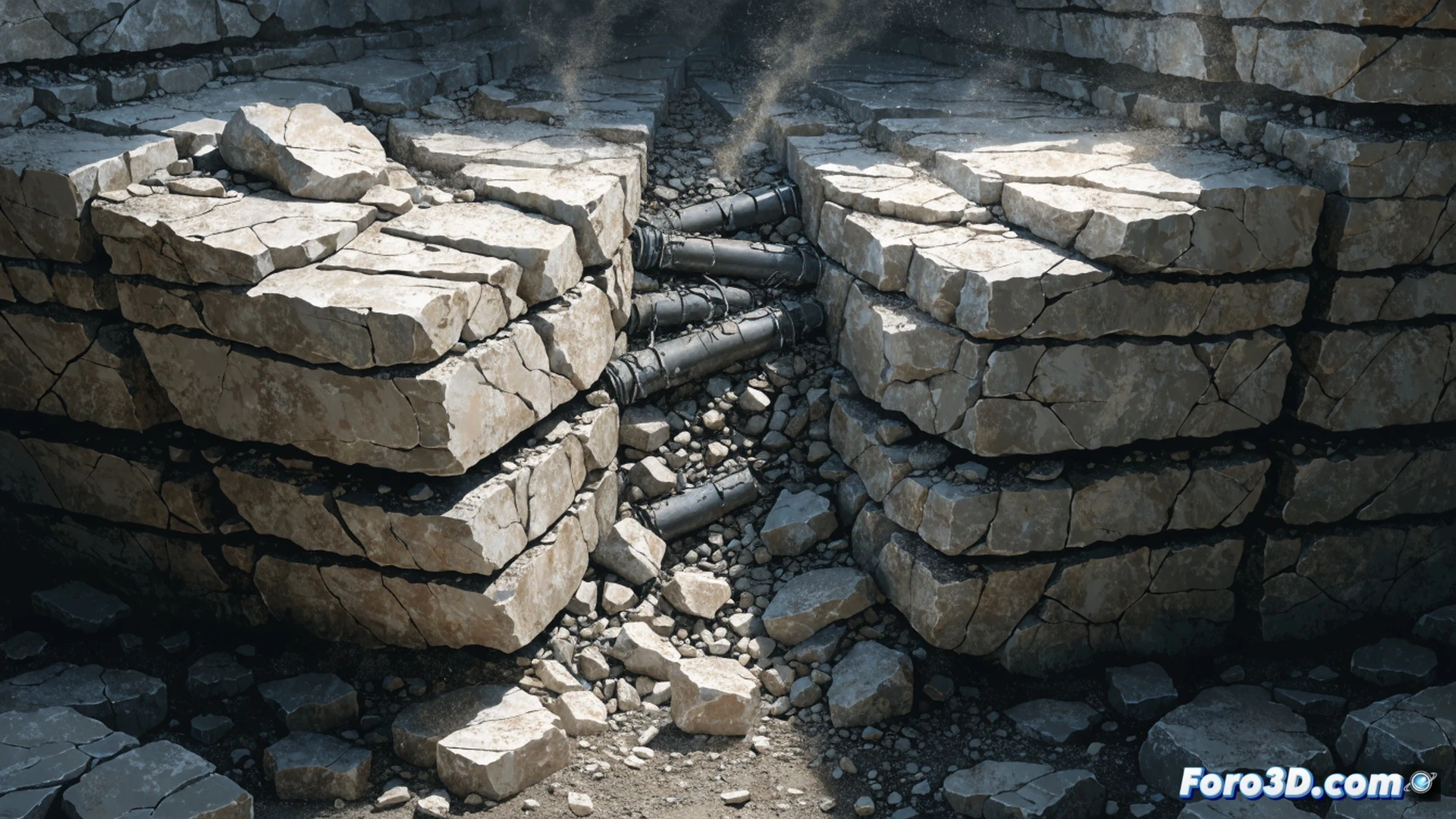
3D Modeling with CloudCompare and FLAC3D for Failure Analysis 🛠️
To reconstruct the collapse, CloudCompare was used in processing point clouds from the well's laser scanner, allowing detection of millimeter-scale deformations in the pipe. Then, FLAC3D modeled the behavior of the ground subjected to shear stresses. The results showed that the direction of the maximum horizontal stress coincided with the rupture point. This combined workflow allows predicting critical zones before a disaster occurs.
The casing said enough: chronicle of a foretold rupture 😅
Geotechnical engineers usually sleep soundly thinking the subsurface is predictable. Then a tectonic fault arrives and reminds them that the Earth has its own plans. The casing collapsed like a plastic straw in a rock milkshake. Now it's time to redesign the reinforcements and, incidentally, check if the insurance covers damages caused by the bad mood of tectonic plates.