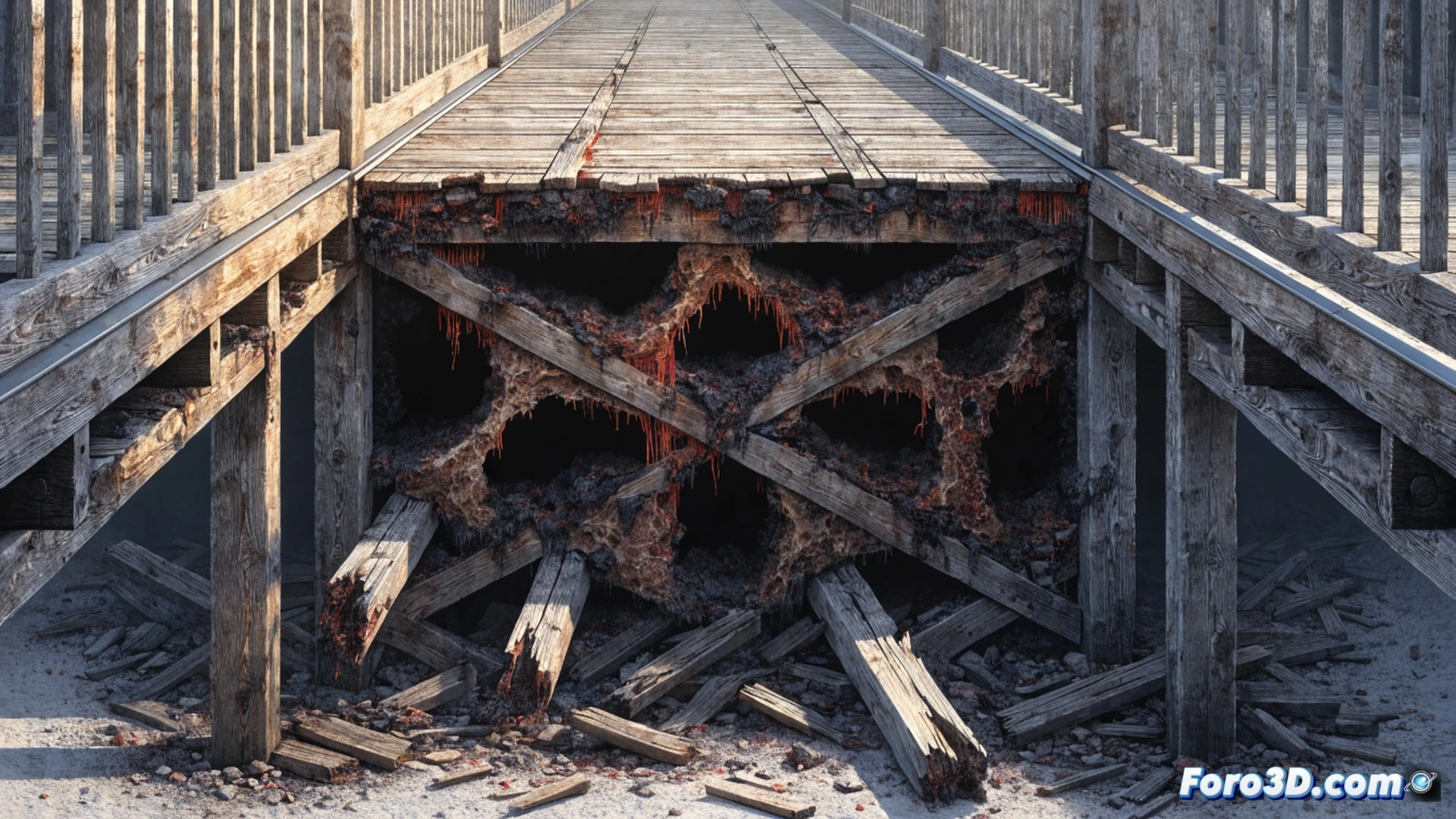
A sawn timber pedestrian bridge collapsed without warning, revealing a silent failure. Shear fracture at the supports was the direct cause, originating from fungal decay that advanced hidden beneath the metal plates. The case demonstrates how visual inspection is insufficient to detect internal damage in timber structures.
3D Pipeline: From point cloud to structural analysis 🛠️
The workflow combined scanning with FARO Scene to capture the actual geometry of the bridge and the collapse debris. The point cloud served as the basis for modeling the structure in SAP2000, where load conditions were simulated and shear stress concentration at the supports was identified. The model confirmed that the effective timber section had been reduced by decay, exceeding the material's strength.
What the plate was hiding: an uninvited fungal feast 🍄
Fungi, those silent architects of destruction, found an all-you-can-eat buffet at the timber-steel interface. While the plate appeared to hold the structure, it actually functioned as a canopy that maintained the perfect humidity for the banquet. The timber gradually turned into compost without anyone noticing, until gravity had enough and the bridge decided to take an unscheduled vacation.