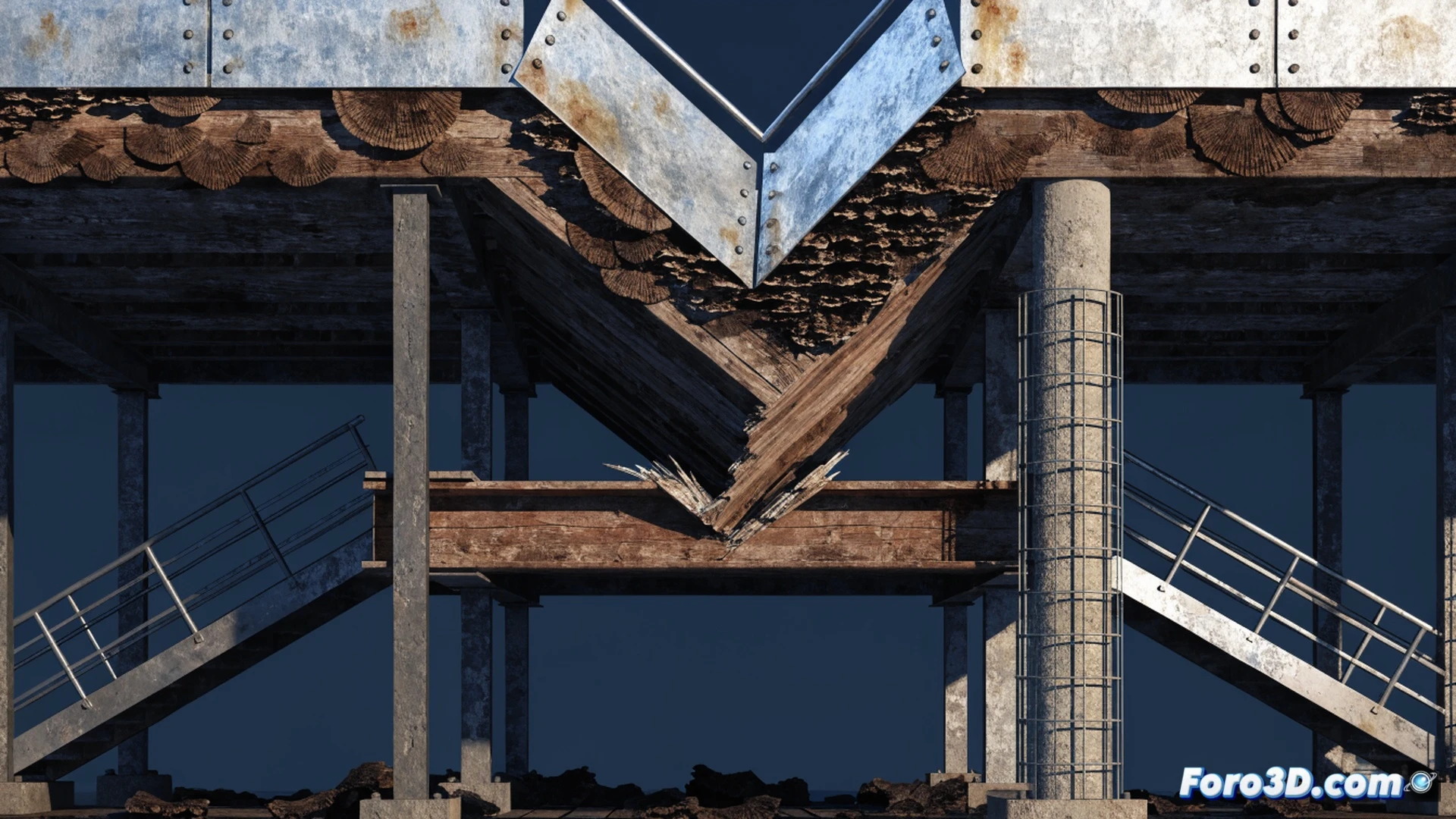
A sawn timber footbridge collapsed due to shear fracture at its supports. The failure originated from fungal decay hidden beneath steel connection plates, an area difficult to inspect visually. The structural forensic analysis required a precise digital reconstruction of the incident.
3D Pipeline: from point cloud to finite element model 🏗️
The team used FARO Scene to process the point cloud of the collapsed structure, generating a detailed geometry of the scene. This model was exported to SAP2000 for a finite element structural analysis. The simulation allowed identifying areas of highest shear stress concentration and correlating them with the degraded timber. Integrating laser scanning data and numerical simulation was key to understanding the collapse sequence without requiring additional destructive testing.
The fungus that had coffee while the beam cracked 🍄
It turns out the wood didn't warn with a dramatic creak or leave a resignation note. It simply rotted in silence, hidden beneath the plates like a squatter in a basement. Engineers discovered the fungus had been working overtime for months without a contract. At least the collapse was educational: now we know that even a footbridge can have cavities and that the forensic dentist is called SAP2000.