The synchrotron maintenance team encountered an unexpected problem: the ring's vacuum chamber showed critical deformation. The source of the failure was located in the micrometric leveling system, which lost precision after an anomalous thermal cycle. To document and analyze the distortion, a 3D pipeline was used with GOM Inspect for part metrology and COMSOL Multiphysics to simulate residual stresses.
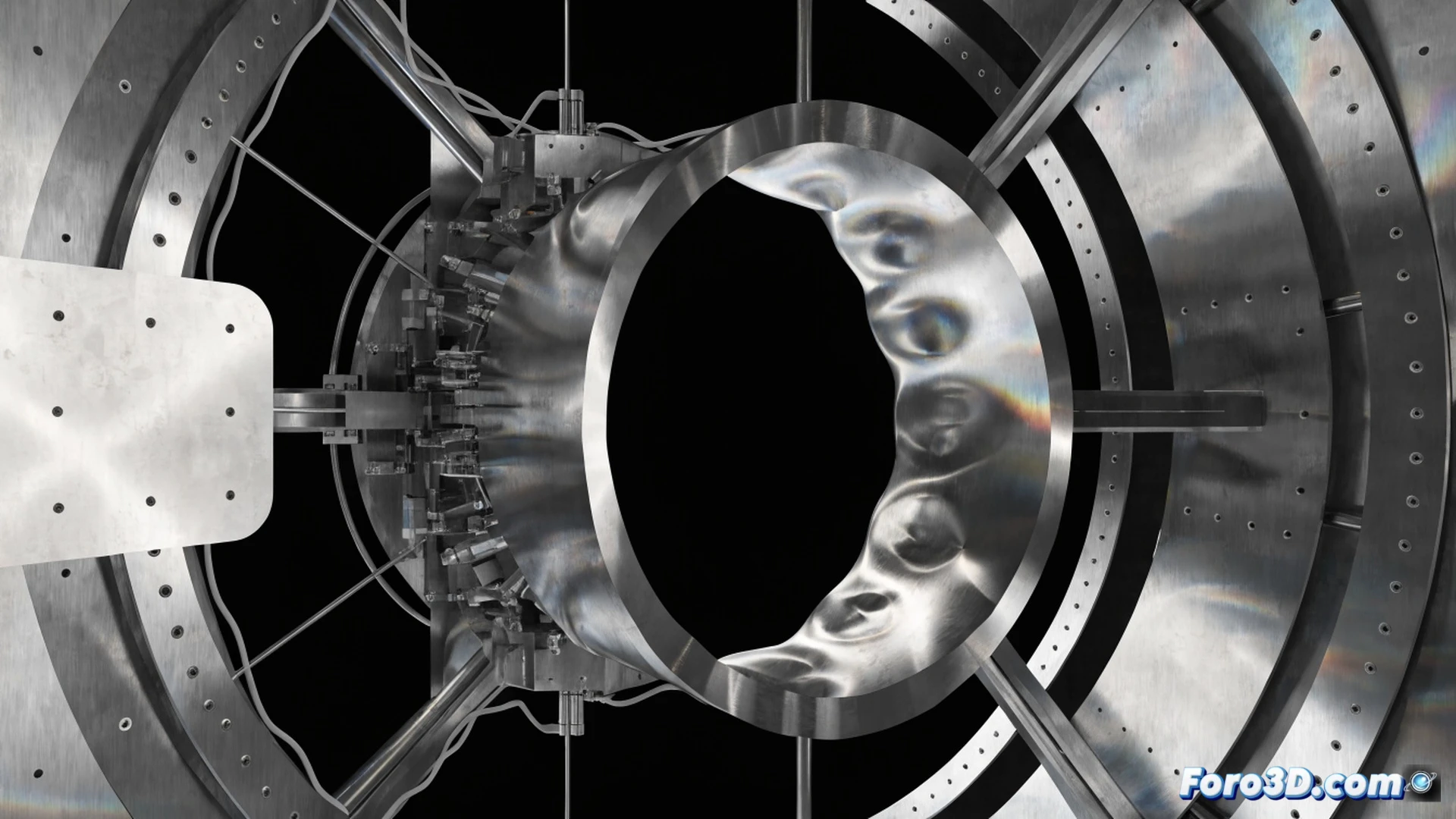
3D Pipeline: from point cloud to finite element model 🛠️
The process began with scanning the deformed chamber using high-resolution photogrammetry. The data was processed in GOM Inspect to generate a surface mesh with a maximum deviation of 0.02 mm from the original design. This geometry was imported into COMSOL Multiphysics, where vacuum boundary conditions and thermal load were applied. The finite element model revealed that the ring deformation exceeded the yield strength of 316L stainless steel at a localized point.
The chamber that lost its way (and its round shape) 😅
After reviewing the records, we discovered that the micrometric leveling system had been waltzing for three months without anyone noticing. An adjustment screw had loosened enough that the ring, instead of a perfect circle, looked like an oval made by a lathe apprentice. The worst part wasn't the deformation, but that the technician in charge of inspections had been using the leveling report to prop up the wobbly leg of his workbench. Stuff happens.