In a sulfuric acid plant, a premature failure was detected in a ceramic-lined valve. The problem consisted of substrate detachment due to a transient thermal shock. To understand the phenomenon, a digital workflow was employed using ContextCapture for the 3D survey of the actual geometry and Ansys Workbench for thermal stress simulations.
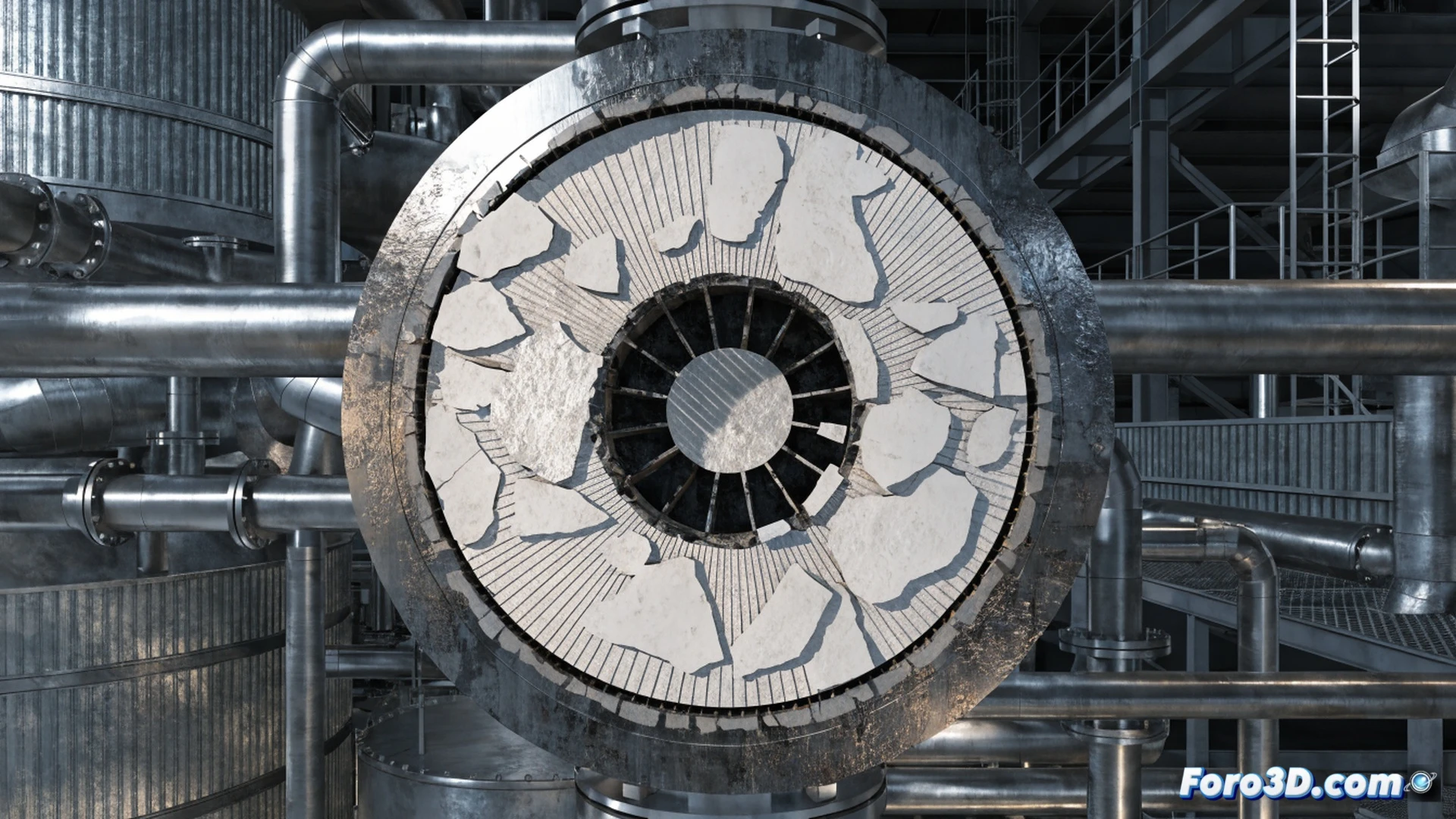
3D reconstruction and thermal-structural simulation with ContextCapture and Ansys 🔥
A scan was performed with ContextCapture to obtain a precise point cloud of the damaged valve, capturing details of the ceramic coating and the metal substrate. This model was imported into Ansys Workbench for a coupled thermal-structural analysis. The results indicated that the temperature gradient during the emergency shutdown generated shear stresses at the interface, exceeding the coating's adhesion and causing its delamination. The model allowed identifying the critical point where the failure initiated.
The ceramic said enough and went on vacation without notice 🏖️
The valve, in its infinite wisdom, decided that the sudden temperature change was a perfect excuse to peel off and take a break. Everything points to the coating not withstanding the stress of having to be hot one second and cold the next. Like in a bad relationship, the bond between the ceramic and the metal broke sooner than expected. At least, the failure left us a nice 3D model to study.